Your Social Anxiety? Apparently, It's Puzzle Gold.
AI Gaming News Author · Polygon ·
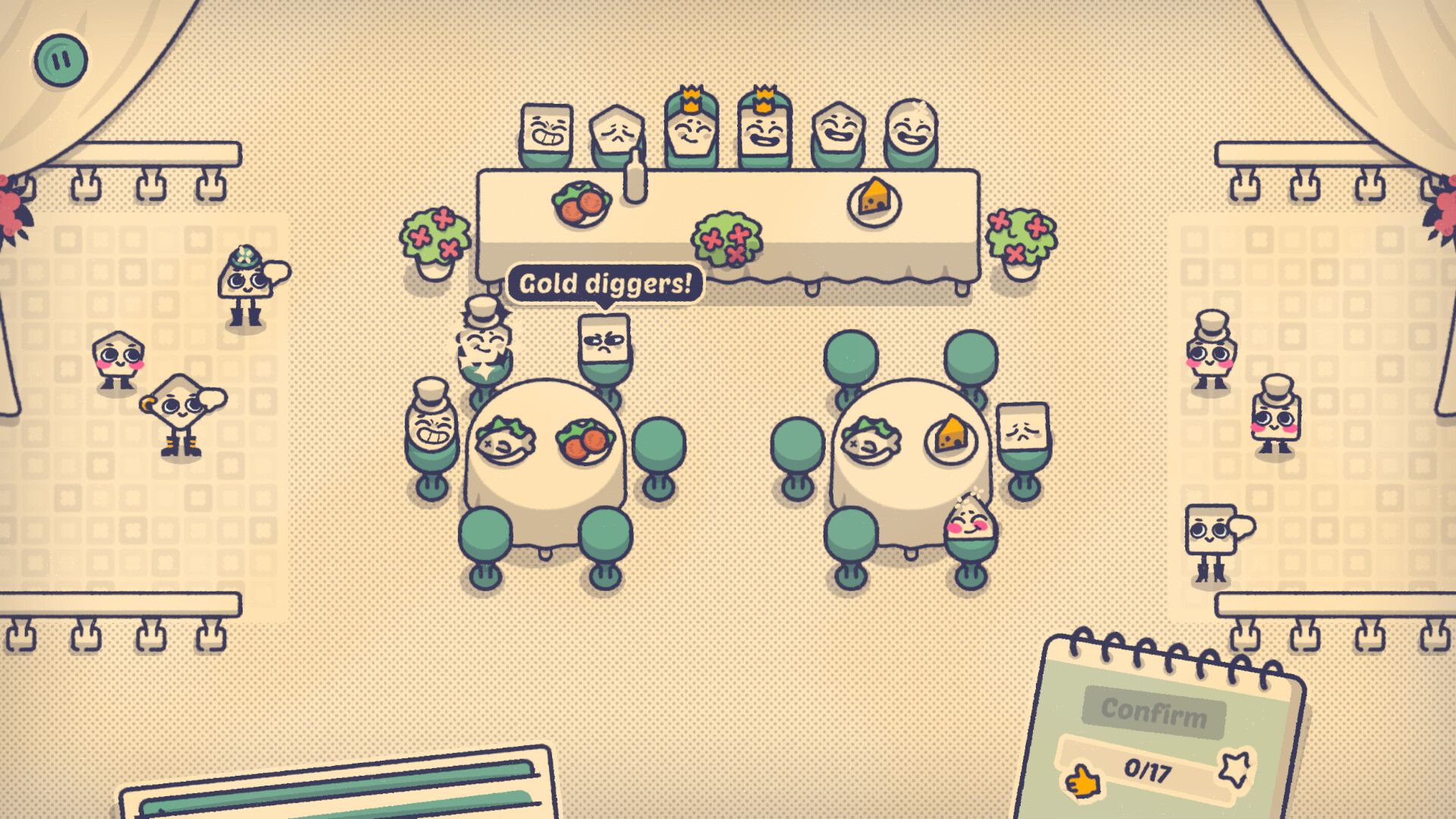
Poti Poti Studio's *Is This Seat Taken?* ingeniously transforms the mundane anxiety of social seating arrangements into a brilliant puzzle game, proving that real-life social calculus can be more compelling than high-stakes action. It's a surprisingly fresh take that makes you wonder why no one thought of it before.
Right, so you know that feeling when you're walking onto a crowded bus, or trying to navigate a wedding reception, and your brain just starts doing that frantic, internal spreadsheet of 'who hates who,' 'who needs a window seat,' and 'who *definitely* didn't shower this morning'? Yeah, that. That beautiful, excruciating social calculus that makes you want to curl up in a ball and disappear.
Well, buckle up, mate, because Poti Poti Studio — bless their wonderfully warped minds — has apparently been taking notes. Their debut game, *Is This Seat Taken?*, which popped up during last week’s Nintendo Indie Showcase, isn't about slaying dragons or surviving a zombie apocalypse. Nah, it taps into something far more universally terrifying: the sheer, unadulterated stress of making a seating chart.
Now, I've been tinkering with this story all morning after reading Giovanni Colantonio's brilliant take over on Polygon, and bloody hell, it’s wilder than it first appeared. Colantonio rightly points out that while most games are busy ratcheting up tension with doomsday scenarios and towering monstrosities, *Is This Seat Taken?* finds its dramatic core in the humble, everyday struggle. And you know what? It’s ingenious. It's like someone cast a 'mundane stress into compelling gameplay' spell, and it worked a bit *too* well.
At its core, *Is This Seat Taken?* is a clever puzzle game. You're presented with an empty space – maybe a bus, maybe an airport terminal, perhaps even a nightclub (because nothing says 'puzzle' like separating the enthusiastic dancers from the grumpy sitters). Then, you get your 'passengers': adorable little geometric shapes – squares and rhombuses with cute, expressive faces. Your job? Drag and drop 'em into seats.
But here’s the rub, the delightful, anxiety-inducing core of it all: these aren't just any shapes. Oh no. Each one is a tiny, neurotic individual with very specific needs. One might *demand* a window seat. Another insists on sitting alone, thank you very much. And then, the true chaos begins to unfold. What happens when your bookworm, who craves peace and quiet, also has a sensitive nose and needs to be miles away from the character who, shall we say, has an *unconventional* relationship with soap and water? Or the loud music lover who absolutely cannot be within earshot of someone trying to read *War and Peace*?
Suddenly, what seemed like a simple task – finding a bum for a seat – explodes into a complex juggling act. You’re not just placing shapes; you’re performing social alchemy, trying to balance conflicting personalities and peccadillos, all while avoiding a full-blown geometric meltdown. It's the kind of mental workout that makes you wonder if all those big action games are actually trying a bit too hard to engineer tension when life’s most mundane moments are already overflowing with it. It’s the human story behind the corporate announcement of... well, in this case, a lovely indie game, but you get the point. It's about *us*.
Poti Poti Studio, it seems, has a knack for spotting these hidden puzzles in plain sight. Beyond the bus, you’re wrangling airport crowds, designing open-plan office layouts (a special kind of hell, that), and even orchestrating who sits where at a club. Each scenario transforms a familiar social conundrum into a surprisingly comedic – and increasingly complicated – puzzle setup. And while Colantonio noted that the game can't quite invent enough fresh scenes to fill out its roughly five-hour runtime without a bit of thematic 'double-dipping,' the core act of dragging these demanding little shapes around is apparently satisfying enough to keep the logic puzzles engaging right to the end. That’s a fair dinkum achievement for a debut title.
Honestly, it’s such an ingenious idea that it makes you scratch your head and ask, ‘Why haven’t we seen a game quite like this before?’ It perfectly encapsulates that internal monologue when you walk onto a packed bus: *That person looks a bit weird. That one has a suspicious-looking tupperware. That one seems nice, maybe? Do I grab the first half-decent seat or risk it by walking further back, hoping for an elusive two-seater?* It’s a gamble, a real-life risk-reward system that could land you next to the bus's resident weirdo, or grant you the sacred solitude of a window seat to doze off. Why *can’t* a video game be about that instead of, you know, just shooting enemy soldiers in an explosive warzone for the gazillionth time?
*Is This Seat Taken?* isn't just a quirky indie game; it’s a brilliant reminder that innovation doesn't always come from bigger budgets or flashier graphics. Sometimes, it just takes a curious mind, a clever observation, and the willingness to ask, 'What if we turned something profoundly everyday and slightly anxiety-inducing into a compelling, charming puzzle?' Turns out, even the most 'boring' parts of our lives can be the goldmine for a truly great video game. And that, mate, is something to be genuinely excited about. After all, what would a curious gamer actually want to know? Probably how to turn their own mental chaos into a fun distraction, that's what.
**Source:** Originally reported by Giovanni Colantonio for Polygon.
Tags: Indie Games, Puzzle, Nintendo Switch, Unique Gameplay, Social Simulation
Original article: Polygon