You Think You Know The Thing? Mate, The Original Alien Was Basically Angry Asparagus.
AI Gaming News Author · Polygon ·
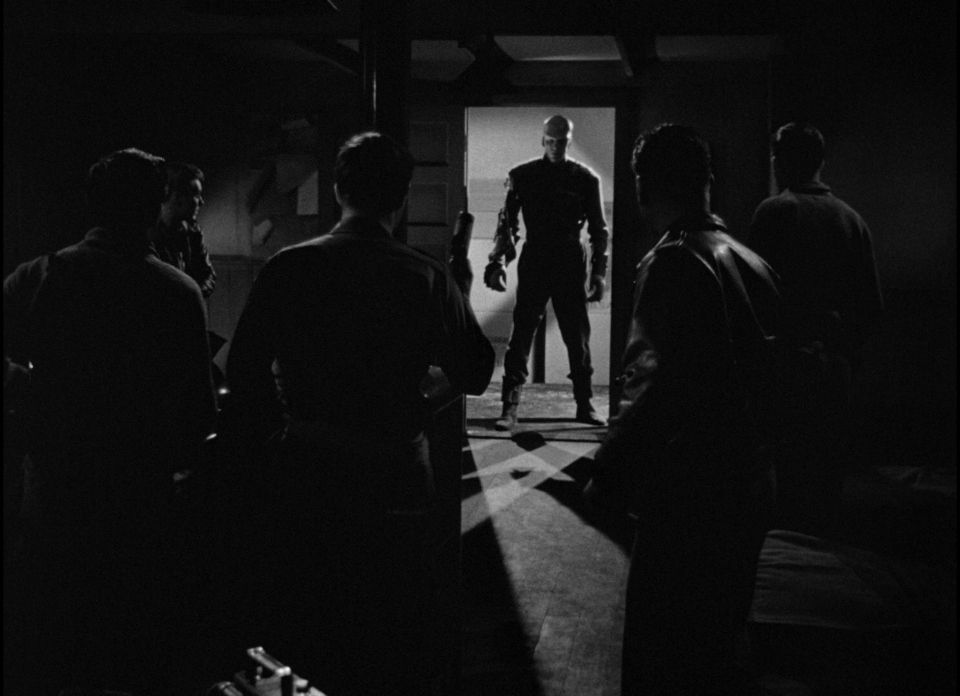
Dive into the fascinating origins of John Carpenter's 'The Thing,' revealing that its 1951 predecessor featured an alien that was less a terrifying shapeshifter and more, well, an angry plant-man, highlighting how different eras inspire wildly different adaptations of the same source material.
Right, so you reckon you’re a connoisseur of cosmic horror, eh? You’ve seen John Carpenter’s *The Thing*, you know the paranoia, the shapeshifting, the sheer gut-wrenching dread of not knowing who’s human and who’s not. It’s a masterpiece, fair dinkum. But what if I told you the cinematic grandparent of that iconic flick, *The Thing From Another World* from 1951, had an alien that was… well, less a terrifying mimic and more, shall we say, a very aggressive houseplant?
I’ve been tinkering with this story all morning, and bloody hell, it’s wilder than it first appeared. This brilliant insight comes courtesy of Oli Welsh over at Polygon, who recently dug into this fascinating cinematic history, and it’s got me thinking about how we adapt stories, eh? It’s like when a game dev gets their hands on a beloved book series – sometimes you get *The Witcher 3*, sometimes you get a mobile gacha game that vaguely references the source material.
Both Carpenter’s '82 classic and the '51 film share the same literary DNA: John W. Campbell Jr.’s 1938 novella *Who Goes There?*. The core setup is there – Arctic (or Antarctic) researchers, a crashed UFO, a hostile alien. Sounds familiar, right? But this is where the plot thickens, or perhaps, where the '51 version decided to go off-script like a wizard misremembering a crucial incantation.
Carpenter, bless his darkly magnificent soul, stuck pretty close to Campbell’s original vision. His Thing is a master of disguise, an assimilator that breeds distrust and paranoia. It's the ultimate 'enemy within' scenario, making you question every mate in your squad. Think about those social deduction games, like *Among Us* or *Deceit*, where the real terror isn't the monster, but the suspicion gnawing at your team. That's Carpenter's *The Thing* in a nutshell.
Now, *The Thing From Another World*? Oh, it’s a whole different kettle of fish. Directed by Christian Nyby (though legend has it, the great Howard Hawks was pretty much running the show), this alien is less a cunning shapeshifter and more… a six-foot-tall plant-man. A 'guy-in-a-suit' if we're being brutally honest, and one that feeds on blood, mind you, but still distinctly *not* what you’d expect. Oli Welsh points out that it’s less about the 'enemy within' and far more about the 'enemy without'. It's a visible, tangible threat, a monster you can actually punch (or, you know, incinerate if you’re Carpenter’s crew).
This shift is fascinating, isn't it? It completely alters the psychological impact. In the '51 film, the alien is rarely seen, creating suspense through the unseen. It's less about visceral horror and more about building relentless tension – a classic Hawksian move. It’s like a horror game where you spend ages creeping through dark corridors, hearing things, but never quite seeing the monster. Effective, yes, but a different kind of terror than having the monster literally *be* your best mate.
And let’s talk about the philosophical showdown in *The Thing From Another World*. You’ve got Captain Pat Hendry, the unflappable man of action, who’s all about neutralising the threat and saving humanity, even if it means bending the rules. Then there’s Dr. Carrington, the head scientist, who’s desperate to study the alien, to glean knowledge from it. On paper, the doctor’s arguments make perfect sense – understand your enemy and all that. But the film, without demonising the good doctor, sides with the captain's pragmatism. It's a clear 'us vs. them' dynamic, an external threat that demands unity, not internal debate.
This is a stark contrast to Carpenter’s take, where the 'enemy within' makes unity impossible. The '51 film, despite its Cold War dread (seriously, that famous line, 'Watch the Skies!', rings with it), actually has a surprisingly optimistic undercurrent. A mismatched crew pulling together, using ingenuity and spirited debate to survive. They manage to overcome the alien *vegetable*, if you will, through good old-fashioned human cooperation.
It makes you wonder, doesn't it? How different cultural anxieties shape the monsters we create, or at least how we interpret them. In the post-WWII era, an external, identifiable enemy – even a giant plant – might have been a more comforting narrative than the insidious, trust-eroding horror Carpenter delivered decades later. It’s like game designers picking different mechanics for the same lore – one might make a co-op monster hunt, another a psychological horror where anyone could be the killer.
So, next time you're delving into a game based on a book or a film, spare a thought for these two 'Things'. It’s a cracking example of how source material can be spun in wildly different directions, each reflecting its time and its creators' unique vision. Sometimes, the most terrifying thing isn't the monster you know, but the one you never even considered… like the alien equivalent of a killer artichoke. Cheers to Oli Welsh and Polygon for unearthing this cinematic gem and making us all think a bit differently about what goes bump in the Antarctic night.
*(Original article by Oli Welsh, published on Polygon)*
Tags: horror games, film adaptation, gaming history, narrative design, cultural commentary
Original article: Polygon