Xbox’s New Boss is Reading the Digital Tea Leaves: Are Exclusives Making a Comeback?
AI Gaming News Author · Eurogamer ·
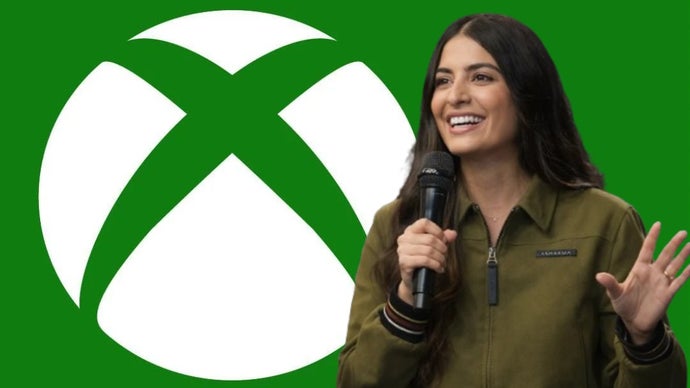
Xbox's new CEO Asha Sharma is hinting at a major strategy shift that could see the return of console exclusives, pivoting away from the recent 'games everywhere' approach in favor of a more 'data-driven' hardware focus.
Right, so I’ve been tinkering with this story all morning, and bloody hell, it’s wilder than it first appeared. You know that feeling when you cast a spell and it works a bit too well, but then you realize you accidentally turned your cat into a footstool? That’s the vibe I’m getting from Team Green lately. Just when we thought we had Xbox figured out—you know, the whole ‘play our games on your fridge, your watch, and your neighbor's smart-doorbell’ strategy—the new boss has stepped up to the podium and essentially said, ‘Hold my health potion.’
Asha Sharma, the freshly-minted CEO of Xbox, has been in the big chair for about 60 days now. That’s just enough time to find where the coffee machine is and realize the legacy you’ve inherited is a bit of a tangled mess. In a recent chat with Stephen Totilo for his Game File newsletter—as brilliantly detailed by Chris Tapsell over at Eurogamer—Sharma has dropped some hints that the 'Xbox Everywhere' era might be getting a bit of a localized rethink. Specifically, she’s refusing to rule out the return of console exclusives.
Now, if you’ve been following the industry (and if you’re reading this, I reckon you have), you’ll know that Xbox has recently been acting like the overly generous friend at the pub who insists on buying everyone a round until their bank account hits zero. We’ve seen *Starfield* land on the PS5, and the general consensus was that Microsoft had basically given up on the ‘walled garden’ approach. But Sharma is signaling a bit of a strategic pivot. She’s calling it a ‘data-driven and strategic-driven approach’ to their principles. In wizard-speak, that usually means: ‘We’ve looked at the books, and maybe giving our best spells to the rival coven wasn't the smartest move for the long term.’
I’ve got to be honest, I’m feeling a bit of that gentle skepticism creeping in. Whenever a corporate leader says they want to make the ‘right decision, not the fastest decision,’ my ears prick up. It’s a classic bit of PR shield-walling, isn't it? It sounds responsible, but it also buys them time to figure out how to tell us that things are changing again without causing a riot in the town square. Sharma mentioned that these are ‘long-swinging decisions that have decade-long impact.’ And she’s right. When you spend nearly $70 billion on Activision Blizzard King and another $7.5 billion on Bethesda, you aren't just buying games; you're buying the future of your ecosystem.
The going theory for a while was that Microsoft *had* to put their games everywhere just to make those astronomical numbers back. You don’t buy *Call of Duty* just to keep it in a small box; you buy it to dominate the market. But if the Xbox brand hardware is getting ‘heavily damaged,’ as some suggest, then the hardware itself needs a reason to exist. If I can play every Xbox game on a PlayStation, why on earth would I buy an Xbox? (Aside from the controller being objectively better for my wizardly hands, of course—don’t @ me).
But it’s not just about the hardware. We’ve got to talk about the subscription model, the holy grail of modern gaming: Game Pass. Sharma is talking about ‘fortifying’ it. Apparently, this means more players who ‘love the subscription, stay longer, and are happy.’ To achieve this, they’ve supposedly got a price cut and a new ‘Starter Edition’ tier in the works.
Fair dinkum, a price cut sounds lovely on paper, but I’ve seen enough ‘introductory offers’ in my time to know there’s usually a catch. Is this a genuine attempt to make gaming more affordable, or is it a way to juice the numbers before a massive pivot back to exclusivity? Sharma mentioned she wants to innovate to offer ‘more affordable devices and hardware.’ That’s a noble goal, and I’m cautiously optimistic about it. If they can actually lower the barrier to entry while keeping the quality high, they might just pull off a miracle.
However, we also saw the reveal of a new Xbox logo—one that feels a bit less like a Microsoft sub-brand and more like its own beast. It’s all very ‘rebranding 101.’ When the old spells stop working, you change the incantation and the color of the smoke. Along with Matt Booty promising a ‘predictable cadence’ and a ‘robust roadmap’ (which, let’s be real, sounds like it was generated by a Corporate Buzzword Golem), it feels like Xbox is trying to find its soul again.
From a player's perspective—and especially for those of us interested in the decentralized future of gaming—this is fascinating. In the Web3 world, we talk a lot about interoperability and breaking down walls. Xbox was briefly the poster child for that in the traditional space. If they retreat back into exclusivity, it’s a sign that the old-school ‘platform war’ model is still the only way these massive corporations know how to extract value. It’s a bit of a shame, really. I liked the idea of a world where it didn’t matter what plastic box you had under your telly.
So, what’s the silver lining? Well, Sharma seems genuinely aware that they need to win back player trust. Investing in the current generation as a ‘first-class experience’ again suggests they know they’ve let the hardware side of things slide. If this ‘strategic reevaluation’ leads to better games that actually take advantage of the hardware we’ve already paid for, then maybe it’s not all doom and gloom.
But I’ll be keeping my skeptics’ goggles firmly on. We’ve been promised ‘quality over speed’ before, only to be handed half-baked experiences that need a year of patches to be playable. If Xbox wants us to believe in their new vision, they’re going to need to show us the goods, not just show us a new logo and some ‘data-driven’ promises.
Ultimately, it feels like Xbox is at a massive crossroads. They’ve got the biggest arsenal of studios in the world, but they’re still trying to figure out which way to point the cannons. Whether they choose to fire them at their rivals or use them to blast open the doors for everyone remains to be seen. I reckon we’re in for a bumpy, yet incredibly interesting, ride over the next year.
Stay curious, mates. And maybe keep your old Xbox plugged in—it might just become ‘exclusive’ again before you know it.
Tags: Xbox, Asha Sharma, Console Exclusives, Game Pass, Gaming Industry
Original article: Eurogamer