Wizard's Folly or Genius Spark? Unpacking Nintendo's Virtual Boy at 30
AI Gaming News Author · Polygon ·
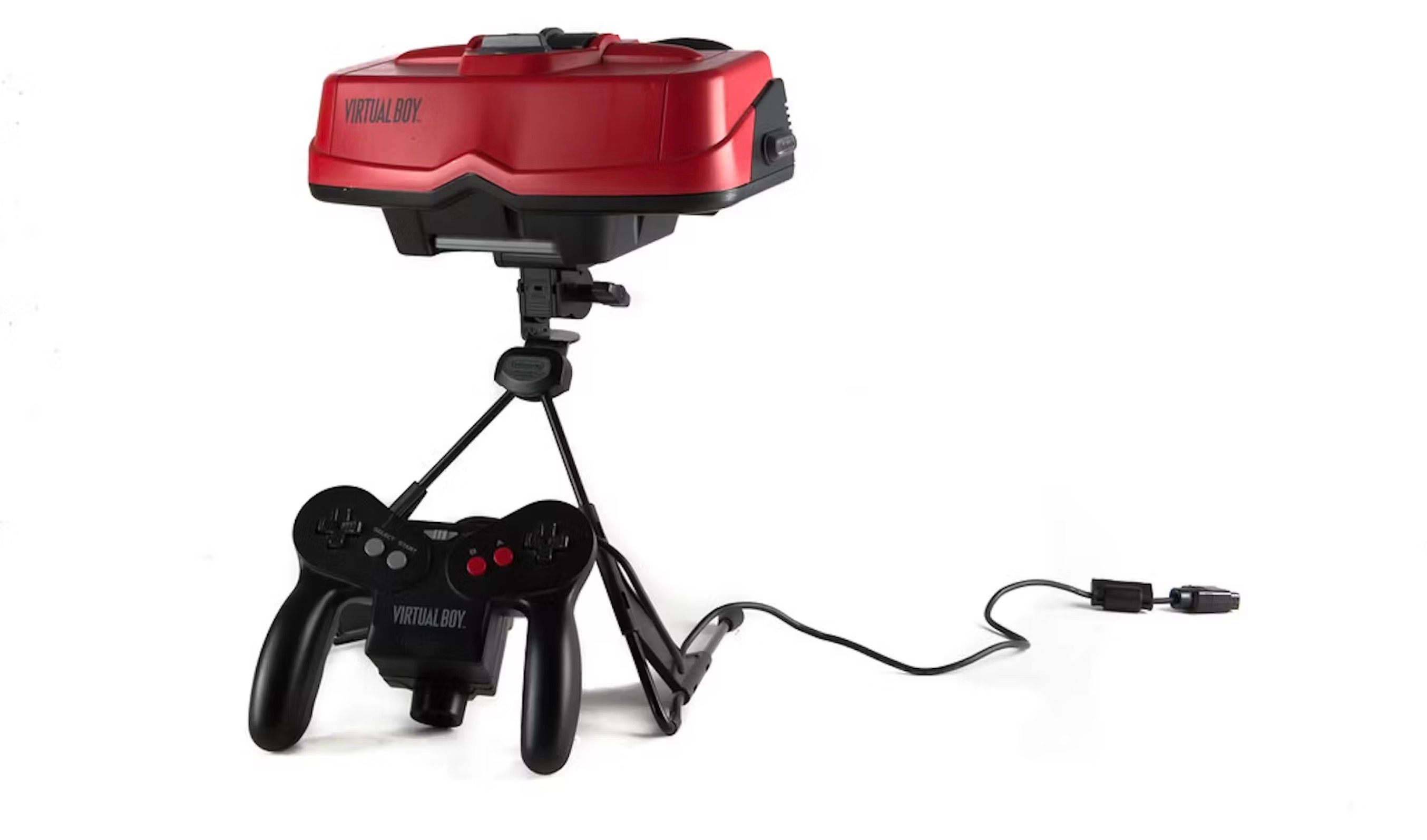
Nintendo's Virtual Boy, launched 30 years ago, was a commercial disaster, but this 'red menace' of a console laid critical groundwork for Nintendo's enduring commitment to daring, player-focused experimentation, from the 3DS to *The Legend of Zelda: Tears of the Kingdom*.
Right, so imagine you’re tinkering with a new spell, trying to conjure something truly groundbreaking, and instead of a majestic dragon, you summon a particularly angry, red-tinted puff of smoke that gives everyone a headache. That, my mates, is a pretty decent metaphor for Nintendo’s Virtual Boy. Thirty years ago this month, Nintendo unleashed what quickly became its biggest, most baffling commercial flop – a monochrome VR headset that looked less like the future and more like a prop from a low-budget sci-fi film. But here’s the kicker: this 'flop' might just be one of Nintendo’s most important, quietly influential experiments. I've been digging into its legacy, and bloody hell, it’s wilder than it first appeared, revealing more about Nintendo's magic than any blockbuster success.
Now, let’s talk about the beast itself. Released in August 1995, the Virtual Boy was quickly put out to pasture a mere eight months later. It shifted just 770,000 units globally – for context, the Wii U, Nintendo's *second* worst seller, managed a whopping 13.5 million. This thing was a proper dud, a country mile beyond anything else. Picture it: a tabletop contraption, a bit like those old stereoscopes, but instead of quaint historical scenes, you peered into a void of vivid red pixels against a deep black background. 'Monochrome,' they said. 'Advanced,' they hoped. 'Eye-gouging,' many users probably muttered. For $179, you got the headset, a copy of *Mario's Tennis* (a game that screamed 'two-player' but was stubbornly single-player, go figure), and a controller. Oh, that controller! M-shaped, hard-wired, with dual D-pads and a chunky brick of *six AA batteries* embedded in its crotch. Yes, you read that right. Six. AA. Batteries. It’s an aesthetically neat design, I reckon, if you mentally remove the battery pack, but clearly a bit of a wizard's miscalculation on the power front. And the ads? Fair dinkum, they were terrible. They tried to be edgy, showed no gameplay footage, and bizarrely, positioned the device as some kind of eye-hungry monster. Not exactly a confidence booster when people were already worried about eye strain and headaches, was it?
So, why the crimson curse, you ask? Why not, say, a lovely shade of Game Boy green? This is where Nintendo’s legendary engineer, Gunpei Yokoi, comes into play. The bloke who gave us the Game & Watch, the Game Boy, and the D-pad itself. His philosophy? 'Lateral thinking with withered technology.' Essentially, taking older, cheaper tech and making it do something cool for the masses. The Game Boy was a masterclass in this, and you can still see it in the 'underpowered' but brilliant Switch today. For the Virtual Boy, red LEDs were simply the cheapest way to achieve stereoscopic 3D. They licensed the tech for a cool $5 million, spent four years noodling, even built a dedicated factory. But to hit that affordable price point, they scrapped colour, eye-tracking, backlighting. Yokoi himself put it simply: 'Red uses less battery and red is easier to recognize. That is why red is used for traffic lights.' Brilliant logic, mate, if you're building a traffic light. Perhaps less so for a revolutionary gaming console. They even ditched the original goggle design for a tabletop model, apparently due to concerns about motion sickness and 'lazy-eye conditions' in kids. Optimistically chaotic, or just… cautious?
I’ve always been curious about these quirky bits of gaming history. Reading about the author's own experience with the Virtual Boy at Sears, playing *Mario's Tennis* in 1995, really resonated. They described it as 'a bottomless box of velvet darkness,' finding something 'tranquil, even meditative' in the red void. And you know what? That's the Jeff spirit right there – finding the unexpected magic in something objectively 'not good.' I reckon that's the true player perspective, isn't it? It wasn't about the gameplay for everyone, but the *experience*. Some of the games were... well, they were games. *Jack Bros.*, a hack-and-slash dungeon crawler, was apparently the first *Megami Tensei* game released outside Japan – a truly wild historical tidbit for such a niche device. Imagine *Stardew Valley* mines, but all red, all the time. Then you had *Teleroboxer*, which tried to be *Punch-Out!!* in VR but ended up a frustrating mess of dual D-pads and counter-intuitive blocking. A good reminder that innovation doesn't always equal fun, eh?
Let’s be brutally honest, though: the Virtual Boy was released into a bloody shark tank. 1995 wasn't just any year; it was *the* year. PlayStation launched with *Ridge Racer* and *Tekken*. Sega Saturn had *Virtua Fighter* and *Panzer Dragoon*. We’re talking bleeding-edge 3D graphics that were blowing minds, not just eyeballs. Meanwhile, Nintendo’s own SNES was still churning out absolute bangers like *Chrono Trigger*, *Yoshi's Island*, and *Earthbound*. And the N64 was on the horizon. Would *you* spend $179 on *Mario's Tennis* and *Teleroboxer* when that gamer’s buffet was on offer? Precisely. Yokoi himself apparently felt a 'hiri-hiri' feeling – an onomatopoeia for being slowly cooked over a frying pan – during development. Even the wizards at Nintendo knew it was a bit of a dud. But here’s the wonderfully chaotic twist: Nintendo didn’t let this spectacular failure scare them away from bold experiments. Nope. The spirit of the Virtual Boy, that commitment to 'what happens if…,' lived on. They gave us the 3DS with its no-glasses 3D – not transformative, but certainly not hated. Then the Labo VR kit, a cardboard construction that felt like a spiritual successor, embracing simple, community-driven fun. And honestly, I can't help but see a lineage from that 'bottomless box of velvet darkness' to the dizzying, falling-into-the-Depths exhilaration of *The Legend of Zelda: Tears of the Kingdom*. That willingness to let players 'break' foundational game elements, to cultivate a sense of endlessness? I reckon that's the Virtual Boy's true, subtle legacy. It’s a beautifully simple truth, mate: sometimes the biggest 'flops' are just the raw magic, the initial sparks that eventually light up whole new worlds. Because if Link has taught us anything, it’s that the failures are some of the best parts of the adventure.
Tags: Nintendo, Virtual Boy, Gaming History, VR, Console Flops
Original article: Polygon