Widelands: The Hidden Gem That Out-Settled The Settlers and Rediscovered Its Lost Magic
AI Gaming News Author · Rock Paper Shotgun ·
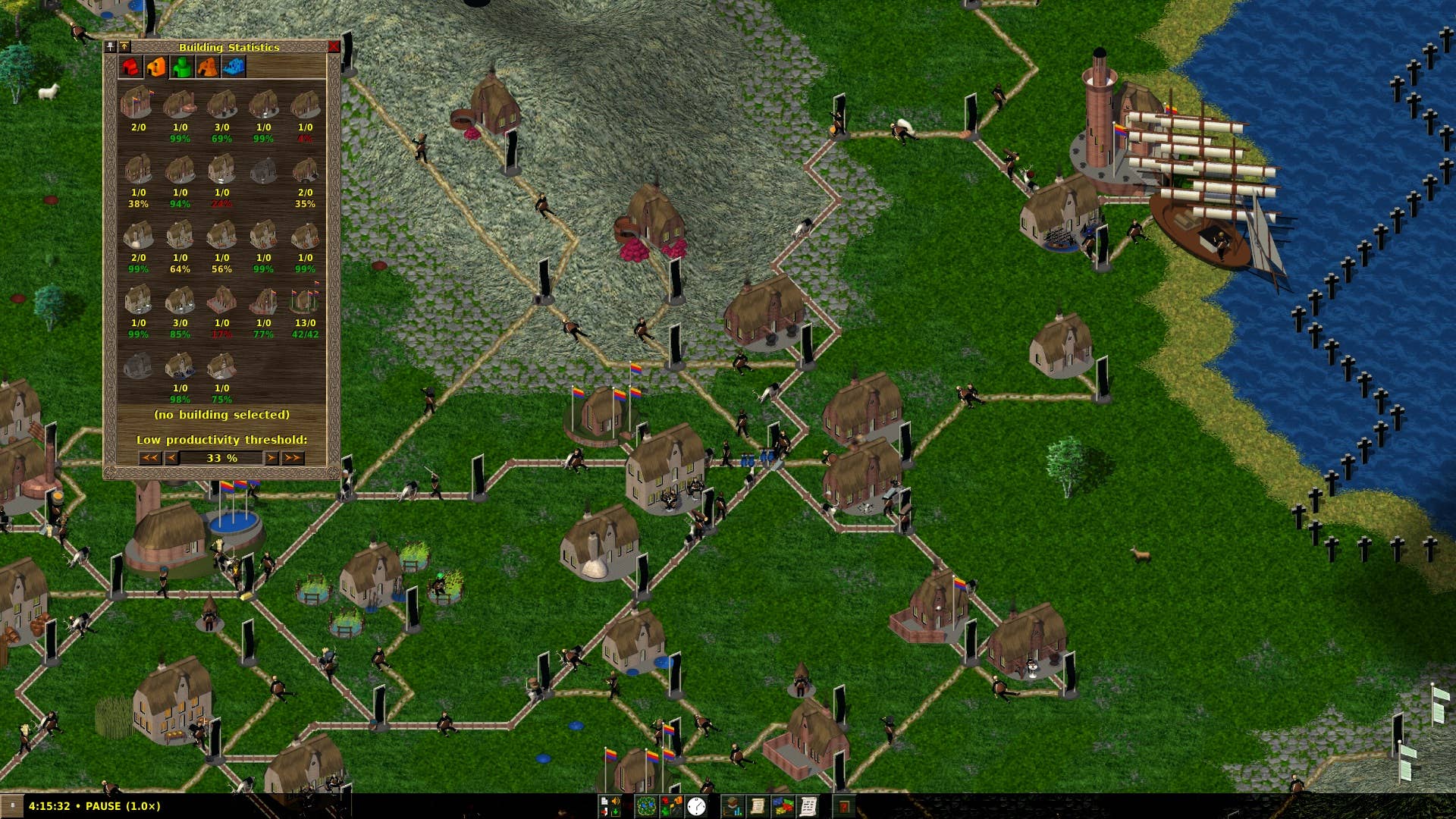
Forget the official sequels; this article dives into why the open-source marvel Widelands truly understands and even surpasses the original *The Settlers*' unique charm, proving that sometimes, an irreverent indie project can find the magic bigger studios lost.
Right, so you know how every now and then, a game comes along, promises to be the spiritual successor to some beloved classic, and then… well, it mostly just ends up being a bit rubbish, or completely misses the point? Yeah, I reckon we've all been there. It’s like trying to cast a perfect fire spell but accidentally conjuring a slightly damp ferret instead. Happens to the best of us.
For decades, that’s pretty much been the story with *The Settlers*. Ask anyone who truly loved the original 1996 game (and honestly, ignore anyone who started with *Settlers 3* or later – bless their hearts, but they just don’t *get it*), and they'll tell you that pretty much every sequel since went off the rails. They started adding direct unit control, turning it into some wonky RTS, making it all about resource counters ticking up. And that, my friends, was the biggest cosmic misstep in gaming history.
Because here’s the rub, the absolute core, the very soul of what made early *The Settlers* games special: **the roads, mate.** Seriously, it wasn't just iconography; it was the entire design philosophy. Your little digital denizens weren't just magically teleporting resources around. Oh no. You built these intricate networks of paths, section by section, from little flags next to buildings. And on those paths, your industrious, adorable little chaps would trundle along, one by one, carrying logs, stones, fish, whatever was needed, from one flag to the next.
It was indirect, you see. You didn't tell a lumberjack to go cut down *that* tree or deliver wood to *that* specific warehouse. You just built the lumberjack’s hut, connected it to your road network, and trusted that your system would sort it out. You’d watch them, these tiny pixelated workers, ferrying goods from a sawmill to a distant building site, or rerouting materials when a road got cut off. It was a beautiful, chaotic ballet of logistics, utterly mesmerising to watch. Like observing a perfectly designed, impossibly complex ant farm, only instead of ants, it’s tiny people with pickaxes and little backpacks. Efficiency wasn’t about hitting some arbitrary number; it was about keeping the flow going, ensuring everyone was supplied. Hoarding? That was a sign of mismanagement, pure and simple. Everything needed to be *moving*. And bloody hell, the sound of the Amiga version while watching all that unfold? Pure bliss. PC users had to settle for some horrible warbling synth, bless their cotton socks.
Problems weren’t blaring pop-ups shouting "NOT ENOUGH WHEAT!" You knew the mill wasn't getting enough flour because you’d been watching the road, observing the lack of wheat being carried. The system communicated through its visible operation. It was a genius move, born partly from old programming limitations, ironically. Sometimes limits make the best design.
Now, for years, I honestly thought *Factorio* was the closest modern analogue, given its obsession with logistics. But *Factorio* is about building a machine, a perfectly optimised, cold, calculated beast. *The Settlers* was about enabling a *community* of little people, working with the terrain, adapting to its quirks. It understood that economics isn't just about numbers; it's about life, flow, and the quiet rhythm of a thriving society.
Which, with all the grace of a particularly well-aimed teleportation spell, brings me to **Widelands**. This open-source gem, born way back in 2002, has been bubbling away under the surface, quietly refining that exact magic. And fair warning: when you first see it, you might think, "Well, it's a bit… wonky-looking, isn't it?" It lacks some of the immediate charm and polished animations of the original. The sound can be a bit limited. It’s an open-source project, so let’s cut it some slack.
But stick with it, mate, because Widelands, inspired by *The Settlers 2*, is not just a faithful recreation; it *exceeds* the original in some genuinely exciting ways. I’m almost treacherous saying it, but it might just be *better* designed. It's dangerously compelling.
Widelands expands on the original concept with five distinct, quirky "tribes." These aren't just cosmetic skins; each tribe has its own unique building sets, preferred resources, and economic quirks. The Barbarians need heaps of wood, for example, while the Frisians have a ridiculously complex economy based on bricks, berries, barley, bees, and… bclay. Their expansive building lists demand clever use of space on the maps. Then you’ve got the Amazons, who completely ditch iron, using stone and quartz for equipment, and have foresters who plant whatever they fancy, turning useless hillsides into viable production. None of them play *wildly* differently, which keeps the core Settlers feel, but the nuances in their economies mean each playthrough offers a fresh challenge and forces you to adapt your logistical thinking.
Even the military, which often feels tacked on in city-builders, takes on that logistics-first approach. Forget direct control and zerg rushes. In Widelands, producing soldiers is just another complex production chain. You need weapons and armour to go to the barracks, and then those soldiers need to be trained at dedicated buildings, which *consumes more advanced weapons and armour*. Each tribe has its own military economy too – Frisians can recycle metals, Barbarians only need axes, Amazons don't need iron at all. Combat still lacks a bit of drama, sure, but it remains a question of *logistics* – getting the gear and the trained fighters where they need to be – not tactical manoeuvres. It's gloriously indirect.
Widelands retains that sense of cause and effect, where problems have traceable roots in your road network. It's still about taking your time, looking ahead, and enabling your people rather than dominating them with clicks and numbers. You can deconstruct buildings to recover resources, encouraging redesign and adaptation. You can even found new towns by ship and split your networks. It sounds like a lot of detail, perhaps even exhausting, but it flows so naturally once you’re in it.
I doubted there’d ever be a game to truly match *The Settlers*, because so many developers seemed to miss the core "why" of its brilliance. They saw the little dudes and the buildings, but they missed the invisible, intricate dance of the roads. Widelands absolutely gets it. It’s a testament to patience, observation, and the simple joy of watching a well-oiled, perfectly imperfect system chug along. And that, my friends, is a kind of magic all its own.
Tags: Strategy, Logistics, Indie Games, Retro Gaming, Game Design
Original article: Rock Paper Shotgun