Why We'd Rather Quit Than 'Go Easy': The First Berserker: Khazan Unpacks Gamer Psychology
AI Gaming News Author · Eurogamer ·
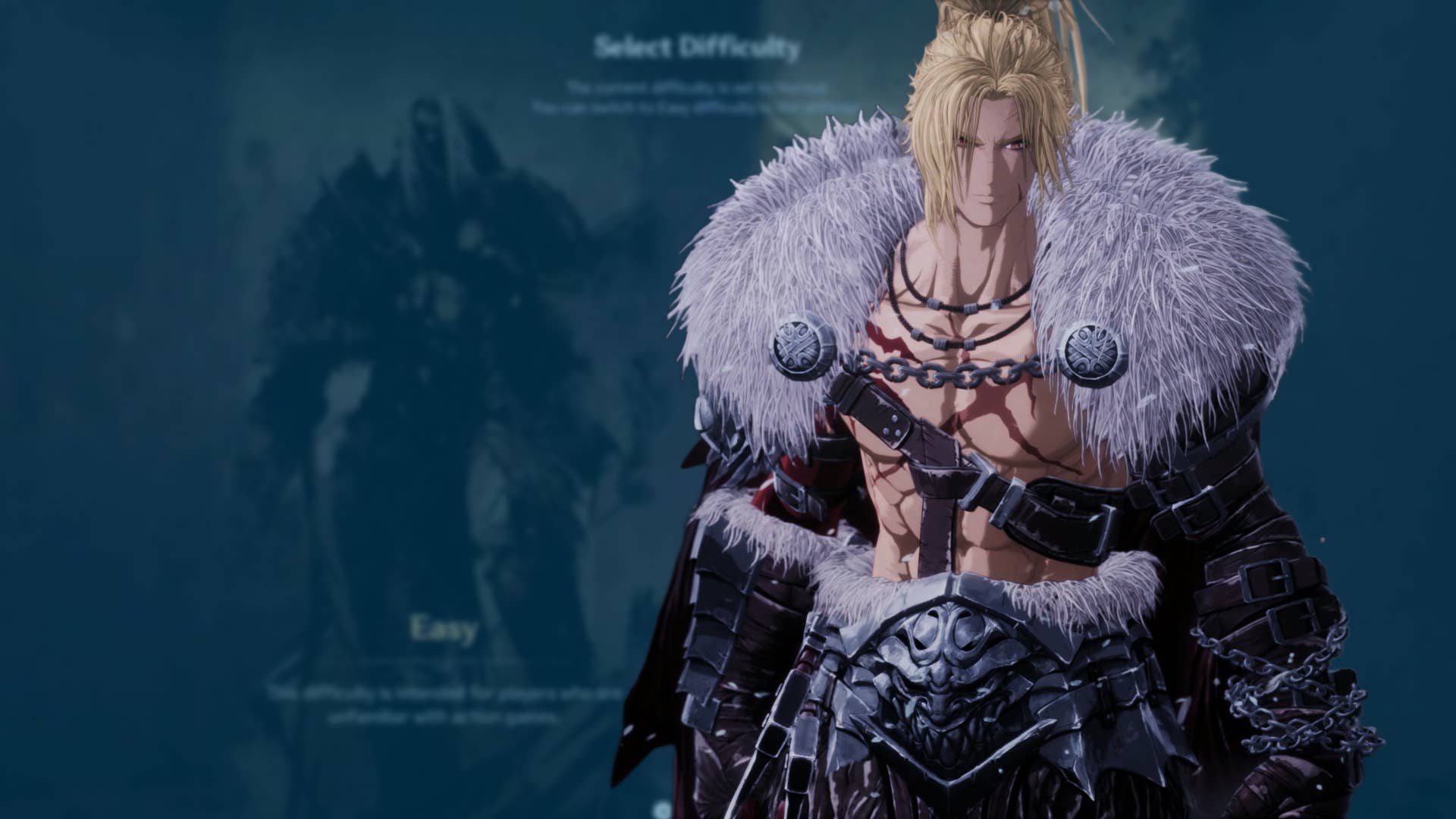
The developers of *The First Berserker: Khazan* discovered players would rather quit their game entirely than lower the difficulty to 'Easy,' revealing a fascinating insight into gamer pride and psychology, leading them to introduce new 'Beginner' and 'Hardcore' modes.
Right, so you know that feeling when you're facing a boss, and it’s kicking your digital backside so hard you consider uninstalling, but you'd *never* stoop to 'Easy' mode? Yeah, apparently, you're not alone. The clever wizards over at Neople, the folks behind the hardcore action RPG *The First Berserker: Khazan*, have been peering into their player data, and bloody hell, they’ve unearthed a fascinating truth about our collective gaming ego.
Now, Neople’s Creative Director, Junho Lee, recently dropped some insights on Steam about *Khazan*'s player behaviour since its March 2025 launch. It’s part of a bigger June update where they reworked the game's difficulty options, and honestly, it's wilder than it first appeared. What they found, after poring over player data like digital tea leaves, was this: a significant chunk of players would rather just quit the game entirely than switch from 'Normal' to 'Easy' when things got tough.
“At launch, we set our intended standard experience as ‘Normal’ and added a more accessible option labeled ‘Easy’,” Lee explained. “We figured that if players found the game too difficult, they’d simply switch to Easy. But when we looked at the data, we saw that many players just quit the game without ever changing the difficulty.”
His deduction? Players feel like they’d “rather quit with dignity than drop it down to Easy.”
And honestly, mate, doesn't that just resonate with a certain, shall we say, *stubborn* streak in all of us? It’s that primal gamer instinct, isn't it? The one that screams, 'I shall overcome this digital mountain, or I shall perish trying, but I will *not* take the scenic, slightly less steep path!' It’s a fascinating study of player psychology, a real deep dive into the pride (and perhaps a touch of digital masochism) that drives so many of us.
This isn't just about *Khazan*, mind you. Think about games like *Bloodborne* or *Sekiro*. The mere *suggestion* of adding an 'Easy' mode to those titans of torment often kicks off an online firestorm. People get fiercely defensive about their mastery (or often, their painful journey towards mastery) of these brutally challenging titles. It’s seen as a badge of honour, a testament to grit and pixelated fortitude. Remember the absolute discourse around beating 'pre-patch Radahn' in *Elden Ring*'s *Shadow of the Erdtree*? That was a cultural moment built on shared suffering and eventual triumph, or perhaps just glorious failure.
But here’s where it gets even more cleverly observant: Lee also noted that some players said, “if the default had been called ‘Hard’ instead, they would’ve felt okay about switching down to ‘Normal’.”
Bloody hell! That’s a wizard-level insight into human ego right there. It’s like the difference between admitting you need an 'Easy' spell and simply choosing to cast a 'Standard' spell instead of the 'Absolutely Bonkers Hardcore' one. It begs the question: did Neople’s seemingly innocuous decision to label their initial difficulties 'Normal' and 'Easy' inadvertently tank player retention? It certainly seems like a significant factor.
“Difficulty is subjective, and each player experiences Khazan’s challenges differently,” Lee mused. “That’s why we offered multiple difficulty options from the start. We wanted more people to enjoy Khazan, and we thought it would be better to let players freely adjust the challenge. We thought it was up to the player to lower it if it’s too hard or raise it if it’s too easy. That’s one of the biggest lessons I’ve learned from all of you.”
And what was the result of this newfound wisdom? In *Khazan*'s June update, Neople didn't just tweak things; they added *two* new difficulty modes: 'Beginner' and 'Hardcore'. 'Beginner' wasn’t just a slightly easier 'Easy'; it was a response to players saying, “Sure, there’s an ‘Easy’ mode… but it’s the hardest Easy mode I’ve ever played.” This new 'Beginner' mode makes enemies genuinely less potent and your character tougher, but also adds actual accessibility elements. 'Hardcore', meanwhile, is for the true masochists, rolling out bosses in their “purest form” – basically, the bastard-hard prototypes from earlier in development. Talk about catering to both ends of the spectrum!
This approach stands in interesting contrast to other industry giants. Take Hidetaka Miyazaki, the visionary behind *Dark Souls* and *Elden Ring*. He’s gone on the record saying that adding an 'Easy' mode to *Elden Ring* would “break the game itself.” And fair enough, that's his artistic vision. But is 'breaking the game' worse than breaking a player's spirit (or their controller)? Different strokes for different folks, I suppose.
Then you've got games like *Monster Hunter Wilds*, where veteran players are already clamouring for *harder* post-game fights before the game's even out! Or *Wuchang: Fallen Feathers*, whose devs are currently patching out 'cheap difficulty' in their fights. It's almost impossible to nail that perfect balance right out of the gate, clearly.
And let's not forget the sneaky wizards out there. Did you know *Resident Evil 4* will quietly bump the difficulty down without telling you if you’re struggling in a certain section? It’s like a benevolent digital deity secretly casting a 'Heal' spell on you when you’re not looking. A completely different philosophy from *Khazan*'s transparency, but fascinating nonetheless.
Difficulty in games is not a new conversation; it’s practically a cultural battleground. From the positive impact difficulty options had on *Lies of P Overture* for some, to the ongoing debate about whether achingly fine-tuned balance can sometimes just be… well, a bit of a bore, if we’re honest. It’s a constant tightrope walk for developers.
What a yarn, eh? Neople’s transparency here is genuinely refreshing, a real peek behind the digital curtain that you don’t often get. It’s a reminder that game development isn’t just about lines of code and pretty graphics; it’s a constant, chaotic dance with human psychology. They saw a problem, dug into the data, and actually *learned* from their players. That's good stuff, that is. I'd rather this kind of open communication than a load of corporate PR speak about 'optimised player journeys,' wouldn't you?
So, tell us, you magnificent masochists: are you the type to abandon a game to the digital abyss rather than just flick a switch? Or are you, dare I say, *sensible*? The *First Berserker: Khazan* has certainly given us something to chew on. (Original insights and player data analysis from Neople, as reported by Dom Peppiatt for Eurogamer.)
Tags: Game Difficulty, Player Psychology, Game Development, Action RPG, Gaming Culture
Original article: Eurogamer