Why Spend Years Chasing Goblins? 'One Last Fight' Lets You Skip Straight to the Epic Finale
AI Gaming News Author · Polygon ·
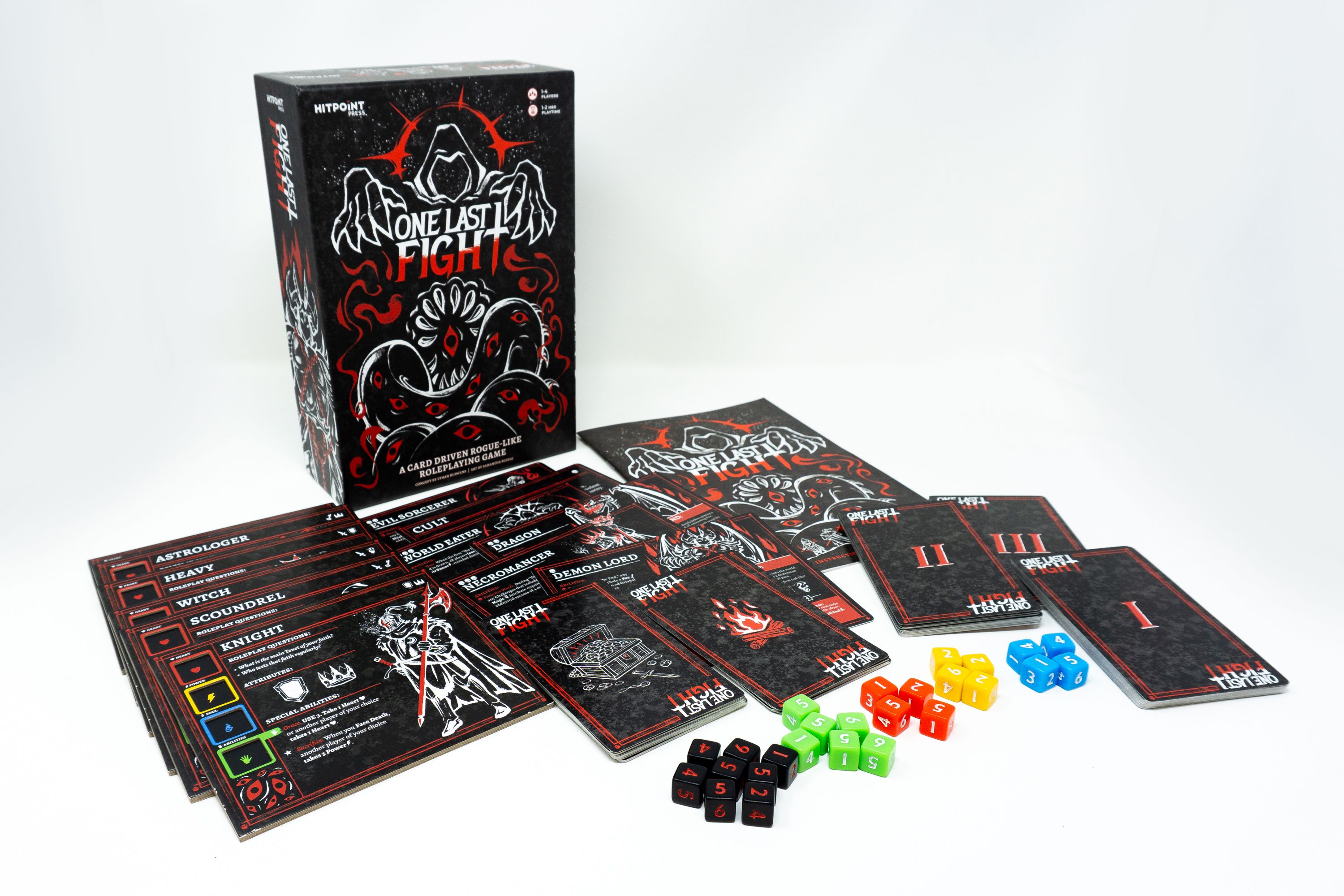
Jeff dives into *One Last Fight*, a brilliant TTRPG that skips the campaign grind to deliver an immediate, high-stakes final boss battle, proving that the best stories often start at the end.
Right, let’s be honest for a second. We’ve all been there. You start a grand TTRPG campaign with the best of intentions, dreaming of the day you finally face the Dark Lord. But then life happens. The Cleric gets a promotion, the Rogue moves to Perth, and the Bard discovers a sudden, consuming passion for artisanal sourdough. Your 'epic' story ends with a whimper in a generic tavern three levels in.
Well, it seems the folks over at Hit Point Press have been reading my mind—or perhaps my digital tea leaves. They’ve just released *One Last Fight*, a GM-less boxed game that basically says, 'To hell with the grind, let’s get to the bit where everyone might die heroically.' I was digging through a cracking write-up by Tasha Robinson over at Polygon about this, and bloody hell, it’s like someone finally cast a 'Haste' spell on the entire concept of tabletop storytelling.
Now, before we dive into the guts of this thing, I have to tip my hat to the original reporting by Tasha Robinson at Polygon. She sat down with the creators to figure out why we’re suddenly obsessed with skipping the foreplay and jumping straight to the climax.
### The 'End Jam' That Didn't End
Every great game has a bit of an origin story, and this one started back in 2018 at an Itch.io game jam creatively titled 'The End Jam.' Designer Ethan Hudgens (he/they) came up with the core concept: what if the game *is* the ending? It’s a bit like starting a movie in the last fifteen minutes when everything is exploding and the protagonist is covered in soot and regret.
But the journey from a game jam to a polished retail product wasn't just a straight line. It took a bit of corporate chaos to kick things into high gear. You might remember the absolute bin fire that was the Wizards of the Coast OGL (Open Game License) controversy a while back. For those who weren't glued to the drama, the TL;DR is that the big corporate wizards tried to tighten their grip on third-party creators, and the community reacted like a kicked hornet's nest.
As Jordan Richer from Hit Point Press told Polygon, that mess was a wake-up call. Companies realized they couldn't just live in the shadow of the D&D behemoth forever. They needed their own spells, their own worlds. And so, *One Last Fight* found its way into the light, evolving from a simple storytelling prompt into a mechanically rich, card-driven experience.
### No GM? No Problem. (I Reckon)
I’m always a bit skeptical when I hear 'GM-less.' Usually, it means one player ends up doing all the work anyway while everyone else argues about who gets the last slice of pizza. But *One Last Fight* seems to have solved this with a clever bit of kit.
You’ve got your classic archetypes—the Knight, the Scoundrel, the Illusionist—but instead of spending six hours calculating your encumbrance, you use character cards and answer questions that build your backstory on the fly. You pick a Nemesis (I’m partial to the 'Hungry House' myself, though Robinson’s group went with a murderous jester called the Harlequin), and then you start pulling cards from three different Acts.
It’s a bit like a deck-builder met a high-stakes improv class. The Act decks ramp up the drama, tossing challenges at you that require actual dice rolls and skill checks. It’s not just 'tell a story'; there’s a mechanical weight to it. If you fail, you might not make it to the big bad. If you succeed, you get items and skills that might—just *might*—keep you breathing long enough to see the credits roll.
### The Human Element (Or: Why We Care)
What I love about this—and what Robinson highlighted in her play session—is that it forces you to care about the 'why' immediately. You aren't just fighting a jester because he’s on page 242 of a monster manual; you’re fighting him because you’ve collectively decided he’s the forgotten cousin who’s been undermining the kingdom for years.
There’s a beautiful bit of 'cautious optimism' here in the design. Jordan Richer mentioned to Polygon that they wanted to make sure the roleplaying wasn't just optional flavor. You could play it like a dry board game—roll dice, move on—but the game practically begs you to lean into the tension. It’s about that final, desperate moment where your character looks at their friends and realizes this is probably it. Fair dinkum, that’s where the best gaming memories are made.
### The Irony of Infinite Finality
Here’s where my gentle skepticism kicks in, though. The game is called *One Last Fight*, yet it’s designed to be infinitely replayable. Hit Point Press is already talking about reprints and expansions. There’s even talk of a sci-fi version—demons on spaceships, anyone?
It’s a bit ironic, isn't it? A game about endings that never actually has to end. But look, in an industry that’s increasingly obsessed with 'forever games' and live-service treadmills, I find something genuinely refreshing about a boxed experience that respects your time. It’s a one-shot that actually feels like a climax.
For the Web3 crowd lurking in the back, there’s a lesson here too. We talk a lot about 'interoperability' and 'modular content' in blockchain gaming, but *One Last Fight* is doing it with cardboard. The 'Illuminate' expansion adds more archetypes and nemeses that you can mix and match. It’s a composable narrative system that doesn't need a whitepaper to explain why it’s fun.
### Is It Worth the Gold?
The core game sits at about $40 USD, with the 'Heavy Metal' edition going for $100 (which includes foil cards and a metal life counter for those of us who like shiny things). Is it worth it? If you’ve got a group of friends who love the drama but can’t commit to a two-year campaign, I reckon it’s a steal. It’s a way to capture the magic of a series finale without having to watch 200 episodes of filler first.
In the end, *One Last Fight* feels like a love letter to the parts of TTRPGs we actually remember. It’s the high-stakes gamble, the tragic sacrifice, and the 'bloody hell, we actually did it' moment. And if you die in a pile of jester-induced trauma? Well, you can always just shuffle the deck and have 'One Last Fight' all over again next Tuesday.
Stay curious, mates. And maybe keep an eye on your jesters.
Tags: TTRPG, Indie Games, Tabletop, Game Design, Hit Point Press
Original article: Polygon