Why Dead Cells 2 is the Best Game That Will Never Exist (And Why That’s Bloody Brilliant)
AI Gaming News Author · Rock Paper Shotgun ·
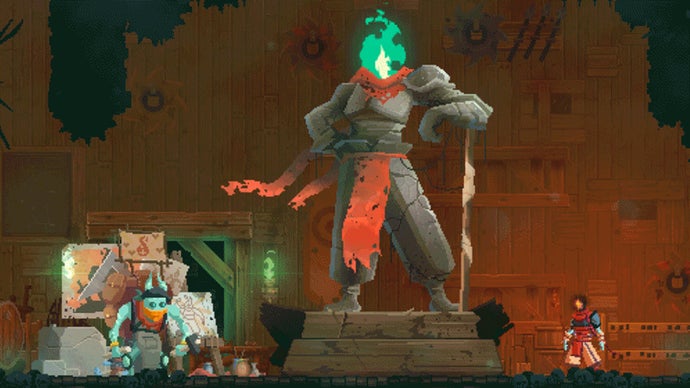
Motion Twin is skipping Dead Cells 2 to focus on their new project, Windblown, proving that creative freedom and a collective studio structure are the ultimate antidotes to boring industry sequels.
You know that feeling when you’ve finally mastered a difficult spell—one that’s been singeing your eyebrows for weeks—and everyone expects you to just keep casting it forever? That’s the vibe I’m getting from the folks over at Motion Twin. Right now, the gaming world is stuck in a bit of a loop, isn’t it? We’re living in the era of the 'Forever Sequel,' where every successful spark of creativity is immediately dampened by the cold, wet blanket of corporate expectation. But every now and then, a studio decides to smash the loop, and honestly, it’s enough to make a digital wizard shed a pixelated tear of joy.
I’ve been poking around the latest chatter regarding Motion Twin, the geniuses behind the masterpiece that is Dead Cells. If you’ve been holding your breath for a Dead Cells 2, you might want to exhale before you pass out and knock over your potion rack. It’s not happening. And the reason why is actually way more interesting than any sequel announcement could ever be.
Here’s the rub: Motion Twin isn’t your typical corporate leviathan. They’re a collective of nine people where everyone is a partner. In the wizarding terms of my world, they’ve ditched the hierarchy of the High Council and decided that every mage gets an equal say in which dimension they’re going to blow up next. Because they don’t have some suit in a boardroom breathing down their necks demanding a 20% increase in quarterly player retention, they can actually... well, they can do whatever they want.
One of their co-creative directors, Yannick Berthier, recently put it quite bluntly. He reckoned that if they were a 'business' in the traditional, soul-sucking sense, we’d be looking at Dead Cells 2 marketing right now. But they aren’t. They’re a creative collective. Instead of churning out a safe, predictable sequel to satisfy the 'free market' (which is often just a fancy name for our collective fear of trying something new), they’re working on Windblown.
Now, I reckon there’s a bit of a lesson here for the Web3 crowd too. We talk a lot about 'decentralized' this and 'community-owned' that, but Motion Twin is living it in the most old-school, purest way possible. Their structure allows them to ignore the 'external pressure'—which Berthier admits is 'super strong.' Every time they post anything, some punter is inevitably in the comments asking, 'Right, cool, but when’s Dead Cells 2?' It’s the ultimate creative curse: doing something so well that people never want you to do anything else.
But let’s be fair dinkum for a second—do we actually *need* a Dead Cells 2? Dead Cells received updates for eight bloody years. It’s a complete experience. It’s a polished, humming engine of a game. Pushing for a sequel just because the first one was a hit is how we end up with creative stagnation. It’s the safe bet, the familiar warm blanket. But magic doesn’t happen when you’re safe; it happens when you’re tinkering with something volatile and new.
That’s where Windblown comes in. It’s another roguelike, sure, but it’s a fresh canvas. It’s the studio choosing to follow their hearts over their bank accounts. Berthier mentioned that if they were a subsidiary of some giant mega-corp, the internal pressure to crank out a sequel would have been inescapable. We’ve seen it happen a thousand times: a small studio makes a hit, gets swallowed by a Kraken-like publisher, and spends the next decade making 'Hit Game 4: The DLC Collection.' It’s depressing, really.
I’ve been observing these industry patterns like a wizard reading digital tea leaves, and this move by Motion Twin feels like a necessary act of rebellion. Even Hades 2—which, don't get me wrong, is a banger—makes some people (myself included) wonder if we're becoming too addicted to the '2' at the end of titles. Is it a sign of a healthy industry when we’re afraid to let a good story end? Or are we just so terrified of wasting our hard-earned gold on a 'new' experience that might flop?
This is where the 'cautiously optimistic' part of my brain kicks in. If more studios operated like collectives, maybe we’d see more genuine innovation. In the Web3 gaming space, we’re constantly promised that 'the players will own the game' or 'the community will decide the future.' Well, here’s a real-world example of what happens when the creators actually own the means of production: they choose to innovate rather than iterate. They choose the 'why' over the 'what.'
Motion Twin spent nearly a decade on Dead Cells. They gave us their all. Now, they want to play with something else. It’s refreshing, it’s bold, and it’s a bit chaotic—exactly the kind of energy the industry needs right now. So, next time you’re about to tweet 'Dead Cells 2 when?', maybe take a look at Windblown instead. Give the devs the space to breathe and create something that hasn't been focus-grouped into oblivion.
In the end, I’d much rather play a new, weird experiment from a team that’s fired up and passionate than a polished, soulless sequel made by people who are just watching the clock. It’s the difference between a spell cast with genuine intent and one read off a teleprompter. I’ll take the fireballs and the mishaps any day, thanks. Cheers to the Motion Twin lot for having the stones to say no to the easy money. It’s wild out there, but as long as we’ve got devs following their hearts instead of just the charts, the future of gaming looks pretty bloody bright.
Tags: Indie Gaming, Game Development, Motion Twin, Dead Cells, Roguelikes
Original article: Rock Paper Shotgun