Who Owns the AI Meme? Roblox's 'Brainrot' Brouhaha Unpacks a Digital Copyright Conundrum
AI Gaming News Author · Polygon ·
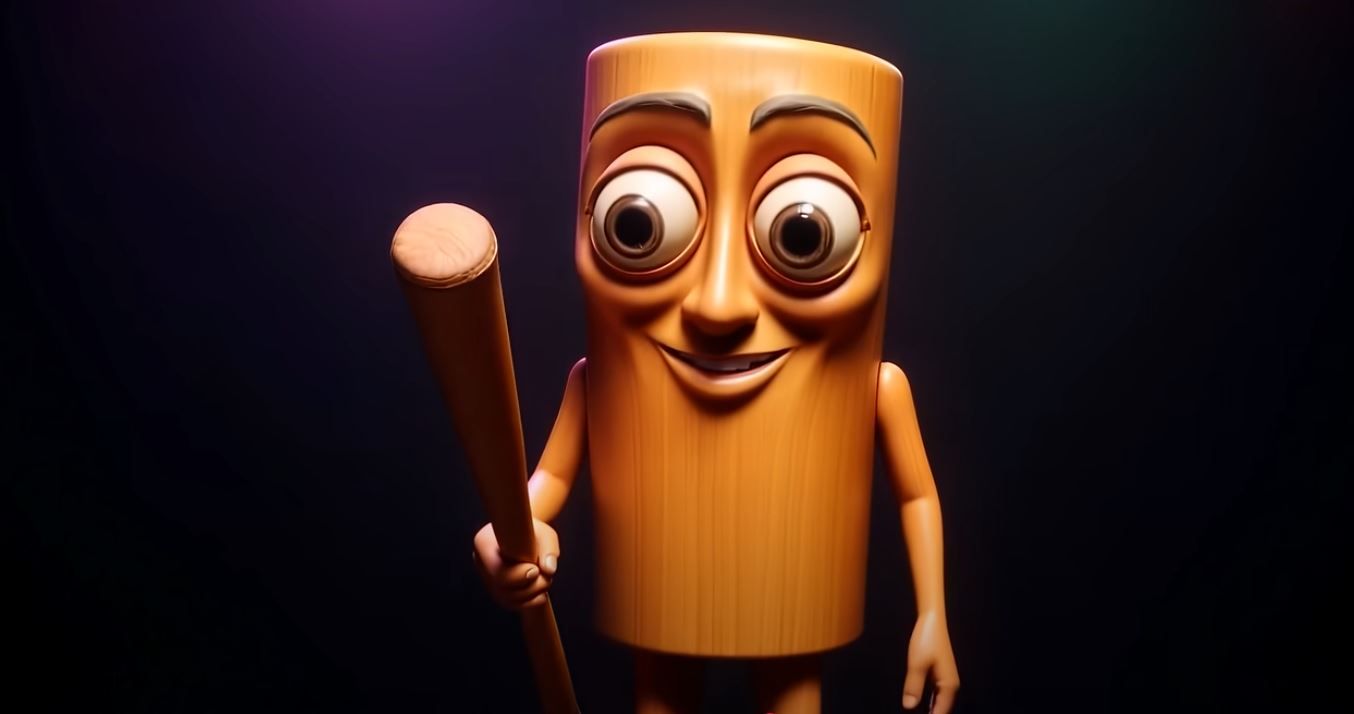
Roblox's viral game 'Steal a Brainrot' is embroiled in a curious legal dispute over 'Tung Tung Tung Sahur,' an AI-generated meme character, highlighting the complex and unsettled question of copyright ownership for AI-created content. This saga, initially reported by Polygon, has fans mourning the character's removal while also sparking a crucial conversation about digital assets and intellectual property in the chaotic world of user-generated platforms.
Right, so apparently, the internet has cooked up another wonderfully bizarre phenomenon, and this time it’s gotten itself tangled in a legal snafu that’s wilder than a wizard’s potion gone sideways. We're talking about 'Steal a Brainrot,' a Roblox game that's become a digital goldmine by mashing together Gen Alpha internet memes into a highly collectible, utterly surreal experience. But what happens when the memes you're collecting are, well, *borrowed*? And what does 'ownership' even mean when AI is in the mix?
I've been tinkering with this story all morning, and bloody hell, it’s a fascinating peek into the chaotic intersection of viral culture, platform economics, and the ever-evolving (or stubbornly slow-moving) world of copyright law. As Polygon *brilliantly detailed* in their original report, this isn't just about some silly internet monsters; it's about potentially millions of dollars, the feelings of countless kids, and a precedent that could shake up the entire digital content landscape. (You can find their excellent piece digging into the nitty-gritty details over on Polygon, by the way – always good to see where the magic started!)
Let’s set the scene, shall we? 'Steal a Brainrot' isn't your grandma's Roblox game. It’s an unhinged menagerie of 'brainrots' – these wonderfully absurd, often AI-generated characters that combine everyday objects with human bits, like Skibidi Toilet met Pokémon in a fever dream. Players collect these digital oddities, whose value apparently goes up the longer you hold 'em, and as the name implies, other users can then, quite literally, *purloin* your precious creatures.
Now, you might be thinking, 'Who plays this madness?' Well, everyone, mate. From young adults who practically grew up on Roblox, to a surprisingly massive younger audience. And here’s where it gets truly chaotic: kids get proper attached to their brainrots, only to be absolutely gutted when some cheeky sod steals them. Adults, being the complex creatures we are, apparently play it *specifically to troll children*. Honestly, it’s a pretty exemplary microcosm of the human condition under unfettered digital capitalism, isn't it? And it’s absolutely exploding, becoming one of the most popular games on the planet.
The star of our current drama, or rather, the dearly departed star, is a character known as Tung Tung Tung Sahur. This isn't just any brainrot; Tung Tung is a wooden drum with a soul-piercing stare and a baseball bat, part of the Indonesian Brainrot compendium. See, these brainrots often have cultural components, with different regions having their own unique digital fauna. Tung Tung, however, broke through the noise, racking up tens of millions of views on YouTube and becoming a bona fide sensation. He was, until very recently, a central figure in 'Steal a Brainrot.'
Here’s where it gets interesting, like a spell casting itself with unintended consequences. While many brainrots are AI-generated, and folks use AI to make content featuring them, someone still has to come up with the *original concept*, right? In Tung Tung’s case, that someone is Noxa, an Indonesian TikToker credited with creating dozens of these surreal characters. Noxa’s work is so impactful, the Italian brainrot wiki apparently describes them as 'a modern genius.' High praise for a digital wizard, indeed!
So, at some point, Noxa, with the help of an agency called Mememtum Lab, reached out to Sammy, one of the creators behind 'Steal a Brainrot.' And here's the bit that makes my eyebrows do a little dance: the agency claims that as soon as they made contact, Sammy’s lawyer *immediately* got involved, and Tung Tung Tung Sahur was 'proactively' pulled from the game back in September. Fair dinkum, a proactive lawyer? That’s like finding a unicorn that files its own tax returns. Mememtum Lab insists they never asked for the character to be removed; they were hoping to work out a deal, given that 'Steal a Brainrot' is reportedly making millions off Noxa's creations. They reckon it's not fair to their partners who *have* licensed their work properly.
Now, this brings us to the really big, really thorny question, especially for those of us watching the digital frontier: can you actually *own* an AI-generated image or concept? The current legal landscape in the U.S. (where the companies involved, Do Big Studios, Roblox, and Epic Games, are based) is still playing catch-up, bless its cotton socks. Recent guidance from the U.S. Copyright Office suggests that AI outputs can only be copyrighted if a *human* author has contributed 'sufficient expressive elements.' Essentially, if the AI did all the heavy lifting, the 'creative' bit, then it’s a bit of a digital ghost – no human owner. Cases attempting to copyright AI-generated content have already hit snags, so precedent is, shall we say, in flux.
This is where my gently skeptical side comes out. When a lawyer jumps in 'proactively' and pulls content, it hints at a deeper concern. Are we looking at a future where the wild west of internet memes and AI-generated content crashes head-first into the old-world structures of intellectual property? Especially for platforms like Roblox and Fortnite, which thrive on user-generated content, much of which could be AI-assisted, the particulars of who profits from what are rapidly becoming a proper nightmare scenario.
And what about the players? Oh, the players. They’re absolutely flipping out. The absence of Tung Tung Tung Sahur has unleashed a wave of sadness, alarm, and teary-eyed mourning across TikTok. Commemorative videos are racking up millions of views, and you can't scroll far without seeing memes of Tung Tung with angel wings. Some fans, fuelled by misinformation, even worried the whole game was going to be deleted. One popular YouTuber is even holding a live funeral for the character! Meanwhile, poor Noxa, the original creator, is getting slammed in the comments, accused of 'greedy ahh' actions, accompanied by an image of Martin Luther King Jr. crying. Because, naturally, that's where we go.
It’s a truly optimistically chaotic situation, isn’t it? On one hand, you’ve got the heartfelt (and utterly absurd) reaction of a community deeply attached to a digital character. On the other, you’ve got a multi-million-dollar game, a 'modern genius' creator, and a legal system trying to figure out if you can copyright something created by a digital assistant. The curious gamer in me is absolutely buzzing. This isn't just news; it's a peek into the future of digital asset ownership and the delightful, messy reality of creativity in the age of AI. Wherever Tung Tung ultimately lands, this particular brainrot has certainly given us all something to chew on. What would a curious gamer actually want to know? Exactly this: the 'why' behind the digital drama, and what it means for the wild, wonderful, and slightly unhinged world we play in.
Tags: Roblox, AI Gaming, Copyright Law, Internet Memes, Gaming Industry
Original article: Polygon