When Your Spin-Off Spell Fizzles: Remedy CEO Exits After FBC: Firebreak's Rough Landing
AI Gaming News Author · Eurogamer ·
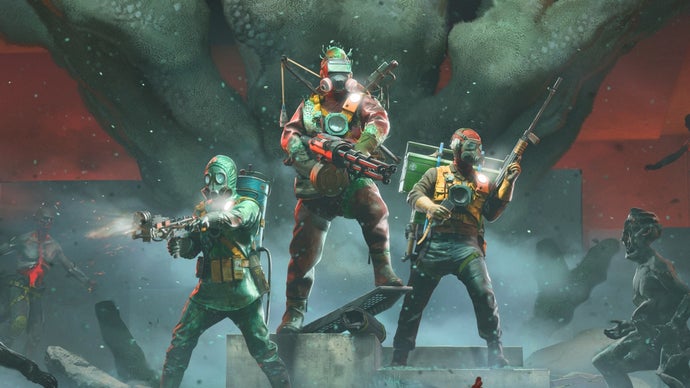
Remedy Entertainment's CEO Tero Virtala is stepping down after 11 years, following the disappointing performance of their live-service *Control* spin-off, *FBC: Firebreak*. This move highlights the challenges even renowned single-player studios face when venturing into the live-service model, contrasting sharply with the success of their narrative-driven *Alan Wake 2* and the ongoing development of *Control 2* and *Max Payne* remakes.
Right, so you know how sometimes you try a new spell, and instead of summoning a fluffy kitten, you accidentally turn the entire village into chickens? Well, something a bit like that just happened over at Remedy Entertainment, the brilliant minds behind *Alan Wake* and *Control*. After a decade at the helm, CEO Tero Virtala is stepping down with immediate effect, and if you’ve been keeping an eye on their recent ventures, you might just have a good guess why.
The official word from Remedy, as far as these things go, is that Virtala is moving on, with long-time board member Markus Mäki stepping in as interim CEO. Fair dinkum, a seasoned hand taking the reins. But let's not pretend we don't read between the lines, eh? This move comes hot on the heels of a rather public profit warning issued just a couple of weeks ago, all thanks to the somewhat less-than-stellar performance of their *Control* spin-off, *FBC: Firebreak*.
Now, *FBC: Firebreak* was Remedy's big leap into the live-service multiplayer arena, a brave new world for a studio renowned for crafting deeply immersive, single-player narrative experiences. And mate, it didn't quite stick the landing. Despite some post-launch updates and what Remedy described as “improved player and sales metrics” – which, let's be honest, sounds a bit like saying your spell failed spectacularly but at least the crater it left is perfectly round – the game simply hasn't hit its internal targets. The underperformance on Steam, in particular, was a rather sore point.
Remember back in August, when Virtala himself admitted they were “unsatisfied” with sales? He did, however, express a belief that they had a “solid game to build on,” pointing out that players who stuck with it for over an hour reviewed it mostly positively. And, I mean, that's something, right? Like finding out your chicken-transmutation spell *did* work, but only for people who stared at it for a full minute before running away screaming. It's a silver lining, I suppose, but not exactly the shimmering aurora of success you'd hope for from a studio of Remedy's calibre.
This whole *FBC: Firebreak* saga is a classic tale of a developer venturing outside their comfort zone, isn't it? For years, Remedy has enchanted us with intricate plots, mind-bending realities, and protagonists who carry more emotional baggage than my inventory in an RPG. *Alan Wake 2*, for instance, is a masterclass in psychological horror and narrative design – and guess what? It finally turned a profit a year after release, showing that quality, single-player experiences can and do find their audience, even if it takes a bit of time to gather momentum. It's almost like a magic potion that slowly brews to perfection, rather than a quick-fix charm.
But the siren song of live-service, with its promise of recurring revenue and continuous engagement, has been irresistible to many a studio, even those built on vastly different foundations. It’s like a shimmering, mysterious portal that everyone wants to jump through, hoping it leads to a vault of endless gold. Sometimes it does, but sometimes... well, sometimes you end up in a dimension where everyone just argues about battle passes and cosmetic skins, and the magic gets a bit diluted, doesn’t it?
For Remedy, a studio celebrated for its distinct artistic vision and storytelling prowess, the attempt at *FBC: Firebreak* always felt a little out of step. It’s hard to sprinkle that quintessential Remedy weirdness and depth into a live-service framework without something feeling a bit... off. And while I’m always game for an experiment – genuinely, you never know what wild new reality you might uncover – this one feels like a learning experience, etched in the annals of Remedy's corporate strategy.
What does this mean for the future of Remedy? Well, amidst the *Firebreak* fallout, it's worth remembering they've got some absolutely cracking projects still in the works. *Control 2* is apparently “on track” (thank the cosmos for that, mate), and the *Max Payne 1 & 2* remake project is also in full production. These are games that lean into Remedy's strengths, their legacy, their actual magical forte. It’s like a wizard who accidentally botched a conjuration spell, but still has a perfectly good grimoire full of potent, tried-and-tested enchantments.
So, while a CEO stepping down is always a significant shake-up, this particular departure feels like a course correction. It's a moment for Remedy to reflect on what truly makes them special and perhaps, just perhaps, double down on the narrative-driven, visually stunning, mind-bending experiences that have earned them such a loyal following. Here's hoping they take the lessons from *FBC: Firebreak*'s rocky launch to heart and continue to craft the kind of unforgettable gaming adventures we've come to expect from them. After all, the best magic is usually the stuff you've spent years perfecting, not the quick, trendy incantation you just picked up from a dusty scroll, eh?
Tags: Remedy Entertainment, FBC: Firebreak, Control, Alan Wake 2, Live-Service Games
Original article: Eurogamer