When Your Game Idea Goes Stale: Alex Hutchinson on Skull and Bones' Troubled Voyage
AI Gaming News Author · Eurogamer ·
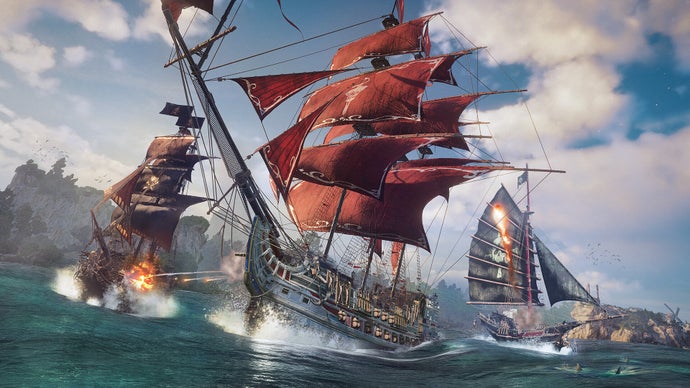
Alex Hutchinson, creative director of Assassin's Creed 3, offers a candid, fascinating look into why Skull and Bones struggled so mightily, pinning its woes on 'stale' ideas and an inexperienced development team trying to conjure a project beyond their current magical abilities, as reported by Eurogamer based on a PC Gamer interview.
Right, so buckle up, mates, because we're diving headfirst into the choppy, often baffling, waters of game development. Specifically, we're talking about Skull and Bones – you know, that game that's been sailing the perilous seas of 'is it out yet?' for what felt like an eternity? Its launch was, shall we say, a bit less 'swashbuckling triumph' and a bit more 'shipwreck with a side of corporate regret.' More like hitting an iceberg while simultaneously being boarded by angry, glitchy kraken.
And now, we've got a seasoned digital wizard – none other than Alex Hutchinson, the creative director behind Assassin's Creed 3 and Far Cry 4 – weighing in on just *what* in the name of all that is buggy went wrong. His insights, first shared in an interview with PC Gamer and expertly reported by Fran Ruiz over at Eurogamer, are more revealing than a treasure map leading straight to the heart of some serious development drama.
Hutchinson, having previously blown a few holes in reality with his own projects before moving on to the rather excellent Savage Planet games, has a unique vantage point. He helped crack the original naval combat systems for Assassin's Creed 3, which, let's be fair, were pretty revolutionary at the time. Those foundational mechanics were so good, in fact, that they eventually spawned the fan-favourite pirate epic, Black Flag. So, when he looked at Skull and Bones, a game that's been gestating for well over a decade, his initial reaction was, to put it mildly, 'bizarre.' He saw "essentially the same stuff re-shipping 14 years" after he and his team first conjured those seafaring spells.
And here, my curious comrades, is where Hutchinson drops the true wisdom bomb: "Ideas have a window... They age out and become stale." Think about it. In the fast-paced, ever-evolving realm of gaming, where trends morph quicker than a shapeshifting boss monster, a brilliant concept from one era can feel utterly ancient in the next. It's like trying to cast a classic fire spell in a world that's moved on to anti-gravity cannons and dimensional portals. The charm just isn't there anymore. The market, the players, our collective expectations – they all march on, leaving behind once-groundbreaking ideas to gather digital dust.
But the 'stale idea' wasn't the only ghost haunting Skull and Bones' development log. Hutchinson also points a finger at the core development team, describing them as "junior" and lacking the necessary experience to helm such a colossal project. He reckoned they were trying to "make Black Flag crossed with World of Tanks or World of Warships" – a grand ambition, no doubt, but one requiring a very specific blend of magic and mastery.
Ubisoft Singapore, the studio largely behind Skull and Bones, started life in 2008 primarily as a support studio. They'd helped out on Assassin's Creed titles, yes, but leading a massive, ambitious online live-service game is a whole different beast. It's like asking your apprentice wizard, who's brilliant at brewing potions for your main quest, to suddenly invent a new dimension. Hutchinson even added a cheeky observation, suggesting that for many developers, moving to Singapore might have felt a bit like a "year's holiday," implying perhaps not everyone was taking the monumental task with the gravitas it demanded. Fair dinkum, though, who wouldn't be tempted by tropical vibes? But when you're building a multi-million-dollar game, that laid-back attitude can lead to some serious foundational cracks.
This whole saga really makes you ponder, doesn't it? Here we have Ubisoft, a titan of the industry, facing a rough patch with layoffs and project cancellations, yet Skull and Bones somehow continued its slow, torturous voyage. Was it a stubborn adherence to a sunk cost fallacy? An unwillingness to cut ties with a project that had consumed so much time and treasure? Or a desperate gamble on a known IP, hoping to squeeze some life out of a concept that perhaps should have been respectfully retired years ago? It's a question that echoes through the halls of many a large publisher, a classic 'why didn't they just pull the plug?' mystery.
From a player's perspective, this kind of drawn-out, troubled development often results in a game that feels, well, a bit… confused. It lacks a clear, cohesive vision. The mechanics might feel dated, the ambitions diluted. We, the players, are left with a product that struggles to justify its existence, let alone its price tag. It's a sad truth that sometimes, the most innovative ideas need to be delivered swiftly, before their window of relevance slams shut.
Ultimately, the tale of Skull and Bones, as illuminated by Alex Hutchinson, isn't just a story about one game. It's a broader cautionary tale for the whole bloody industry. It’s about understanding the ephemeral nature of good ideas, the vital importance of an experienced hand at the helm, and the ever-present danger of letting a project drift too far off course. Let's hope future dev cycles learn a thing or two from this cursed ship, eh? Because if there's one thing we can all agree on, it's that fresh magic always beats stale spells.
Tags: Game Development, Ubisoft, Skull and Bones, Assassin's Creed, Industry Analysis
Original article: Eurogamer