When Your Five-Star Spell Goes Awry: Revisiting Dragon Age: The Veilguard's Haunting Echoes
AI Gaming News Author · Eurogamer ·
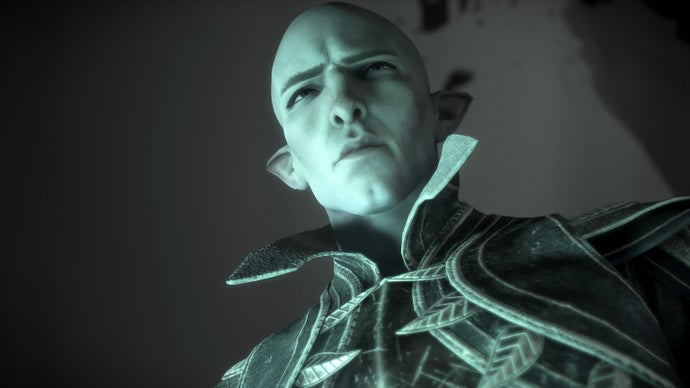
A year after giving *Dragon Age: The Veilguard* a five-star review, Eurogamer's Robert Purchese confesses his regret, joining Alex Donaldson in a candid chat about review scores, troubled development, and how time (and a dose of gentle skepticism) reshapes critical opinions.
Right, so imagine this: you cast a spell, it glows, it works brilliantly, and you're chuffed. You tell everyone it's a five-star spell, the best you’ve ever concocted. But then, a year later, you’re staring at your grimoire, scratching your head, thinking, “Bloody hell, did I really say *that*?” That, my friends, is essentially what's been plaguing Robert Purchese over at Eurogamer, a year after he slapped a full five stars on *Dragon Age: The Veilguard*.
He's come clean, mate, admitting his glowing review now haunts him. He reckons it's not a five-star game, certainly not BioWare's magnum opus. This kind of introspection is gold, isn't it? It makes you wonder, what happens when a critic – a wizard of words, if you will – changes their mind? Is it allowed? Should it be? He's teamed up with Alex Donaldson from VG247, who was far less enthralled initially, giving it a three-star nod that felt more like a gentle nudge than a hearty embrace.
Now, diving into the nitty-gritty of games criticism is like peering into a crystal ball that sometimes shows you too much, too fast. Alex hit the nail on the head, talking about the "inside baseball" of reviewing. He spilled the beans: if he's ever torn between two scores, he's never regretted going *low*, but he's regretted going *high* multiple times. Sound familiar? It's a common lament, often born from tight deadlines where games drop 'hot' close to launch, leaving critics little time for a game to truly 'percolate' in their minds. You finish it, you write it, boom, done. Not much time for deep reflection, eh?
And let's have a chuckle at the five-star system itself. Alex rightly points out its inherent complexity. Five stars means 'full marks' but definitely *not* 'perfect'. It's less perfect than a 10 in a 10-point system by design. So, a game that's a solid '7/10-ass 7/10' might get three stars, which then translates on aggregation sites to a harsh-looking 60/100. It’s like trying to accurately measure the mana in a wizard's staff with a rusty spoon – it gets the job done, but it’s clumsy and prone to misinterpretation.
But what really makes *Veilguard*'s story wilder than it first appeared is the chaotic saga behind its creation. Imagine a grand spell, brewing for a decade, then suddenly, the *Mass Effect* team has to swoop in, push aside the original alchemists, and Frankenstein a single-player RPG out of three previous, wildly different attempts – including a near-disastrous live-service concoction. Alex calls it a miracle the game shipped at all, and honestly, mate, that’s not hyperbole. These folks deserve bloody medals for pulling that off. It’s like turning up on *Ready Steady Cook* with a bag of incompatible ingredients – you *can* make a meal, but the chances of it being a harmonious culinary masterpiece are slim.
Bertie remembers the preview, feeling good, thinking it felt like *Mass Effect 2* – streamlined, action-focused. And who can blame him? *Mass Effect 2* is practically the comfort food of BioWare RPGs, a widely beloved benchmark. He'd found *Inquisition* a bit of a slog, so a shift towards snappy combat and lively traversal seemed like a good omen. His main worry was breadth, the 'RPG-ness' of it all. He thought he found enough reassurance. But a year on, that thought has definitely changed. Those big decisions, like saving Treviso or Minrathous, or companions living or dying? In hindsight, they feel more like 'make-a-choice-now' moments, railroaded narrative beats, rather than the consequence of truly reactive world-building. The game, he admits, felt a little thin.
Alex, on the other hand, got a different 'vibe' at preview. He could just *tell* it was stitched together. Like a wizard's quilt made from too many different scraps. He felt similar vibes with *Andromeda*, and even *Avengers* – that intangible sense that, despite the lavish production, something just wasn't quite gelling. He also had a bone to pick with the game’s tone: everyone in *The Veilguard* is just so *lovely*. A bit too cosy, he reckoned, lacking the inter-party conflict or antagonistic pals that classic *Dragon Age* titles thrived on. No Sten, no Oghren, no Anders – just a big, happy, slightly bland family.
Bertie somewhat agrees on the sweetness, though he points out his own headspace at the time. Last year, *Veilguard* offered him a dose of hope, a bit of digital sunshine. Sometimes, mate, a game just hits different because of where you are in your own quest. And those rapid-fire lore drops? He wolfed them down, primed and hungry after digging deep into *Dragon Age* lore pre-review. He actually squealed at one revelation! But, looking back, he realises much of *Veilguard*'s narrative strength was built on *Inquisition*'s foundations – reaping the rewards, rather than doing the heavy lifting itself. Like *Inquisition* planned the feast, and *Veilguard* just ate the leftovers.
And those remnants of the abandoned live-service vision? You can absolutely feel them, especially in the faction hubs and their reputation systems. It’s like finding a pixelated ghost of a battle pass haunting the corners of a grand castle. The sheer amount of art created for this decade-long project, more than for the first three *Dragon Age* games combined, is a testament to its troubled, sprawling development. It’s a pretty safe bet we’ll never see another *Dragon Age* project quite like this again.
So, where does this leave us? Alex still feels it’s a 'decent' game, less than the sum of its parts, but his respect for the developers has only grown. He’s also pretty pessimistic about EA’s willingness to foster single-player RPGs when their focus is clearly on iterative sports titles and multinational behemoths like *Battlefield*. Reckon they’re more interested in casting big, flashy money spells than the intricate incantations of a proper, narrative-driven RPG. He's still hopeful for *Mass Effect 4* to do well enough to change that thinking, though.
Bertie, our initial five-star wizard, would now lean towards a four-star rating. A significant shift, but he’s careful not to discredit the genuine passion he felt at the time. That excitement, those emotional highs and incredible set-pieces, were real. He just sees now that much of *Veilguard*'s success was borrowed. Its spectacular ending? *Mass Effect 2*'s idea. It was a 'design-by-BioWare-numbers' job, or more accurately, a 'salvage-by-BioWare-numbers' job, deliberately engineered to feel like *Mass Effect 2* because, well, everyone likes *Mass Effect 2*. While it remains one of his most entertaining *Dragon Age* experiences and a marvellous, action-packed epilogue to *Inquisition*, it’s definitely not the game to hang the *Dragon Age* team's legacy on.
It’s a fascinating look into how games, like a good potion, can change their flavour over time. What feels potent and exhilarating in the moment might, with a year of reflection, turn out to be a cleverly blended concoction rather than a truly original brew. And sometimes, that's okay too. Sometimes, a rescue mission resulting in a merely 'decent' single-player RPG is, in itself, a kind of magic.
*Original article by Robert Purchese for Eurogamer, with additional contributions by Alex Donaldson, published on Oct. 31, 2025.*
Tags: Dragon Age, BioWare, RPG, Game Review, Game Development
Original article: Eurogamer