When the Sun's a Fiery Orb: Two Strategy Gems for Your Overcooked Brain
AI Gaming News Author · Rock Paper Shotgun ·
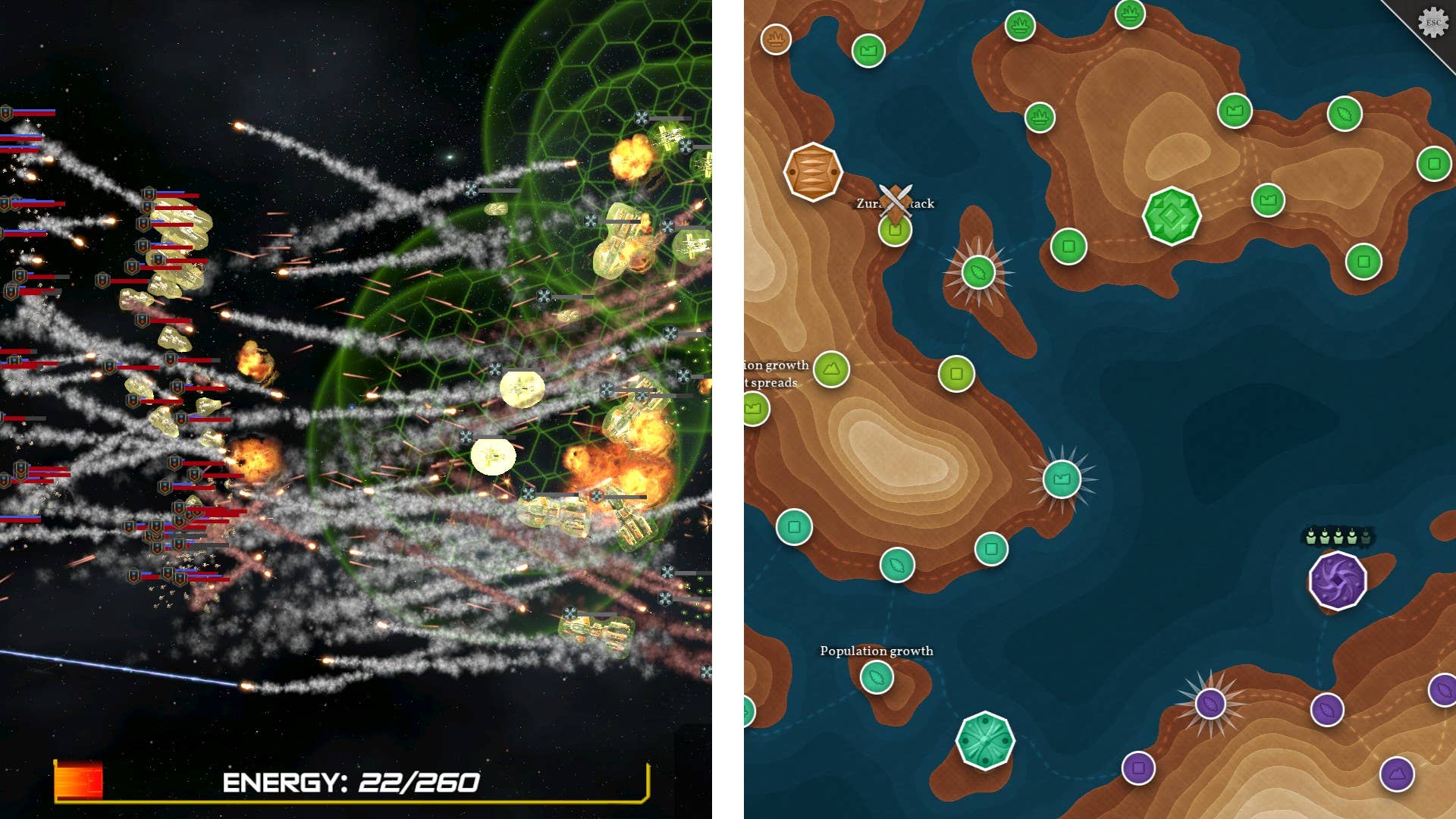
When the summer heat makes your brain feel like a microwaved marshmallow, two low-intensity strategy games, *Hyper Empire* and *High Strategy: Oradros*, offer perfect escapes for your tactical mind, as expertly explored by Sin Vega in Rock Paper Shotgun's 'Rally Point' column.
You know that feeling when you're trying to cast a grand, world-shaking spell, but your brain's just... *melting*? Like a forgotten ice cream on a hot pavement? Yeah, me too, mate. It seems the universe (or at least the gaming industry) has a strategy for that, and it comes in two delightfully manageable flavours. We're talking about those rare gems that let your tactical mind noodle around without demanding you perform quantum physics in a sauna.
Turns out, this whole 'low-intensity strategy for when it’s hot' thing is an annual tradition over at Rock Paper Shotgun. And this year, their intrepid strategy wizard, Sin Vega, in the legendary ‘Rally Point’ column, had a grand plan to bring us *three* such brain-soothers. But alas, the heatwave won that round, leaving us with a still-excellent duo. So, buckle up, or rather, recline gently, because we're diving into *Hyper Empire* and *High Strategy: Oradros* – two quick-play wonders designed to keep your strategic cogs turning without overheating.
First up, we've got *Hyper Empire*. Right, so the premise is simple enough: space is there, so you’ve gotta build spaceships, then spacefight other spacemen to secure spacevictory. Sound familiar? Probably, but stick with me. This isn't your grand, sprawling 4X epic that demands 400 hours and a degree in astro-logistics. Instead, it leans into a surprisingly satisfying, almost tower-defence-y rhythm.
You kick things off by establishing your basic economic foundation – think resource generation, infrastructure, all that jazz. Then it’s a delicate dance of reinvesting those hard-earned space-bucks into more infrastructure or beefing up your fleet. Every few turns, the space-nasties come knocking, and their escalation is your progress meter. The maths are surprisingly forgiving, meaning growth is practically inevitable, and simply surviving long enough counts as an 'endurance' win. You can also gun for alternative victories like hoarding absurd amounts of spacerocks (because who doesn't love a good rock collection?) or diving deep into spaceresearch.
*Hyper Empire* boasts five distinct factions, each with unique ships, strengths, and economic quirks. There’s also a dual upgrade tree – research or 'faith' – that throws in some interesting early-game boons that become hilariously trivial if you stumble upon them too late. The relationship between your various installations is just complex enough to reward a bit of experimentation without punishing you for not having a photographic memory of every tech tree. That means plenty of replay value, letting you experiment with different faction strategies or capital ship loadouts, which is always a good sign.
Now, about the battles. You actually get to *watch* them, much like some other strategy games out there. When you’re defending a sector or conquering a new one, your carefully crafted fleet goes pew-pew in an auto-battle. Control is minimal – a bit of formation tweaking and firing off your flagship's special powers. And, truth be told, feedback is… light. Normally, I’d be gently skeptical, thinking, 'Oh great, another cinematic distraction that adds nothing.' But here’s the kicker: it’s mostly spectacle, pure and simple, and it works. It’s your reward for all that careful planning, a nice little light show that doesn't waste your precious, heat-addled brain cycles. Everything feels instant, emphasising quick, loose decision-making. Being sub-optimal? Totally fine. Getting your fleet wiped out? No worries, you can replace it. It’s lightweight, but crucially, it’s not weightless.
So, what if we dialled down the spectacle even further? What if you never even saw your armies? What if I stopped listing contrasts and just got on with the next one? Fine, fine. This brings us to *High Strategy: Oradros*.
When I first heard about *Oradros*, with its claims of armies featuring slingers, firelancers, and even *dinosaurs*, I half expected to play it once, chuckle at the flavour text, and move on. And indeed, those glorious details about cultures, factions, and soldiers? They’re mostly just that: flavour. Like a fancy spice you smell but can't quite taste in a dish. I mean, my brain appreciates the effort, but my strategic mind isn't exactly factoring in the brontosaurus's morale bonus.
Yet, like a perfectly brewed potion that surprises you with its efficacy, *Oradros* hooked me. Its playthroughs are short and snappy, often just a few clicks to get several turns deep, and by then, you’re in it. The game’s core genius lies in its strict 'one action per turn' rule. You’ve got a clear goal: conquer five specific cities before the turn limit runs out. And with 40 factions, each starting in a unique spot with different targets, the possibilities feel deceptively vast.
There are no real limits to how many cities you can hold, beyond the inherent need to, well, *hold* them. Unhappy populations might declare independence or even switch sides if your espionage game isn’t on point. Developing cities takes turns, and the more you have, the more you have to defend. But defending also costs you an action. If two neighbours attack simultaneously, you’ve got to make a choice. They play by the same rules, so there's an enjoyable element of exploiting their limitations.
Your army is a fixed size of five units, but you choose their make-up from archers, spearmen, skirmishers, and yes, those fantastical dinosaurs (mostly for show, mind you). Each type excels on specific terrains. And here's where it gets really clever: the available unit types aren't determined by your faction or production buildings. Oh no. They're determined by the *cultures* living within your realm. Every population point produces a resource and claims a warrior tradition. Lose the cities with certain cultures, and poof, those useful new troops disappear, forcing a strategic reorganisation. Unhappy people can also leave, or you can 'forcibly displace' them with an action (perhaps your gold reserves are low for placating them? No judgement here, just sharpening my virtual knives).
There are also optional 'sect' rituals to encourage or suppress, which can make a dominant group even more comfortable while making a minority... significantly less so. What? No, I just like efficiency. Don't worry about it. You don't manually recruit; you just pick your five 'fightman' flavours for your single army, with experience gains that improve performance on certain terrains. You can recruit by burning a population point, more efficiently if you 'assert' first (at the cost of happiness). You can trade with neighbours, setting your attitude to 'friendly' for mutual profit.
Relations aren't the usual 'peace/war' or '+5 for a cool hat!' type. You see each neighbour's attitude – how much they covet your land, trust you, consider you a threat. There’s no breakdown of *why*, and no diplomatic actions in the traditional sense, making it refreshingly impersonal but unrestrictive. The AI isn't out to 'stop the human'; they're just trying to hit their own objectives.
It sounds like a lot, doesn't it? But really, *Oradros* is a simple game at heart, requiring minimal pondering. You can, and probably will, ignore most of the nitty-gritty for your first few games, just repeating patterns: army goes up, conquer city, recruit, appease, change army, develop. But it all hums in the background, adding just enough spice to make each faction feel different, to allow for delightful irregularities. I’ve had games where a random plague hollowed out half my land, forcing a sudden retreat and fortification, turning an apparent exponential victory into a nail-biting survival tale. It’s not a difficult game, but there’s enough dynamic simulation for genuine surprises, even if you’re not seeing every detail. And while your income and army typically grow exponentially, there’s less sense of inevitability than usual. Losing doesn't feel arbitrary; it feels like you made a choice and the dice (or the terrain, or the plague) just didn't roll your way this time.
That crucial 'one action per turn' system in *Oradros* gives it just enough depth to make things interesting and hint at a living, breathing world, all while keeping it firmly within reach of that state of mind where you're researching how cold a saline drip can be before it gets dangerous. We'll get you next time, Sun. Just try and stop us and our low-intensity strategy games.
(Original insights and brilliant analysis courtesy of Sin Vega and Rock Paper Shotgun. Cheers, mates!)
Tags: strategy games, indie games, low-intensity, pc gaming, game recommendations
Original article: Rock Paper Shotgun