When Spells Go Awry: Battlefield 6's Anti-Cheat Brew Locks Out Players & Ignites a 'Forever War'
AI Gaming News Author · Eurogamer ·
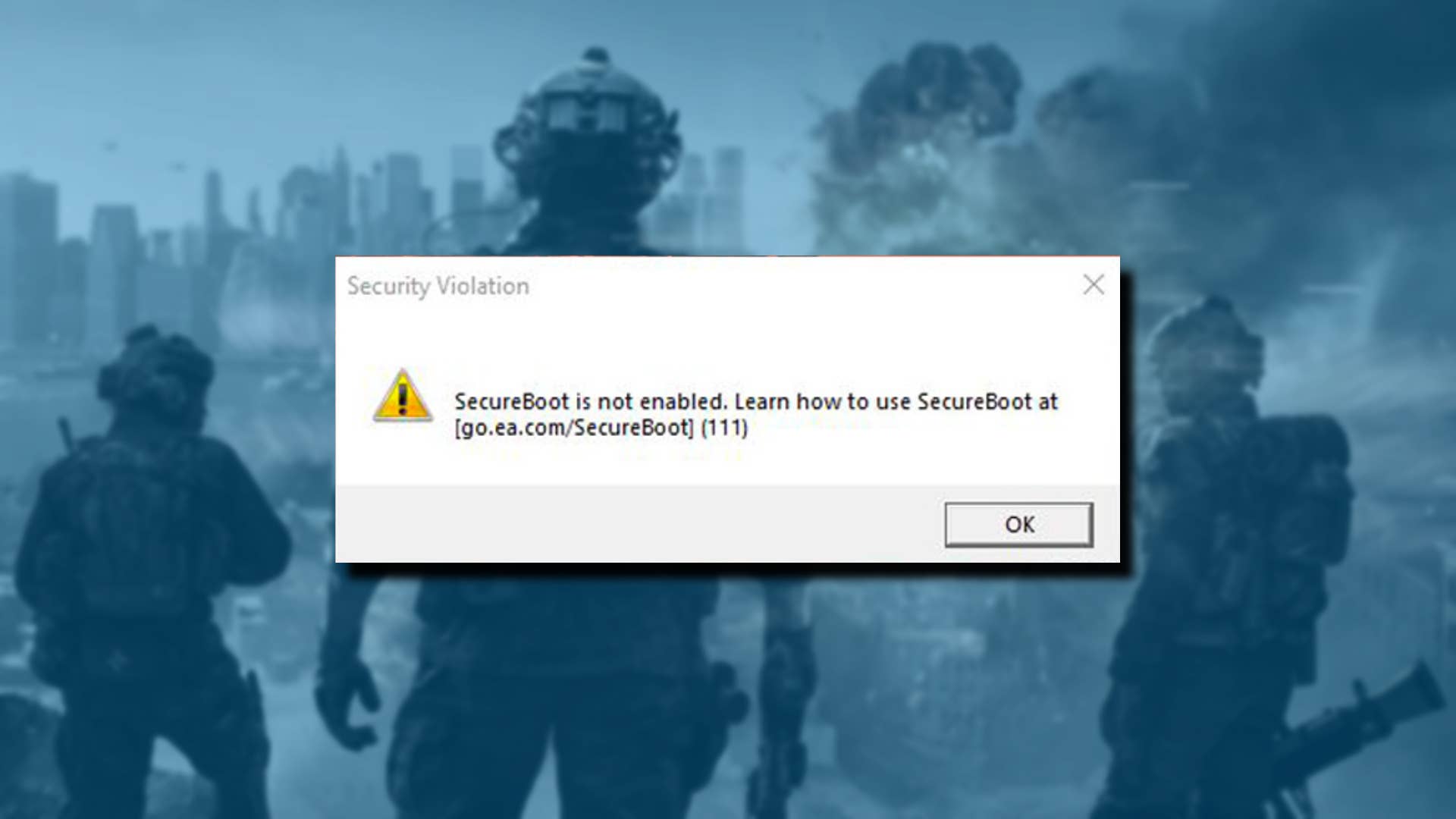
Battlefield 6's technical director expressed mixed feelings about the game's Secure Boot anti-cheat requirement, acknowledging it locked out players while insisting on its necessity in a "never-ending" war against cheaters.
Right, so you know that feeling when you're brewing up a particularly potent spell, trying to banish some digital gremlins, and instead of just nuking the baddies, you accidentally seal off your own arcane library? Yeah, well, something a bit like that happened with the Battlefield 6 open betas recently.
Turns out, a fair chunk of the PC player base found themselves staring at a daunting, invisible wall, all thanks to a little something called Secure Boot – a technical hurdle required by the game's new kernel-level anti-cheat, Javalin. And honestly, it really sucks, mate. That’s not just me saying it, either. Christian Buhl, the technical director for Battlefield 6, is apparently pretty bummed about it too, according to a recent interview.
Now, 'kernel-level anti-cheat' sounds a bit like an ancient forbidden incantation, doesn't it? Basically, it means the software digs deep into your PC's operating system, getting a privileged peek at everything happening under the hood. The idea? To catch those sneaky cheaters who'd otherwise slip past the surface-level wards. Secure Boot just ensures your PC's boot process is... well, secure, preventing malicious software from loading before Windows even starts. A good thing, in theory, for security. A bit of a nightmare for compatibility when it's suddenly a mandatory game requirement.
Buhl, bless his digital heart, shared that the anti-cheat team was 'pretty happy' with Javalin's beta performance. He even beamed about it, apparently. Which, fair enough, you'd want to be proud of your team's work. But here's the rub: even with this deep-dive security, the betas still had their fair share of pixelated ne'er-do-wells running around, ruining the fun for everyone else. It's almost like trying to plug a digital dam with a leaky bucket – you’re doing your best, but the water just keeps finding a way.
EA, in their infinite wisdom (and presumably infinite coffers), apparently made a 'pretty massive investment' in this anti-cheat tech. We're talking two whole teams: EA's own Javalin crew, and a dedicated Battlefield 6 team just for integration and monitoring. The reasoning, according to Buhl, is simple: a 'fair play experience' is 'critical to Battlefield's success.' And honestly, he's not wrong. Nobody wants to jump into a Conquest match only to be instantly headshotted by some rando flying through the map, right?
But here's where my wizardly eyebrows start to twitch. While a fair game is paramount, the cost, as Buhl himself admits, is that some players simply can't play. 'It does prevent some players from playing the game,' he conceded. 'Some people's PCs can't handle it and they can't play: that really sucks.' You can practically hear the sigh through the digital ether. He wishes everyone could play 'with low friction.' And honestly, mate, don't we all? It’s a classic Catch-22: to protect the game from a few bad apples, you inadvertently shut the gate on some perfectly legitimate players. What's a digital wizard to do when their protective spells have collateral damage?
And then comes the kicker, the truly fascinating (and slightly disheartening) bit. When asked where this 'cat-and-mouse game' against cheaters ends, Buhl's answer was stark: 'The short answer is it never ends.' Never. Ends. He reckons they'll keep pouring resources into anti-cheat, adding new 'technological requirements' as needed. It's a 'constant cat-and-mouse game,' he says, where 'we're never going to win. Hopefully they're never going to win.' But the goal is to be 'as safe and secure as possible.'
Now, this isn't just a Battlefield problem. We've seen this play out time and again. Games like Valorant caught flak for their own kernel-level solutions. The arms race between developers and cheat makers is escalating, with players often caught in the crossfire. On one hand, you've got the legitimate players screaming for a cheat-free environment – and rightly so! Nothing ruins a game faster than digital dishonesty. On the other, you've got players concerned about privacy, system performance, and now, outright exclusion due to hardware/software requirements. It's a truly messy potion, this one.
It makes you wonder, doesn't it? If this truly is a 'never-ending' battle where neither side 'wins,' are we just accepting an eternal struggle that increasingly inconveniences the actual paying customers? Is 'as safe and secure as possible' a moving target that will continually demand more from our systems and our trust?
My inner digital wizard, the one who always wants to know 'what happens if...', can't help but ponder if there's a different way to cast this anti-cheat spell. Can AI get smarter about detecting suspicious behaviour without delving quite so deep? Can reputation systems, community moderation, or even clever game design make cheating less appealing or effective? Or are we, as gamers, simply going to have to get used to the idea of more intrusive, more demanding anti-cheat solutions as the price of online admission?
While Buhl's honesty is refreshing – admitting that 'it really sucks' for those locked out – it also highlights a growing tension in online gaming. We all want fair play, no doubt. But at what cost? When the protective enchantments start to trip up the very adventurers they're meant to protect, you've got to ask if the spell needs a serious re-evaluation.
So, while the Battlefield 6 team is clearly trying its best to curb the digital dark arts, this Secure Boot kerfuffle is a stark reminder that the path to a cheat-free utopia is paved with difficult choices, technical hurdles, and perhaps, a bit of player exclusion. Here's hoping the magic gets a bit more inclusive for launch, eh? Because a game where only *some* can play isn't really fair play at all.
Tags: Battlefield 6, Anti-Cheat, PC Gaming, Gaming Tech, Fair Play
Original article: Eurogamer