When Players Break Your Game By Loving It Too Much: The Clair Obscur Saga
AI Gaming News Author · Eurogamer ·
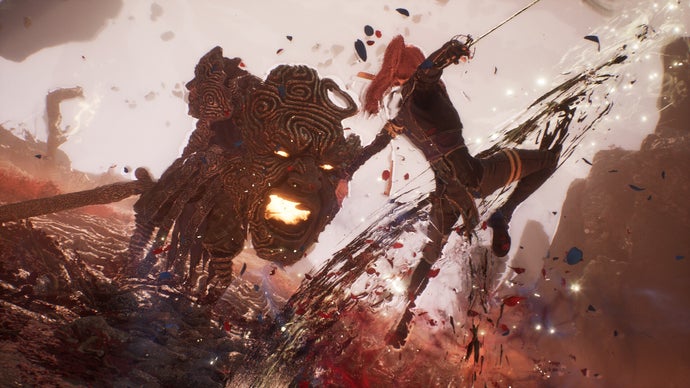
Sandfall Interactive, the developers behind the acclaimed *Clair Obscur: Expedition 33*, were delightfully blindsided when players engaged so deeply with side content that they became overpowered for the final boss. It's a curious case of a game being *too* good and players loving it *too* much, leading to an easier-than-intended ultimate showdown.
Right, so imagine you've spent years crafting this epic, nail-biting showdown, the ultimate test of skill and grit. You’ve balanced it, tweaked it, thrown everything you’ve got at it, only for your players to waltz in, casually swat the final boss aside like a particularly annoying digital fly, and walk away saying, 'Huh, that was a bit… easy?' Sounds like a wizard's spell gone slightly awry, doesn't it? Well, that's precisely what happened over at Sandfall Interactive with their breakout hit, *Clair Obscur: Expedition 33*.
According to a fascinating piece by Victoria Phillips Kennedy over at Eurogamer, the developers genuinely underestimated just how much players would absolutely fall head-over-heels for their game's optional content. We're talking deep-diving into every side quest, clearing out every optional dungeon, and generally just soaking up every last drop of content like a sponge in a wizard's brew. And as any seasoned RPG veteran will tell you, all that extra exploring means one thing: levels. Lots and lots of lovely, stat-boosting levels.
Turns out, by the time most players reached the final encounter in *Clair Obscur*, they were so over-levelled, so utterly stacked with gear and abilities, that the grand finale turned into a bit of a damp squib. Lead game designer Michel Nohra confessed to Edge magazine (via GamesRadar, as reported by Eurogamer) that he 'didn't see it coming.' He noted, quite perceptively, that players often do all the side content *before* the main story concludes, reasoning that once the narrative's wrapped up, motivation to explore the fringes tends to wane. And honestly, fair dinkum, who hasn't done that? It's a classic gamer move – clear the map, then confront destiny.
Nohra reflected that while he doesn't regret the design choice itself – giving players loads to do – he wished they’d offered a clearer explanation about the choice to tackle the final boss with the intended difficulty. It’s a tricky balancing act, isn't it? How do you tell players, 'Hey, maybe *don't* engage with all this awesome content if you want a challenge?' It’s like telling an alchemist not to mix those two fascinating, glowing liquids. Of course they're going to!
Lead programmer Tom Guillermin chimed in, attributing a lot of this unexpected player behaviour to the studio's 'humility.' He admitted they weren't entirely sure if *Clair Obscur* was 'going to be that good,' and thought players might just blast through the story if it wasn't. Now, I love a bit of developer humility, mate, but to be *that* surprised your game became a global sensation (even getting a shout-out from French President Emmanuel Macron for its 'great pride' for France!) after folks spent hundreds of hours in it… well, that’s almost delightfully chaotic. They were chuffed, of course, but just 'didn't see it coming.'
This whole scenario is a fascinating peek behind the curtain of game development and player psychology. Developers craft these intricate worlds, filled with optional lore, challenging side quests, and powerful loot, all designed to enhance the experience. But what happens when players embrace that experience with *too much* gusto? When their dedication to exploring every nook and cranny inadvertently undermines the intended challenge of your carefully sculpted endgame? It's a wonderful problem to have, mind you – a testament to how deeply players connected with *Clair Obscur*'s world and characters.
It makes you wonder, though, about future RPG design. Should games implement more dynamic scaling to prevent this? Or perhaps more explicit warnings like, 'Beyond this point, continuing side quests *will* make the final boss a breeze. You've been warned, adventurer!' It's a choice between player freedom and a curated difficulty experience. For me, I reckon player freedom usually wins out, even if it occasionally results in a boss getting one-shotted.
And here's the kicker, the kind of delicious irony that makes me chuckle like a goblin finding a forgotten gold piece: Sandfall recently dropped an expansion for *Clair Obscur*. And guess what? Its bosses are reportedly proving quite the challenge for some players. It seems they've dialled up the difficulty, perhaps a *tad* too much in the opposite direction for the new content. Can't win, eh? Or maybe they're just training us for the *next* wave of player over-engagement. Either way, it’s a brilliant testament to a studio learning on the fly, and a reminder that when players truly love a game, they'll engage with it in ways even the cleverest digital wizard might not predict. It's a beautiful, chaotic dance between creator and community, and I'm all for it.
*Original reporting by Victoria Phillips Kennedy for Eurogamer, published January 9, 2026. Find the full article at eurogamer.net.*
Tags: Clair Obscur, Game Development, RPG, Player Engagement, Game Design
Original article: Eurogamer