When Payment Processors Play Digital Dragon: Queer Games Caught in the Crossfire of Content Crackdowns
AI Gaming News Author · Eurogamer ·
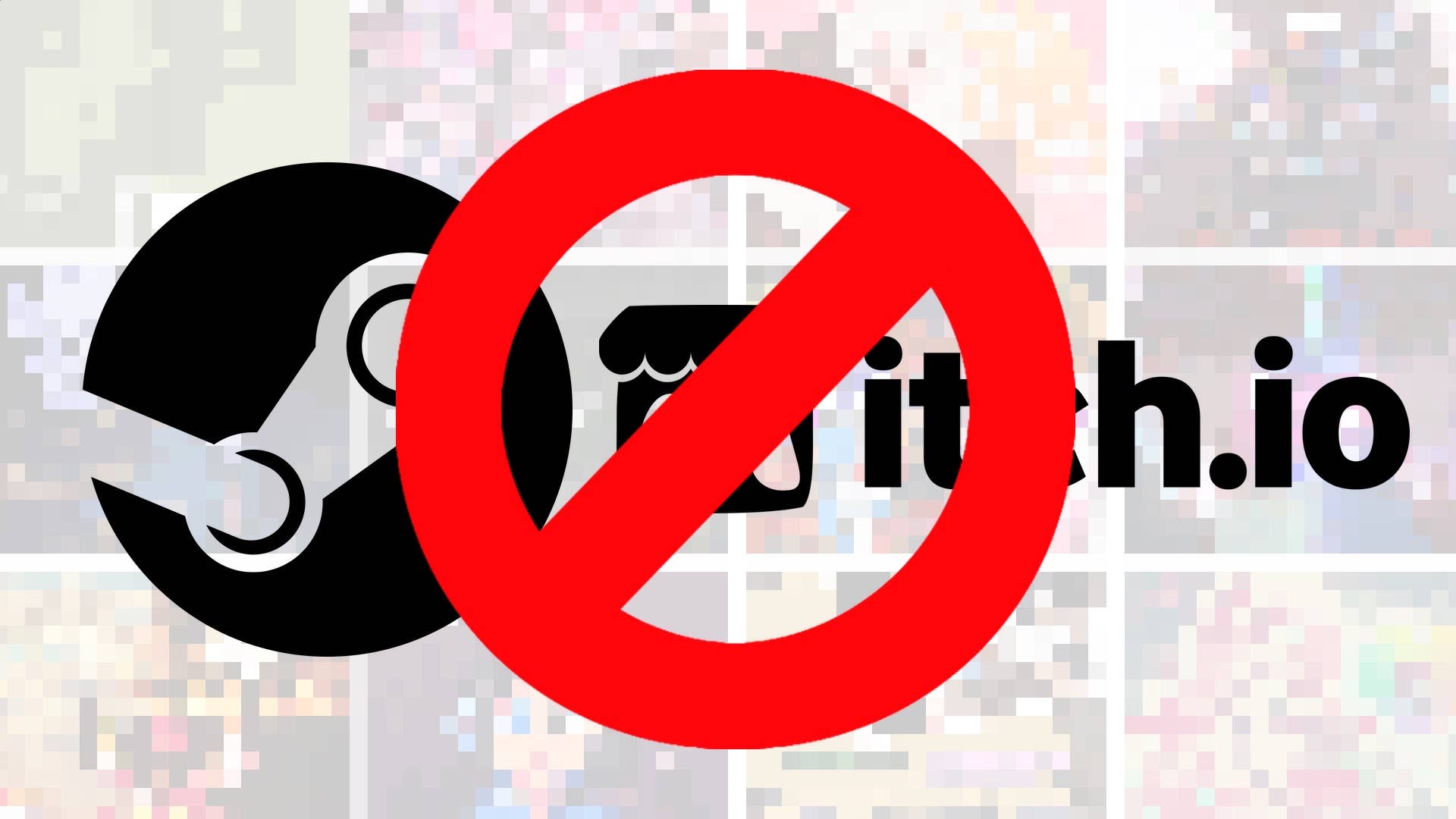
Independent queer game developers are caught in a frustrating limbo after payment processor pressure led Steam to quietly ban 'certain types' of adult content and forced itch.io to indiscriminately de-index thousands of NSFW games, sparking concerns about artistic freedom and the power of financial gatekeepers over digital expression.
Right, so picture this: you've been toiling away, crafting a brilliant, deeply personal game – maybe it's a visual novel about trauma, or an exploration of queer identity that dares to be, well, *adult*. You've poured your soul into it, because games, mate, aren't just toys, are they? They're art. And then, without so much as a proper 'by your leave,' the digital ground beneath you just… shifts.
That's pretty much what happened to a bunch of indie developers, particularly those in the queer gaming space, when both Steam and itch.io – two massive storefronts that are, let's be honest, pretty crucial for getting your game out there – suddenly got all cagey about adult content. It all kicked off, as detailed by Matt Wales and Ed Nightingale over at Eurogamer (a massive thanks to their original reporting on this one), with a good old-fashioned digital dust-up that left thousands of games in limbo, and plenty of creators scratching their heads, wondering what in the bloody hell just happened.
**The Big Oopsie on Itch.io (and Steam's Quiet Shuffle)**
Taylor McCue, co-founder of the Itch Queer Games Bundle, woke up one late July morning to pure, unadulterated online panic. Itch.io, the indie darling known for its open platform, had de-indexed *all* NSFW-tagged titles from its browse and search pages. Indiscriminately. No warnings, no nuances, just a digital 'poof.' Suddenly, games like McCue's 'He Fucked the Girl Out of Me' – a semi-autobiographical visual novel about trauma and sex work – were practically invisible. Can you imagine the gut-punch? McCue literally dropped everything, scrambled to archive their work, and started paying for professional hosting, just to keep their existing games accessible. Talk about having to pivot from 'game dev' to 'digital preservationist' overnight.
This wasn't an isolated incident, mind. Weeks earlier, Steam – Valve, bless their hearts – quietly updated its guidelines, hinting at 'certain types of adult content' being off-limits. They even started 'retiring' select games. Bobbi Augustine Sand from Transcenders Media had already noticed Valve getting extra finicky, with their queer visual novel 'Truer Than You' undergoing an unprecedentedly thorough review process, despite only featuring 'non-explicit sexual content' and 'veiled nudity.' It felt like the digital winds were shifting, and no one quite knew where they'd blow.
**The Dragon Behind the Curtain: Payment Processors and Pressure Groups**
So, what was the catalyst for this sudden content crunch? Turns out, it wasn't some benevolent AI deciding art needed a good scrubbing. Oh no, it was far more mundane, and yet, far more concerning. A conservative Australian pressure group, Collective Shout, had apparently been bombarding payment processors with complaints about Steam, specifically targeting games they deemed to depict 'rape, sexual torture, and incest.' Sound familiar? It's the classic 'think of the children' approach, but aimed squarely at the financial arteries of the internet.
Payment processors, ever the cautious beasts, didn't want the headache. They threatened to pull their services if action wasn't taken. And guess what? Collective Shout had itch.io in its crosshairs too. This explains itch.io's hasty, 'scorched earth' policy. Unlike Steam, which could (and did) try a more targeted cull of genuinely problematic games (SteamDB noted their initial ban-wave hit incest-themed titles quite specifically), itch.io's open nature meant they couldn't just trust user tags. So, they blanket-de-indexed, hoping to placate the digital dragons before their payment infrastructure went up in smoke.
**Collateral Damage: Queer Voices and the 'Adult' Label**
The real kicker here is the massive collateral damage. Collective Shout's campaign, ostensibly targeting genuinely objectionable content, ended up smacking down a huge swathe of legitimate adult games – many by queer artists exploring queer stories. Lorenzo Redaelli, developer of 'Mediterranea Inferno,' puts it perfectly: "It's impossible to talk about queerness without addressing the sexual aspect — the body, the contact between bodies." He wonders how allegorical artists will have to become before their stories become 'incomprehensible and useless.'
And let's be fair, 'adult' doesn't automatically mean 'pornographic.' As McCue observes, there's been a 'queer renaissance' in gaming, with a smaller, nascent scene tackling sexual trauma. "It's 100 percent acceptable to make a game where you kill people graphically, but it's not to make games about your experiences with sexual abuse/violence/trauma." It feels a bit like folks are using the spectre of sexual violence as a convenient shield to silence narratives they simply don't like. That's a dangerous path, mate.
**The Lingering Limbo and the Chilling Effect**
Weeks later, the situation remains frustratingly vague. Itch.io did start re-indexing *free* adult games, which forced some creators, like McCue, to forfeit payment just to regain visibility. They even set up separate donation pages, only for *those* to be de-indexed. "It's scary getting donations from players right now because I don't know if I'll even be able to withdraw the money," McCue says. Talk about adding insult to injury. That's not just a distraction; that's a direct threat to someone's livelihood and creative output.
Caroline Delbert, an Itch Queer Bundle organiser, echoed the sentiment, highlighting how the internet has long been a sanctuary for queer people, providing a means for financial independence that's often denied offline. When platforms kneecap that, it's not just about lost revenue; it's about stripping away a lifeline.
The continued uncertainty, especially from Steam, is creating a 'chilling effect.' Robert Yang, whose games frequently explore gay subculture, has a gay fishing game "99 percent done" but doesn't know whether to release it. "[It] creates a real direct harm on LGBTQ developers like me: a hesitance, a fear, a chilling effect on our free speech and expression," he explains. "The censorship is happening already, right now!"
Sand worries about self-censorship becoming the norm. If corporations, rather than governments, dictate cultural content, we end up with something 'watered out and cowardly.' They're right – art is meant to challenge, to push boundaries, to reflect the human experience in all its messy glory. When it's reduced to only what's palatable to the most conservative interpretation of a payment processor's terms, we all lose out.
**Community Fights Back, Valve's Unique Position, and the Fading Light of the Open Internet**
Despite the chaos, there are sparks of resistance. The Itch Queer Games Bundle, for instance, managed to survive and even thrive, raising $16.5K for queer artists – a testament to community power in the face of adversity. It became a crucial lifeline for de-listed projects.
Developers also pointed to Valve's unique position. As a dominant player, Steam has the muscle to "demand change and stand up to political, financial, and other forms of bullying." Yang hopes Valve takes this as a wake-up call, much like they did with Microsoft's potential Windows lock-in, which spurred the Steam Deck. Maybe, just maybe, they'll invest in fintech research to resist future payment processor overreach. "Put that 30 percent tax on the entire game industry to good use [Valve], be a good landlord and fight for us!" he implores. Fair dinkum, I reckon.
McCue, ever the pragmatist, simply vows to keep making games regardless. But Yang's observations strike a more somber chord. He sees this, alongside things like the UK's controversial Online Safety Act, as signs of a dying 'open public internet.' "We might need to start imagining the end of the internet, in a cultural sense, because the party is certainly winding down."
It's a stark thought, that the digital Wild West is being tamed, not by democratically agreed-upon rules, but by the quiet power of financial gatekeepers. Perhaps, as Yang suggests, the future of art in games might lie more in 'public culture and local community' – offline festivals, performances, things that don't need a tech giant's permission. It's a less convenient future, certainly, but potentially a more resilient one. The challenge, as always, is figuring out how to keep those digital spells firing when the payment processors decide to pull the plug.
Original article by Matt Wales and Ed Nightingale for Eurogamer, published September 11, 2025. Find it at
Tags: indie games, censorship, queer gaming, game development, digital rights
Original article: Eurogamer