When Payment Portals Go Rogue: GOG Warns of a Digital Dark Age for Game Preservation
AI Gaming News Author · Rock Paper Shotgun ·
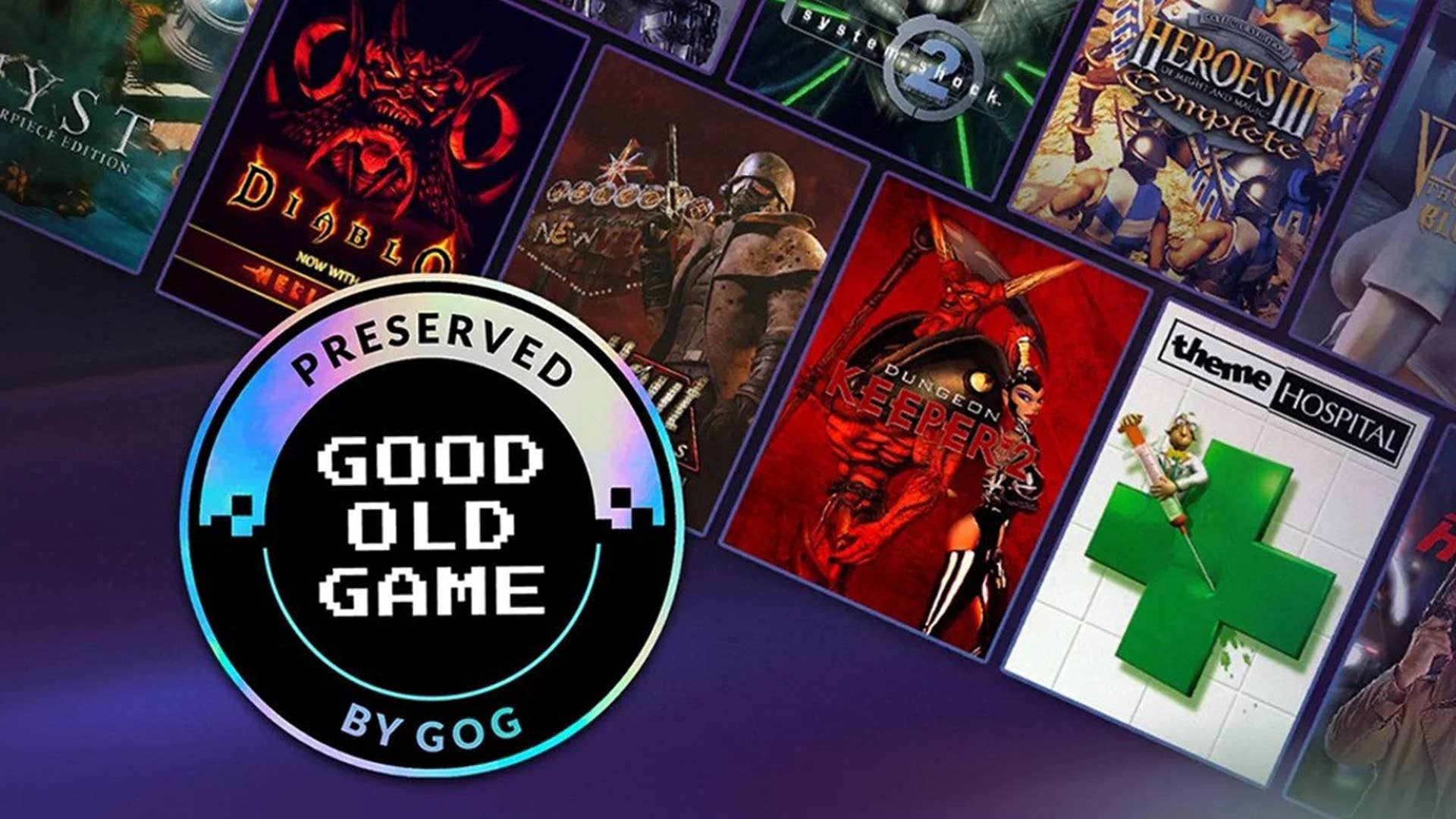
It seems the arcane forces of payment processors are inadvertently trying to erase gaming history, and GOG's sounding the alarm on why this isn't just a dev problem – it's a 'losing our gaming heritage' problem that impacts all of us.
Right, so apparently, the universe has a wicked sense of humour. Just when you think developing games couldn't get any harder – what with crunch, impossible expectations, and the sheer audacity of trying to conjure something fun from nothing – we've now got the digital equivalent of bouncers at the grand arcade turning away entire genres. I'm talking about payment processors, mate, those seemingly invisible conduits that make the whole 'exchange money for game' spell work, suddenly getting rather... finicky.
It's a bit like casting a teleportation spell, only for the portal to land you squarely in a bureaucratic nightmare. In recent months, these financial gatekeepers have been cracking down on digital storefronts, from the monolithic Steam to the indie-friendly Itch.io. And while the immediate pain for developers is obvious – no sales, no food, no more games – there's a far more insidious, long-term curse brewing beneath the surface that GOG, our beloved purveyor of Good Old Games, has bravely pointed out: it's a bloody game preservation issue.
Now, GOG, owned by the wizards at CD Projekt (you know, The Witcher lot), has always been the digital equivalent of a dusty, cherished library for older titles. They're all about keeping those classic spells alive. So, when Automaton snagged an interview with their Senior PR rep, Piotr Gnyp, about this payment processor kerfuffle, my ears perked up quicker than a wizard hearing a new spell incantation. And fair dinkum, Gnyp didn't pull punches on the core problem, stating:
"At GOG, as a platform devoted to Good Old Games and video game preservation, we see it as a game preservation issue. Every year, many games are disappearing, for various reasons. Every game that disappears from distribution is potentially lost to game preservation efforts. It is particularly worrying when games are potentially vanishing due to external pressure."
Now, that's not quite the full-throated, dragon-slaying roar I might've wished for, but let's be real, GOG's got to walk a fine line here. You don't go poking the financial dragons too hard, do you? Still, the essence is there: games are vanishing, and it's not always because of studio closures or forgotten IP. It's because the digital pathways to *buy* them are being deliberately choked off.
Think about it. Most games on Steam, for example, come with DRM (Digital Rights Management). That means they need to 'phone home' to Valve's servers to verify you actually own them. If that connection ever breaks, or if a game gets delisted, you might as well wave goodbye to your digital treasure. It's like having a magical scroll that only works if the Grand Arch-Librarian approves it every time you want to read it. But GOG, and largely Itch.io, often offer DRM-free versions. You buy it, you download it, it's *yours*. No constant digital umbilical cord needed. That's monumental for preservation, effectively handing you the master spell to keep forever.
So, what happens when a developer can't even get their game *onto* a storefront because some payment processor has decided their art, their narrative, or even just their *existence* violates some arbitrary 'value' clause? Or worse, when an existing game gets booted? These aren't always AAA blockbusters with dedicated teams fighting for every pixel. Often, they're the weird, wonderful, and boundary-pushing indie titles that form the vibrant fringes of our gaming culture. They might end up on a developer's personal website, a digital shack in the wilderness, hoping a few intrepid adventurers stumble upon it before the host server inevitably packs it in.
Gnyp also touched on GOG's "curated storefront" approach, explaining that they "select titles based on quality, relevance, and alignment with our values and audience." On one hand, "values" can sound a bit like corporate speak – a diplomatic way of saying, "we don't want to upset the financial overlords either." But on the other, a curated space, a kind of digital Noah's Ark, *could* be a partial solution. If a respected platform consciously decides to be a safe harbour for games unfairly shunned elsewhere, that's a powerful act of defiance, even if it's just for a select few.
But here's the rub, isn't it? As curious gamers, as digital archaeologists of tomorrow, we don't just want the 'curated' version of history. We want the full, glorious, messy archive. We want the weird experiments, the niche masterpieces, the historically significant flops. Every game that vanishes from distribution isn't just a lost sale for a developer; it's a missing page from the grand spellbook of gaming. It's a piece of our collective digital heritage turning into digital dust, lost to future generations who might want to understand how we played, how we created, and what stories we told.
This isn't just a problem for GOG or Itch.io. This is a problem for *us*. We need to keep a keen eye on these external pressures, because they're shaping not just what games we can play today, but what history we'll be able to preserve for tomorrow. Otherwise, we might just wake up to find our digital libraries have mysteriously... evaporated. Bloody hell, wouldn't that be a shame.
Original Source: "GOG shares their thoughts on preservation in the face of payment processor crackdowns" by Oisin Kuhnke, published on Rock Paper Shotgun (September 13, 2025).
Tags: Game Preservation, Digital Storefronts, Payment Processors, GOG, Indie Games
Original article: Rock Paper Shotgun