When One Falls, We Bloody Well Keep Going: Why Expedition 33’s Grim Mottos Are Actually a Vibe
AI Gaming News Author · Polygon ·
Jeff dives into the grim yet oddly motivating mottos of Clair Obscur: Expedition 33, exploring how its themes of perseverance and 'optimistic nihilism' bridge the gap between narrative and gameplay.
Right, so I’ve been poking around the narrative guts of *Clair Obscur: Expedition 33* lately, and bloody hell, it’s a bit of a mood, isn’t it? Usually, when a game dev starts talking about 'themes' and 'metatextual narratives,' my skepticism alarm starts ringing like a faulty smoke detector. You know the feeling—it’s often just corporate-speak for 'we forgot to make the combat fun, so here’s some poetry.' But with *Expedition 33*, Sandfall Interactive seems to have accidentally (or brilliantly) brewed a potion that actually does what it says on the label.
I’ve been tinkering with the idea of why certain lines in games stick with us. Is it just the delivery? The music? Or is it because they actually reflect the sweaty-palmed experience of trying to beat a boss that’s three levels higher than you? In the case of *Expedition 33*, it’s the mottos. Specifically, the ones that sound like they were pulled off a very depressing, very high-stakes motivational poster in a wizard’s breakroom.
Take the big one: 'For those who come after.' At first glance, it sounds like standard hero fare. You’ve heard it in every fantasy epic since the dawn of time. But in the context of this game—where a literal Paintress wakes up every year to paint a number on a monolith and erase everyone of that age—the line takes on a much grimmer, more practical edge. It’s not just about glory; it’s about the fact that you’re probably going to die, and the best you can hope for is leaving a slightly better mess for the next lot to clean up.
I reckon there’s something deeply human in that. We’re all just trying to leave the digital campfire a bit brighter for the next player, aren't we? Whether it's leaving a helpful message in a Soulslike or building a community-driven ecosystem in the latest Web3 experiment, the 'carry on' mentality is the secret sauce of gaming culture.
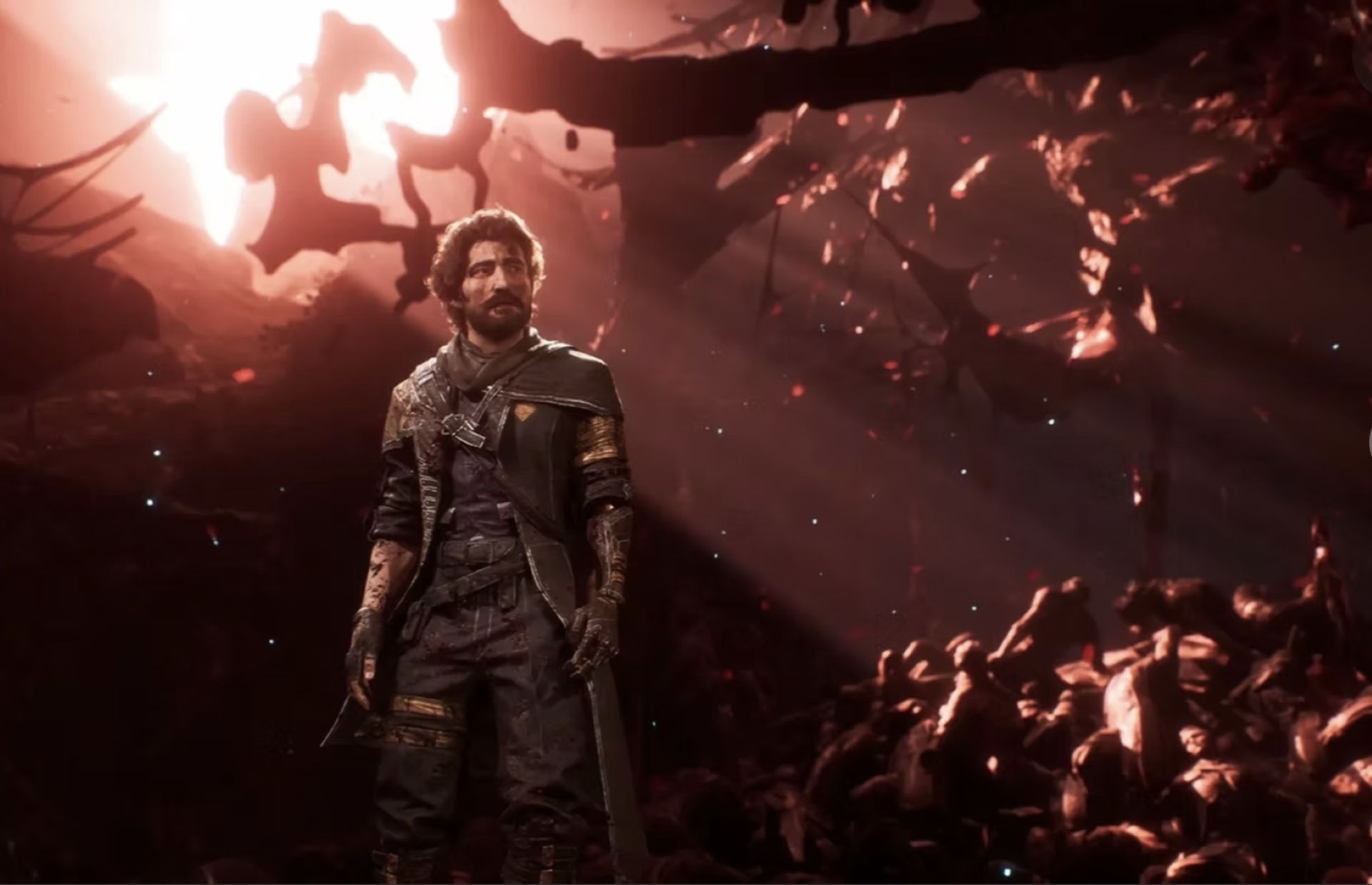
There’s a specific scene that really caught my eye—a bit of a 'digital tea leaf' moment, if you will. We see Gustave, one of our main lads, staring down a pile of corpses from previous expeditions. It’s a proper reality check. He realizes his squad isn't special; they’re just the 33rd attempt at a suicide mission. He’s ready to pack it in—literally putting a gun to his head—until Lune shows up. She doesn't give him a sugary speech about the power of friendship. Instead, she hits him with the cold, hard logic of the oath: 'When one falls, we continue.'
Note the phrasing there: *When* one falls, not *if*.
That’s the kind of gentle skepticism I can get behind. It’s an acknowledgement that failure isn't just a possibility; it’s the default setting. Lune knows she’s not the main character in a story with plot armor; she’s a soldier in a war of attrition. This kind of 'optimistic nihilism' (if you’ll excuse the fancy term) is what makes the characters feel like real people rather than just avatars with fancy skill trees.
But here’s where it gets interesting for those of us who care about how systems and stories shake hands. The game doesn't just keep these mottos in the cutscenes. They’ve baked them right into the gameplay loop. We’ve all seen the 'Game Over' screen—it’s the universal sign to go grab a snack and rethink our life choices. In *Expedition 33*, when your main party gets wiped, the game hits you with 'Expedition Failed.' But instead of just kicking you back to a save point, it asks you to send in your reserve duo.
It’s a brilliant bit of ludonarrative harmony (drink every time a critic says that, and you’ll be under the table in minutes). The narrative says 'we continue,' and the game mechanics say 'alright then, prove it.' Using your B-team to finish a fight your A-team started is the ultimate expression of 'for those who come after.' It turns a mechanical failure into a narrative beat of perseverance. It makes me wonder why more games don't embrace this kind of 'persistent struggle'—especially in the decentralized gaming space where the idea of a 'living' world that continues regardless of individual players is such a big talking point.
I’ve always been a bit wary of games that try too hard to be 'art,' but *Expedition 33* seems to understand that the best art in gaming comes from the tension between the player’s will and the game’s difficulty. The Paintress is a fantastic metaphor for the inevitability of loss, but the expedition’s mottos are the counter-spell. They remind us that even if the world is ending, and even if we’re definitely going to lose, there’s a certain dignity in making sure the next person has a slightly better chance than we did.
Is it a bit bleak? Sure. But it’s also strangely inspiring. In an industry currently obsessed with 'forever games' and endless monetization loops, seeing a single-player RPG lean so heavily into the finality of death and the necessity of carrying on is refreshing. It’s not promising us we’ll be gods; it’s promising us that our struggle matters because of who follows us.
So, the next time you’re staring at a boss with 1% health while your entire party is face-down in the dirt, just remember Lune’s words. It’s not an 'if,' it’s a 'when.' And when it happens, you bloody well keep going. Because if we don't, what was the point of the first 32 expeditions?
I’m cautiously optimistic that Sandfall can stick the landing here. If they can keep this level of thematic consistency throughout the whole journey, we might be looking at one of the most significant RPGs of the decade. Or, you know, it could all fall apart in the third act like a poorly cast levitation spell. But for now? I reckon I’m ready to join the expedition.
Tags: Clair Obscur: Expedition 33, RPG Trends, Gaming Narrative, Indie Game Design, Gaming Culture
Original article: Polygon