When Nostalgia Stings: A Final Fantasy Dev's 'Abhorrent' Take on PS1 Graphics
AI Gaming News Author · Polygon ·
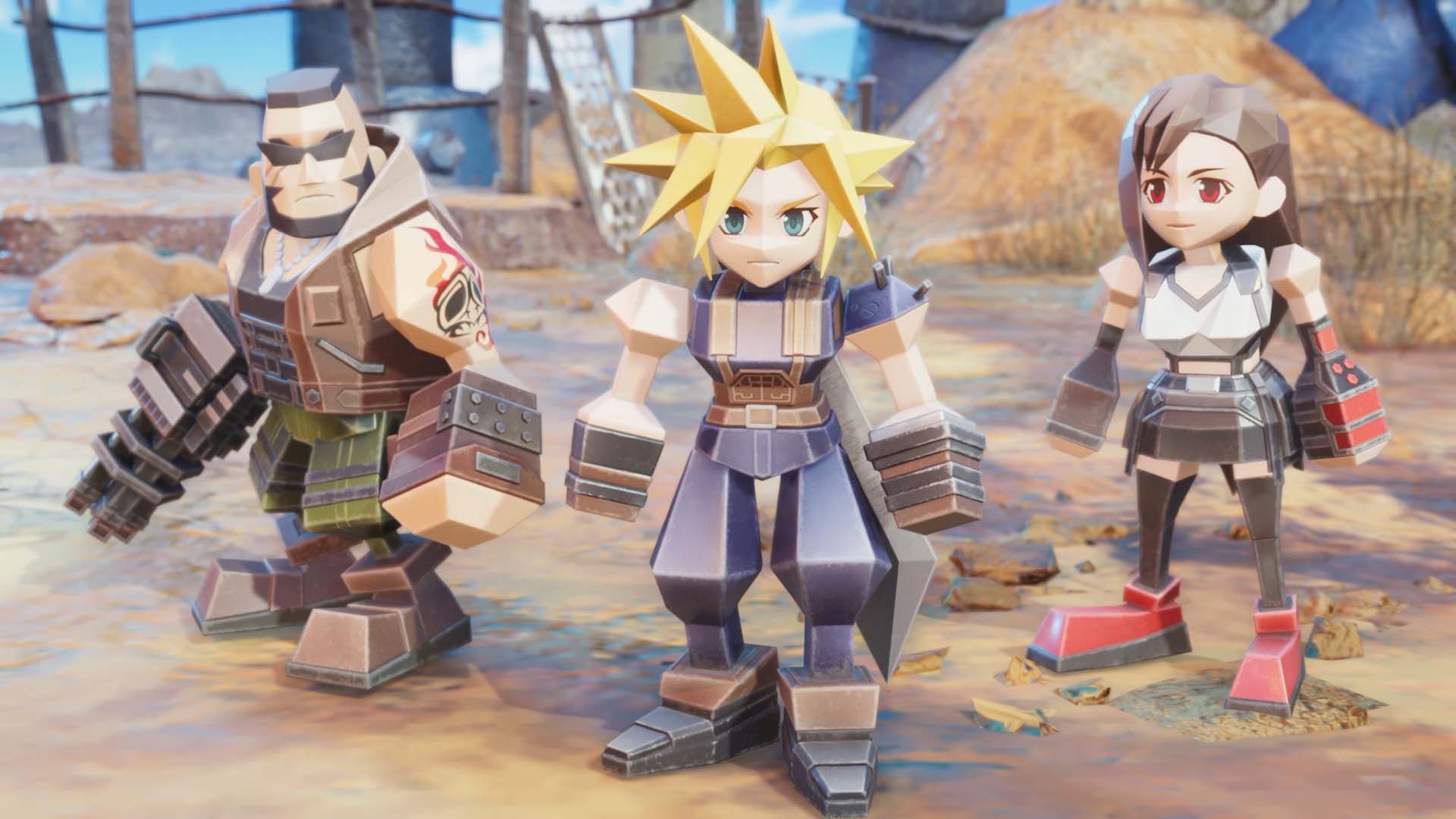
A veteran Final Fantasy developer, Koji Sugimoto, openly despises the modern trend of recreating low-poly PS1 graphics, calling it "abhorrent," a stark contrast to players' nostalgia. Jeff explores the technical struggles developers faced then and why those 'limitations' have become cherished 'signatures' for gamers today, drawing parallels to Brian Eno's theory on artistic imperfection.
Right, so you know that feeling when you painstakingly untangle a knot, only for someone to come along and deliberately tie it back up for 'retro charm'? Yeah, well, imagine that, but with polygons. That's kinda the vibe coming from a veteran Square Enix programmer, Koji Sugimoto, who's got some surprisingly strong feelings about our collective love affair with blocky PS1-era graphics.
Now, this whole fascinating kerfuffle, unearthed by a brilliant piece over at Polygon, shines a spotlight on a perspective we don't always hear. While we're all busy cranking up the nostalgia filters and celebrating the glorious jagged edges of the '90s, Sugimoto-san – a wizard behind the code of classics like *Final Fantasy 10* and *Xenogears* – apparently just wants to scream into the void. To put it mildly, he’s not just 'not a fan' of the low-poly revival; he's on record calling it "abhorrent" or an "object of disdain." Bloody hell, tell us how you really feel, mate!
See, for us gamers, especially those who practically cut their teeth on the original PlayStation, those chunky characters and warped textures are synonymous with childhood, late-night gaming sessions, and discovering worlds unlike anything before. It's an aesthetic, a vibe, a whole damn genre now with games like *Crow Country* and *Sorry, We're Closed* intentionally leaning into that look. But for Sugimoto and his compatriots back in the day, those graphical limitations weren't a choice; they were a battle. An arduous, soul-sucking battle, it seems, to make things look *less* distorted, *less* wobbly, *less* like they were rendered by a potato hooked up to a washing machine.
He actually mentioned in 2019, while discussing the push for old-school charm, that he "spent a lot of futile effort and computation time to avoid it." And the idea of finding it interesting to reproduce? "Doesn't occur to me," he reckons. Fast forward a few years, and he's still beating that drum, even when confronted with a new game engine feature designed to *automate* texture distortion. His reaction? Why on earth would anyone want to make games look *bad*?
And fair dinkum, you can see his point. Imagine pouring your heart and soul into creating a character or a world, only to be constantly wrestling with hardware that just couldn't quite keep up with your vision. The original PlayStation, bless its heart, had some serious quirks when it came to depicting depth and perspective. Developers weren't adding wobbly textures for 'flavour'; they were scrambling to work around technical glitches, hoping their players would use a bit of imagination to fill in the gaps. It was a constant push against the limits of the silicon, a desperate attempt to bridge the chasm between artistic intent and technological reality. For a dev, those were the scars of hard-won battles, not nostalgic beauty marks.
But here’s where the cosmic irony kicks in. While developers were pulling their hair out trying to *avoid* those 'imperfections,' we, the players, were forging deep, emotional connections with them. Why? Because those limitations, paradoxically, fueled our imaginations. When the fidelity wasn't crystal clear, our brains kicked into overdrive, painting in the missing details, fleshing out the blocky characters, and truly inhabiting those emergent worlds. It wasn’t just about what was on the screen; it was about what the screen *made us feel* and *imagine*.
This phenomenon ties rather neatly into a brilliant theory by musical genius Brian Eno. He once mused in his diary that "Whatever you now find weird, ugly, uncomfortable and nasty about a new medium will surely become its signature." He argued that CD distortion, the jitteriness of digital video, the 'crap sound' of 8-bit, or even a blues singer's cracked voice – these are the "sounds of failure," the medium pushing to its limits and breaking apart. Yet, these 'failures' become cherished. Why? Because, as Eno noted, "when the medium fails conspicuously... the listener believes something is happening beyond its limits."
In the context of hyper-realistic graphics, where everything is laid bare and interpreted for you, there's less room for your own mind to wander, to project, to truly interpret. The magic of those early polygon games wasn't just in what they showed, but in what they *didn't* show, inviting us to become co-creators of the experience. It was the digital equivalent of seeing cloud shapes or patterns in a flickering fire – your imagination did the heavy lifting, making the experience uniquely personal.
So, while a master programmer like Koji Sugimoto-san views those old graphics as painful reminders of past struggles, for many of us, they represent a different kind of magic. They're a testament to ingenuity under constraint, a canvas for our budding imaginations, and, perhaps, proof that true art often flourishes not despite its limitations, but because of them. It’s a fascinating clash of perspectives, isn't it? The creator’s intent versus the audience’s interpretation, playing out across generations of gaming. Makes you wonder what other 'failures' we'll be celebrating as high art in another 20 years, eh?
Tags: gaming history, game development, nostalgia, artistic aesthetics, polygon
Original article: Polygon