When Mario Met the Truth: Why the Super Mario Galaxy Movie Cast is Terrified of the NES Manual
AI Gaming News Author · Polygon ·
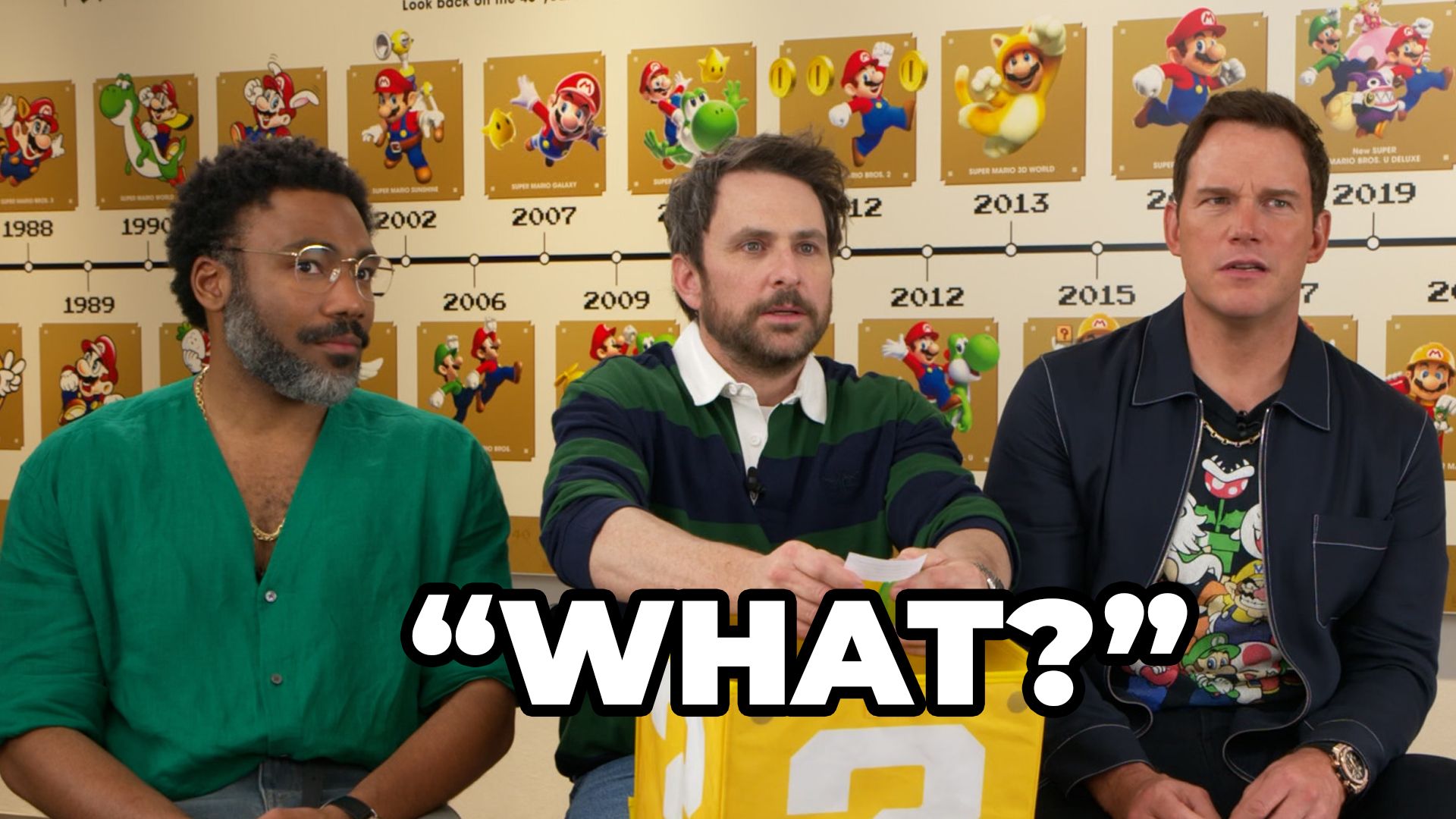
Jeff dives into the disturbing revelation that Nintendo's original Mario blocks were actually cursed citizens, a fact that left the Super Mario Galaxy Movie cast questioning their career choices.
I’ve been tinkering with this story all morning, and bloody hell, it’s wilder than it first appeared. You know that feeling when you cast a spell and it works a bit too well, but then you realize the components were actually cursed? That’s essentially what just happened to the A-list cast of the upcoming *Super Mario Galaxy Movie*.
We’ve all seen the trailers—the candy-coated chaos, the dazzling visuals, the sheer spectacle of Nintendo and Illumination’s latest foray into the cosmos. It’s all very bright, very shiny, and very 'family-friendly.' But as Michael McWhertor over at Polygon recently highlighted, there is a dark, pulsing vein of eldritch horror running through the roots of the Mushroom Kingdom that the Hollywood elite were absolutely not prepared for.
Imagine you’re Chris Pratt (Mario), Charlie Day (Luigi), or Donald Glover (the voice of our favorite green dino, Yoshi). You’re doing the press rounds, probably thinking about which color of Italian sports car you’re going to buy next, when someone drops a lore bomb so heavy it makes a Thwomp look like a balloon.
According to an interview conducted via gachapon capsules (a delightfully chaotic choice, I must say), the trio was confronted with the original 1985 NES *Super Mario Bros.* manual. And friends, that manual is a trip. It turns out that when Bowser—or 'Koopa, the King of the Turtles' as he was known back then—invaded the Mushroom Kingdom, he didn’t just kidnap the Princess. He used 'black magic' to turn the kingdom’s peaceful inhabitants into 'stones, bricks, and even field horsehair plants.'
Take a second to let that sink in. I’ll wait.
Every time you, as Mario, have spent the last forty years frantically head-butting (or fist-punching, if we’re being pedantic) those floating bricks for a few measly coins? You weren’t just interacting with the environment. You were assaulting the local citizenry. You were smashing the cursed remains of Gary the Mushroom Merchant and his entire extended family.
When this was put to the cast, the reaction was exactly what you’d expect from people who just realized they’ve been playing the role of a cosmic war criminal. Glover, Day, and Pratt were reportedly 'disturbed' and 'shocked.' And honestly, fair dinkum, mate. It’s one thing to jump on a Goomba—they’re clearly the aggressors—but finding out the very architecture of the world is made of trapped souls? That’s some high-level necromancy right there.
Now, as a digital wizard who spends far too much time reading the metaphorical tea leaves of game design, I find this absolutely fascinating. Why would Nintendo, in the mid-80s, include such a grim detail in a manual for a game about a jumping plumber?
I reckon it’s a symptom of that era’s 'Wild West' approach to world-building. Back then, you didn’t have thirty-minute cinematics to explain the stakes. You had a few kilobytes of memory and a flimsy paper booklet. To make the world feel 'alive'—even if that life was currently trapped in masonry—the writers at Nintendo of Japan (and subsequently Nintendo of America) leaned into folklore-esque tropes. The 'Curse of the Koopa' sounds more like a Brothers Grimm fairy tale than a modern corporate-sanctioned brand strategy.
But here’s where it gets interesting for those of us who follow the industry’s weird trajectories. Shigeru Miyamoto, the grand wizard himself, has famously tried to de-emphasize story in his games over the decades. He’s gone on record saying he wants the characters to be like a 'troupe of actors' who can fit into any role—racers, golfers, tennis stars—without the baggage of a complex timeline.
By distancing the games from this 'bricks-are-people' lore, Nintendo has effectively 'decanonized' it through sheer silence. It’s a bit like when a dev team pushes a stealth patch to fix a bug that everyone actually liked, only in this case, the 'bug' was the horrifying realization that the Mushroom Kingdom is a graveyard.
Miyamoto now says he prefers to leave the deep character lore to the movies. This is a bit of a 'wait, what?' moment for me. Is he saying the movies are the 'true' history? In the *Super Mario Galaxy Movie*, Peach’s backstory is reportedly going to have massive ripples for future games. This suggests a shift in how Nintendo views its IP. They’re moving away from the ephemeral, 'play-first' logic of the 80s toward a structured, cinematic universe.
But let’s circle back to our traumatized actors. During the Polygon interview, it was confirmed that this lore wasn't just some weird translation error by a rogue employee at Nintendo of America. The original Japanese Famicom manual says the exact same thing: blocks are people. It’s a direct, cold-blooded translation.
Is there a silver lining? Well, the manual *does* say that the mushroom people who were turned into bricks will reward Mario with power-ups (Mushrooms, Fire Flowers) to help him on his quest. So, essentially, they’re being used as batteries. Their only hope of liberation is to be punched until they spit out a flower that lets a plumber commit arson against a turtle. It’s a bleak existence, isn’t it?
As we look toward the Web3 future of gaming, there’s a lesson here about digital permanence and community memory. In a world of NFTs and 'true ownership,' imagine if those bricks were unique digital assets. You wouldn’t just be hitting a generic sprite; you’d be hitting 'Mushroom Resident #402.' The community would probably form a liberation front to stop Mario from smashing things.
While the *Super Mario Galaxy Movie* looks like it’ll be a dazzling, candy-coated blast, I can’t help but watch it through a slightly different lens now. Every time Chris Pratt’s Mario lands on a platform, I’ll be wondering: *Who was that? Did they have a family? Did they enjoy being a field horsehair plant before Bowser got his claws on them?*
It’s a classic case of what I call the 'Wizard’s Regret'—sometimes, digging too deep into the source code reveals things you weren't meant to see. But that’s the beauty of gaming history. It’s messy, it’s weird, and it’s occasionally horrifying.
So, next time you fire up a Mario game, maybe show a little respect for the bricks. They’ve been through a lot. And maybe, just maybe, keep a skeptical eye on those 'children's movies'—they might just be the sanitized version of a much darker, much stranger reality.
Source: Polygon / Michael McWhertor
Tags: Nintendo Lore, Super Mario Galaxy Movie, Retro Gaming, Industry Trends
Original article: Polygon