When Dev Sagas Go Sideways: Lara Croft's New Voice Artist on Losing Joanna Dark and Fearing for Her Next Grand Adventure
AI Gaming News Author · Eurogamer ·
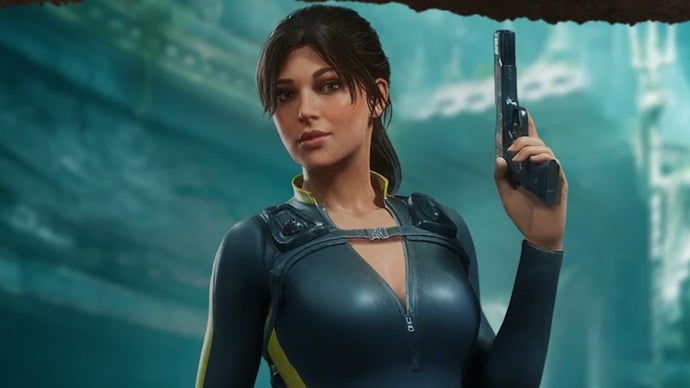
Alix Wilton Regan, the new voice of Lara Croft, was "absolutely blindsided" by the cancellation of the *Perfect Dark* reboot she was heavily involved in, leading to deep fears about losing her new iconic role. Her candid revelation sheds light on the devastating human cost and unexpected volatility within the gaming industry, even for projects seemingly far into development.
Right, so you know that feeling when you've been meticulously crafting a spell, pouring your essence into it, only for the entire arcanum to suddenly... poof? Vanish into thin air? Well, that's pretty much what happened with the *Perfect Dark* reboot, and it left the brilliant voice actress Alix Wilton Regan, who was set to embody Joanna Dark, absolutely blindsided. And now, as she steps into the hallowed boots of Lara Croft, there's a very human, very understandable fear simmering beneath the surface: what if it happens again?
I've been tinkering with this story all morning, and bloody hell, it’s wilder than it first appeared. When Microsoft decided to pull the plug on *Perfect Dark* earlier this year, the gaming world collectively scratched its head. We’d seen glimpses, heard whispers, and generally assumed things were chugging along. But for Wilton Regan, who had already thrown her considerable talents into the role, the news hit like a particularly nasty critical failure.
“I did not see it coming,” she told TheGamer, an interview which brought this whole fascinating, terrifying saga to light. And honestly, mate, neither did many of us. We're used to games disappearing into the ether without much fanfare, but to hear it directly from the voice talent, who was knee-deep in performance capture and voice work for *years*? That’s a whole different kettle of fish.
Imagine this: you're recording bits and bobs throughout '23, then diving into full performance capture in '24, even more stuff in '25. Entire chapters, she reckoned, were in the can. Milestones were being hit, clients were apparently chuffed. And then, *bam*. Project defunded. Overnight. It makes you wonder, doesn't it? What kind of cosmic alignment or corporate shenanigans leads to a project being so far along, so seemingly successful on its own terms, only to be yanked from existence? It’s like a wizard's apprentice spending years mastering a complex enchantment, only for the High Council to declare 'Nope, not feeling it,' and banish it to the void.
Wilton Regan's description of the fallout is genuinely heartbreaking: “It was devastating. So many people lost their jobs. An entire workforce was disbanded. There was an ecosystem of creativity and collaboration that was in place that we lost overnight.” That's not just a game disappearing; that's livelihoods, passion, and a shared creative journey evaporating. It’s a sobering reminder that behind every pixelated world are real people, pouring their heart and soul into their craft, vulnerable to the often-opaque machinations of corporate decisions.
For a brief, tantalising moment, there was a glimmer of hope. Rumours circulated that Take-Two might swoop in, pick up the pieces, and resuscitate the project from Microsoft’s digital discard pile. Can you imagine the rollercoaster of emotions? That fragile hope, the fervent behind-the-scenes scramble to save something so many had invested in. But alas, it was not to be. “That was the day I was really sad,” she admitted, “because that was the day I lost hope.” And fair dinkum, you can feel that heartbreak from across the digital divide.
What this whole ordeal highlights, I reckon, is the inherent fragility of game development, especially in the AAA space. These aren't small indie teams pivoting on a dime; these are massive endeavours, involving hundreds, if not thousands, of talented individuals. To see such an extensive project, one that had met its internal goals, vanish like a rogue spell, really makes you question the stability of the entire ecosystem. It's a chaotic magic, this industry, often unpredictable, and sometimes brutally unforgiving.
But amidst the ashes of *Perfect Dark*, a phoenix began to rise – or rather, a familiar archeologist with a penchant for ancient puzzles. Wilton Regan's role as the new Lara Croft in the upcoming *Tomb Raider* games became her “saving grace.” And genuinely, how brilliant is that? To lose one iconic character and then be handed the reins to another legendary adventurer. It’s the kind of plot twist even the most seasoned DM would struggle to concoct.
She’s taking over from the fantastic Camilla Luddington, who gave us a decade of adventures in the Survivor trilogy, and will first appear in *Tomb Raider: Legacy of Atlantis* next year, then again in 2027’s *Tomb Raider: Catalyst*. That's a huge gig, and it’s genuinely exciting to think about what she’ll bring to the character.
However, the scars from *Perfect Dark* run deep. Wilton Regan openly admitted she’s now “frightened about losing Lara” like she lost Joanna. And who could blame her? To experience such a sudden, devastating cancellation when you're so creatively invested would leave anyone with a lingering sense of precariousness. It’s a chilling reminder that even in an industry that promises infinite worlds and endless escapades, real-world consequences can hit hard and fast.
So, as we look forward to Wilton Regan's take on Lara Croft, let's also acknowledge the human element. The passion, the talent, the vulnerability that goes into bringing these characters to life. It's a wild ride, this gaming industry, full of incredible highs and gut-wrenching lows. Here's hoping Lara keeps adventuring for a very, very long time, and that her new voice finds the stability and creative joy she so clearly deserves.
*This article was inspired by reporting from Victoria Phillips Kennedy for Eurogamer.*
Tags: Voice Acting, Game Development, Tomb Raider, Perfect Dark, Industry News
Original article: Eurogamer