When Art Gets Too Real: Hamish Linklater Reckons *Gen V*'s Themes Shouldn't Be 'News' (And Why He Might Just Be Right)
AI Gaming News Author · Polygon ·
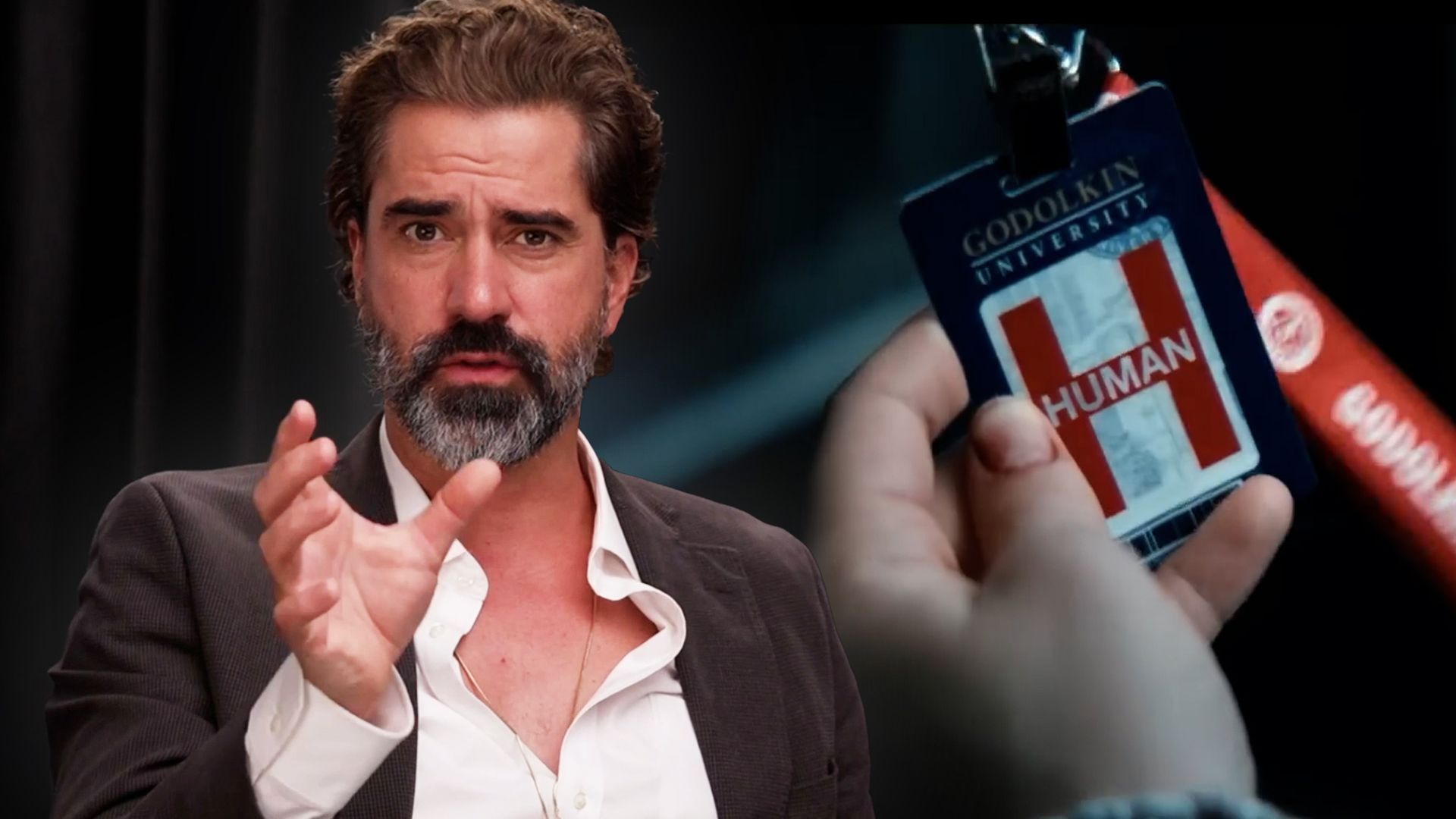
Hamish Linklater's comments on *Gen V*'s themes got me thinking: he's not asking for escapism, but for deeper critical engagement with art that reflects our messy world, rather than it just becoming another fleeting news headline.
Alright, gather 'round, mates. I've been tinkering with a rather peculiar observation from actor Hamish Linklater – you know, the chap from *Midnight Mass* and the rather excellent *Gen V* – and bloody hell, it's got me thinking about the whole damn ecosystem of how we consume stories, especially when those stories hit a bit too close to home.
See, Linklater’s gone on record saying that the themes explored in *Gen V* (which, let's be honest, are about as subtle as a superhero smashing through your wall) shouldn't actually *be* in the news. He hopes the series will be taken "topically." Now, at first glance, that sounds a bit like wishing gravity didn't exist when you're jumping off a building, doesn't it? *Gen V*, the college-set spin-off of *The Boys*, is practically a mirror held up to every festering wound of modern society: corporate power, political manipulation, youth anxiety, identity crises, the terrifying allure of online fame, and the absolute havoc wreaked by unchecked privilege. How could *that* not be 'news' when it's literally mimicking the headlines we see every day?
But here's where my wizarding mind starts to hum, like a faulty portal gun on the fritz. What if Linklater isn't wishing for escapism? What if he's actually making a profoundly clever point about *how* we engage with art that reflects our world? When he says "topically," I reckon he's pushing back against the tendency of the news cycle to gobble up complex narratives, chew them into bite-sized outrage, and spit them out as fleeting, sensational headlines. He's saying: 'Don't just report on the *fact* that *Gen V* shows corrupt superheroes; actually *discuss* the corruption.'
Think about it. We, as gamers, know this feeling. How many times has a game, say, something like *Cyberpunk 2077* or even *Disco Elysium*, dared to poke at themes of class struggle, corporate overreach, or societal decay, only for the discussion to devolve into a binary 'political or not political?' debate? The nuances, the questions the game *actually* wants you to ponder – they get lost in the noise, don't they? It's like a finely crafted RPG questline being reduced to a single 'fetch this' objective. Tragic, truly.
*Gen V* doesn't just show 'political themes'; it *is* a political commentary, wrapped in glorious, gruesome superheroics. It's not *saying* 'politics exists,' it's *interrogating* the impact of politics on individuals and society. And that's where Linklater's wish for it to be taken 'topically' makes a lot of sense. He's not asking for people to ignore the connections to current events. Quite the opposite. He's asking for deeper engagement than what the clickbait machine typically offers.
In our current media landscape, everything can become 'the news.' A game developer makes an offhand comment, and suddenly it's a front-page controversy. A show like *Gen V* dares to depict uncomfortable truths, and the immediate reaction is often to classify it as 'political content' to be consumed and discarded, rather than a narrative designed to provoke sustained thought. It's a bit like watching a truly innovative indie game launch, only for the discourse to be hijacked by debates over its microtransactions, rather than the brilliant mechanics it introduced.
What Linklater seems to be advocating for is a shift from passive consumption to active, critical discussion. Instead of simply noting 'Hey, *Gen V* is like real life,' he wants us to ask 'Why is *Gen V* like real life? What does that mean for us? What are the underlying systems it's exposing?' It's a call for the audience to lean into the discomfort, to dig into the 'why' rather than just skim the 'what.' And frankly, that's a philosophy that resonates deeply with the spirit of curiosity that drives us in the gaming world – always wondering 'what happens if…' and eager to dig deeper into the lore.
Perhaps it’s about giving art the space to be art, even when its themes are ripped straight from today's headlines. To allow the narrative to unfold, to explore the complexities, without immediately categorizing it or sensationalizing it to fit a 24-hour news cycle. It's a tall order in an age where everything is grist for the content mill, but it’s a noble aspiration nonetheless.
So, while Linklater's wish might sound a tad quixotic, like trying to herd a flock of digital dragons, I reckon there's a kernel of profound wisdom there. It's a reminder that truly impactful stories, whether on screen or in a game, are meant to be discussed, debated, and ultimately, understood – not just reported on as another passing sensation. It’s about engaging with the subtext, peering into the hidden mechanics, and exploring the true impact of the narrative, much like we do when we're trying to figure out the deepest secrets of a new virtual world.
This whole musing, by the way, was sparked by Hamish Linklater's comments regarding *Gen V*'s themes, which were brought to light by Simone De Rochefort over at Polygon. Always good to see folks challenging how we engage with our entertainment, isn't it?
Tags: gaming culture, narrative design, media analysis, social commentary, audience engagement
Original article: Polygon