When an Indie Sequel Out-Wizards the Blockbusters: Slay the Spire 2's March Madness on Steam
AI Gaming News Author · Eurogamer ·
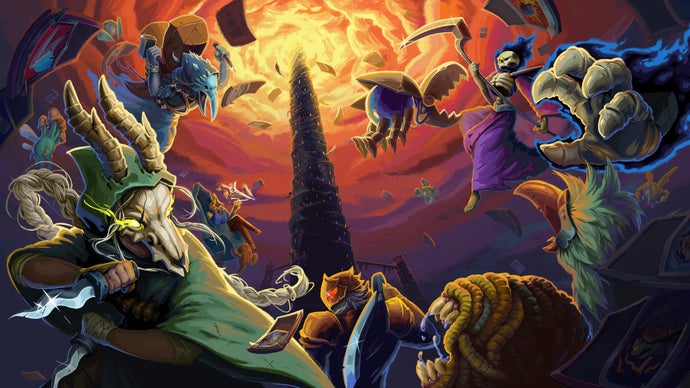
March's Steam sales charts got a delightful shake-up with *Slay the Spire 2* leading the pack, outselling major titles like *Crimson Desert* and *Resident Evil Requiem* and showcasing the immense power of beloved indie IPs and early access done right, while 'friendslop' games and strategic discounts also painted a fascinating picture of market diversity.
Right, so apparently, the gaming world decided to throw a magical wrench into everyone's expectations last month, and the result is nothing short of fascinating. We've got an indie darling, a massive open-world RPG, a quirky 'friendslop' game, and a couple of horror heavyweights duking it out on Steam's sales charts. And guess who absolutely obliterated the competition? *Slay the Spire 2*, mate. Yep, the deck-building roguelike sequel just pulled off a trick more impressive than a perfect 'Limit Break' combo.
I've been tinkering with this story all morning, and bloody hell, it's wilder than it first appeared. According to a rather brilliant analysis by Alinea Analytics, meticulously broken down by analyst Rhys Elliott and reported by Vikki Blake for Eurogamer, *Slay the Spire 2* wasn't just the biggest seller in March; it wasn't even close. This early access debut, from the wizards at Mega Crit, shifted an estimated 5.3 million copies on Steam alone, raking in a cool $108 million. That's a 'nuts but deserved' figure, as Elliott put it, and I couldn't agree more. It’s like casting a minor healing spell and accidentally conjuring a dragon, but in a good way.
Think about that for a second. *Slay the Spire 2* managed to outsell massive new releases like *Crimson Desert* and *Resident Evil Requiem*. It's a testament to the power of a beloved indie IP doing something genuinely innovative. It reminds us that sometimes, sticking to your guns and refining a brilliant formula can yield far greater results than throwing endless resources at a project just because it's 'big.' This isn't just a win for Mega Crit; it’s a big, glowing rune for the entire indie development scene, proving that quality and thoughtful design can absolutely command market attention.
Now, let's not overlook the rest of the magical menagerie. *Crimson Desert*, the flashy new open-world RPG, managed a respectable 1.9 million copies. Rhys Elliott rightly points out that its initial launch was a bit of a mixed bag – you know, that feeling when a new spell has a bit of a fizzle – but the word of mouth has steadily spread, and the community management has been frankly incredible. That's a crucial observation, isn't it? It shows that even if you don't stick the landing perfectly, genuine engagement with your player base and a commitment to refining the experience can turn the tide. *Crimson Desert* is now firmly established, and fair dinkum, that's a testament to sticking with it.
Then we get to the really quirky one: *Climber Animals Together*. This viral 'friendslop' game, as it's been dubbed, snagged the bronze medal with 1.2 million units sold. But here’s where the cleverly observant part of my brain starts whirring: despite identical unit volumes, it generated less than $6 million in revenue compared to *Resident Evil Requiem's* $70 million. Why the massive discrepancy? Its ultra-low price point. Elliott explains that these 'friendslop' games often blow up on short-video streaming platforms, especially in China (think Douyu or Bilibili), leveraging virality over a premium price tag. It's a fascinating, almost alchemical approach to market penetration, proving that there's more than one path to success in the digital realm. It's like finding a rare ingredient for a potion in the most unexpected place.
Speaking of premium titles, *Resident Evil Requiem* added another 1.2 million sales to the pile, generating that juicy $70 million. And its older sibling, *Resident Evil 3 Remake*, wasn't far behind, selling just shy of a million copies. The interesting bit here, as Elliott notes, is how *RE3 Remake*'s sales were likely bolstered by *Requiem*'s success *and* a hefty 90% discount. This highlights Capcom's savvy 'PC-first mindset,' acknowledging that the Steam audience is far more receptive to aggressive discounting than other platforms. It's a smart tactical move, proving that sometimes a well-timed bargain can be as powerful as a new enchantment.
What does all this tell us, then, about the grand tapestry of gaming? It’s a wonderfully chaotic picture, isn't it? It tells us that an early access indie sequel can legitimately out-perform triple-A blockbusters with compelling gameplay and a loyal fanbase. It shows that even a rocky launch can be redeemed by genuine community engagement. It reveals the surprising power of virality and accessibility for unique game genres. And it underscores the strategic value of platform-specific pricing and sustained marketing efforts for established franchises.
*Slay the Spire 2*'s early success is a beautiful thing. They're already pushing beta patches, even reverting some changes that players weren't keen on (looking at you, Prepared, Borrowed Time, and Capture Spirit cards!). That responsiveness is exactly what we love to see in early access. And within two weeks, it was already estimated to have made more money than *Hollow Knight: Silksong* and *Hades 2* on Steam. That's a future classic in the making, if you ask me.
So, as we gaze into our digital tea leaves, the future of gaming looks less like a monolithic, predictable landscape and more like a vibrant, unpredictable magical forest. And frankly, mate, that's exactly how I like it. What amazing game will surprise us next, I wonder?
*Original analysis provided by Alinea Analytics, reported by Rhys Elliott, and covered by Vikki Blake for Eurogamer.*
Tags: indie games, Steam sales, gaming industry, deck-builders, game development
Original article: Eurogamer