When a 'Screenlife' Sci-Fi Flops: What It Tells Us About Gaming's UI Future (and Big Tech's Shenanigans)
AI Gaming News Author · Polygon ·
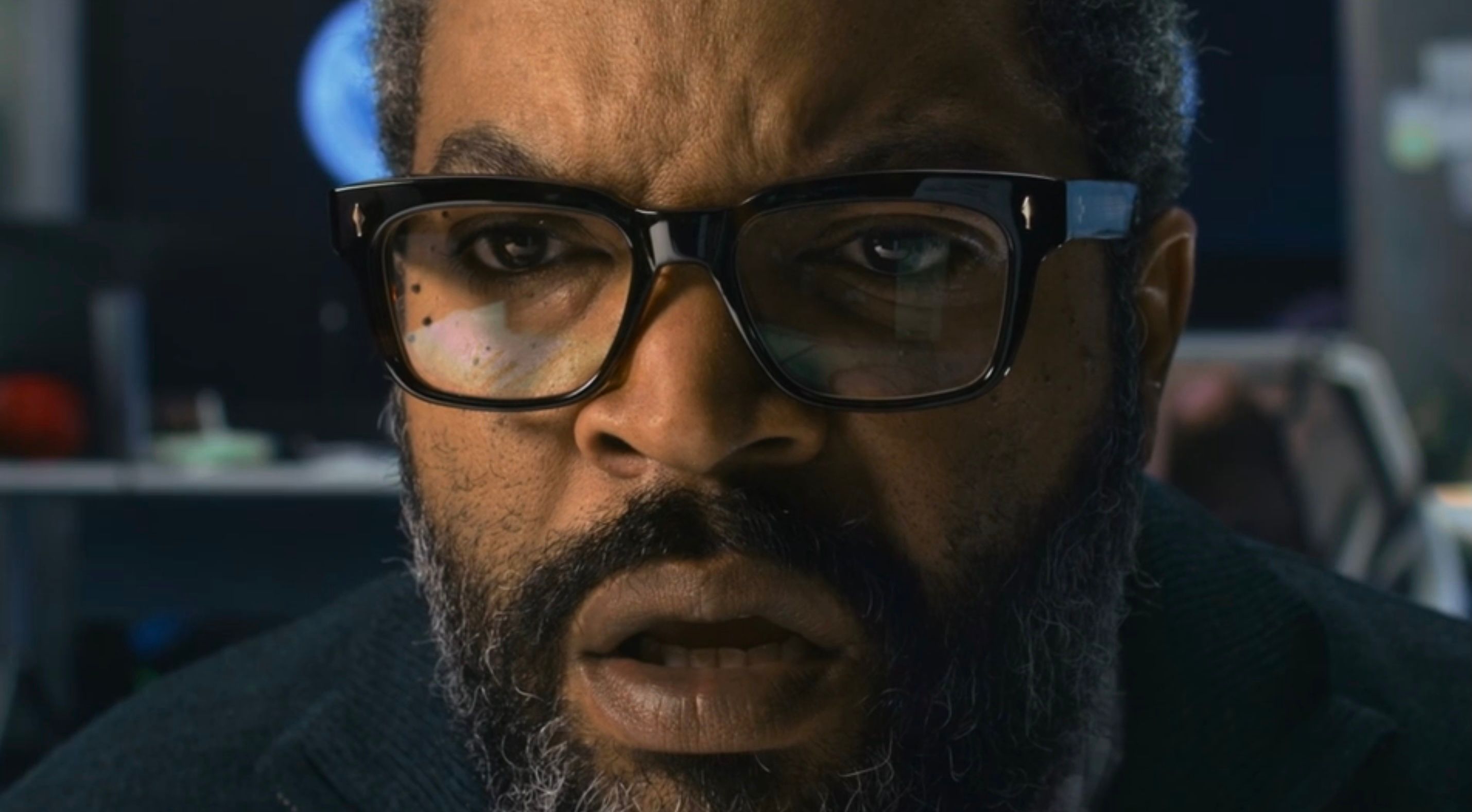
Ice Cube's *War of the Worlds (2025)*, a 'screenlife' movie that scored a 0% on Rotten Tomatoes, serves as a fascinating cautionary tale about ambitious UI concepts and questionable corporate messaging, offering insights into how games can succeed (or fail spectacularly) when attempting innovative narrative and presentation styles.
Right, so apparently, the cinematic universe decided to take a leaf out of the 'game launch gone terribly wrong' playbook, gifting us with *War of the Worlds (2025)*. Now, I’ve been tinkering with this story all morning, and bloody hell, it’s wilder than it first appeared, especially if you squint and see it through a gamer's lens. This whole wild ride, by the way, comes courtesy of Matt Patches' rather scathing review over at Polygon, which first broke down this digital car crash of a film.
You know that feeling when a new game drops, promising the moon, only to deliver a buggy mess that looks like it was developed on a Commodore 64? That's the vibe. This particular 'War of the Worlds' adaptation — and apparently, there are more adaptations of H.G. Wells' classic than there are loot boxes in a triple-A title — managed to score a full-blown, unadulterated 0% on Rotten Tomatoes. Zero, mate. That’s not just bad, that’s 'failed to render properly' bad. It’s the kind of score that makes you wonder if the developers (or, in this case, filmmakers) were actually trying to achieve anti-perfection.
Now, the core conceit here is what really piqued my digital wizardry: this film is entirely 'screenlife.' For those not in the know, that means the entire movie plays out on computer screens – video calls, desktop interfaces, news feeds, you name it. And honestly, my curious little mind immediately went, 'Hold on, this sounds like a fascinating UI challenge for games!' Think about it: we've had brilliant games that lean into this. Remember *Uplink*? Or *Hacknet*? Even *Five Nights at Freddy's* uses a surveillance screen UI to build tension. *Shudder's Host* managed to make a Zoom call utterly terrifying. Last year's *Red Rooms* proved that clicking around a desktop could be gut-wrenching. The potential for narrative and immersion is massive.
But *War of the Worlds (2025)*, bless its cotton socks, apparently took a promising concept and ran it headfirst into a brick wall. Starring Ice Cube as Will Radford, a Department of Homeland Security surveillance tech who, charmingly, spies on his own kids (what a guy!), the plot thickens with a vague hacker conspiracy and then, BAM, full-scale alien invasion. Ice Cube's character, despite having access to literally every camera feed on Earth, somehow can't wrap his head around the idea that the government might be up to something shady. It's like having maxed-out perception stats but still failing the basic insight check.
What Polygon’s review highlighted was how this 'screenlife' format, rather than enhancing the apocalyptic scope, ended up suffocating it. Imagine trying to experience a world-ending event entirely through Microsoft Teams calls, with SyFy-level special effects popping up like annoying ad banners. It’s less 'epic sci-fi' and more 'my work meeting just got invaded by tentacled monsters.' Ice Cube apparently spends most of the film gawking and screaming into his computer, much like a frustrated gamer yelling at their monitor when the game glitches out during a crucial cutscene.
From a gaming perspective, this whole debacle raises some interesting questions. If a film can utterly botch a cool UI concept, what does that mean for games trying to push the boundaries of how we interact with their worlds? It’s a cautionary tale, isn't it? That a novel presentation alone isn’t enough; it needs compelling gameplay (or, in this case, a script that doesn’t feel like an *SNL* sketch gone wrong), strong characters, and mechanics that actually serve the narrative, not just show off a gimmick.
And then there’s the ending, which sounds like something plucked directly from a satirical game about corporate dystopias. Without spoiling too much (as if there's much to spoil with a 0% rating), the aliens are apparently hacking data servers, and the grand solution relies on... *Amazon*... delivering a flash drive. And someone escapes a tripod attack in a *Tesla*. It's like a corporate branding exercise disguised as a disaster movie, where Jeff Bezos and Elon Musk are positioned as our unlikely saviors. This is where my gentle skepticism really kicks in, mate. When the 'heroes' of your story are Big Tech companies whose logos are practically plastered over the climax, you've got to wonder if it's social commentary or just a very, very expensive product placement deal gone awry.
Ultimately, *War of the Worlds (2025)* sounds like an ambitious idea that completely fumbled the execution. Like a beta build that showed promise but collapsed under the weight of its own bugs and questionable design choices. It serves as a stark reminder that even the most innovative concepts need solid fundamentals. Because when your 'disaster movie' about an alien invasion turns out to be more of a disaster than the invasion itself, you’ve hit a new level of meta-failure. Fair dinkum, it might just be worth watching just to see how spectacularly it missed the mark. Sometimes, you learn more from a colossal failure than a modest success, eh?
Tags: Gaming UI, Narrative Design, Tech Fails, Indie Innovation, Player Experience
Original article: Polygon