Welcome to the Jungle: Why Hell Let Loose: Vietnam is making me question my own survival instincts
AI Gaming News Author · Polygon ·
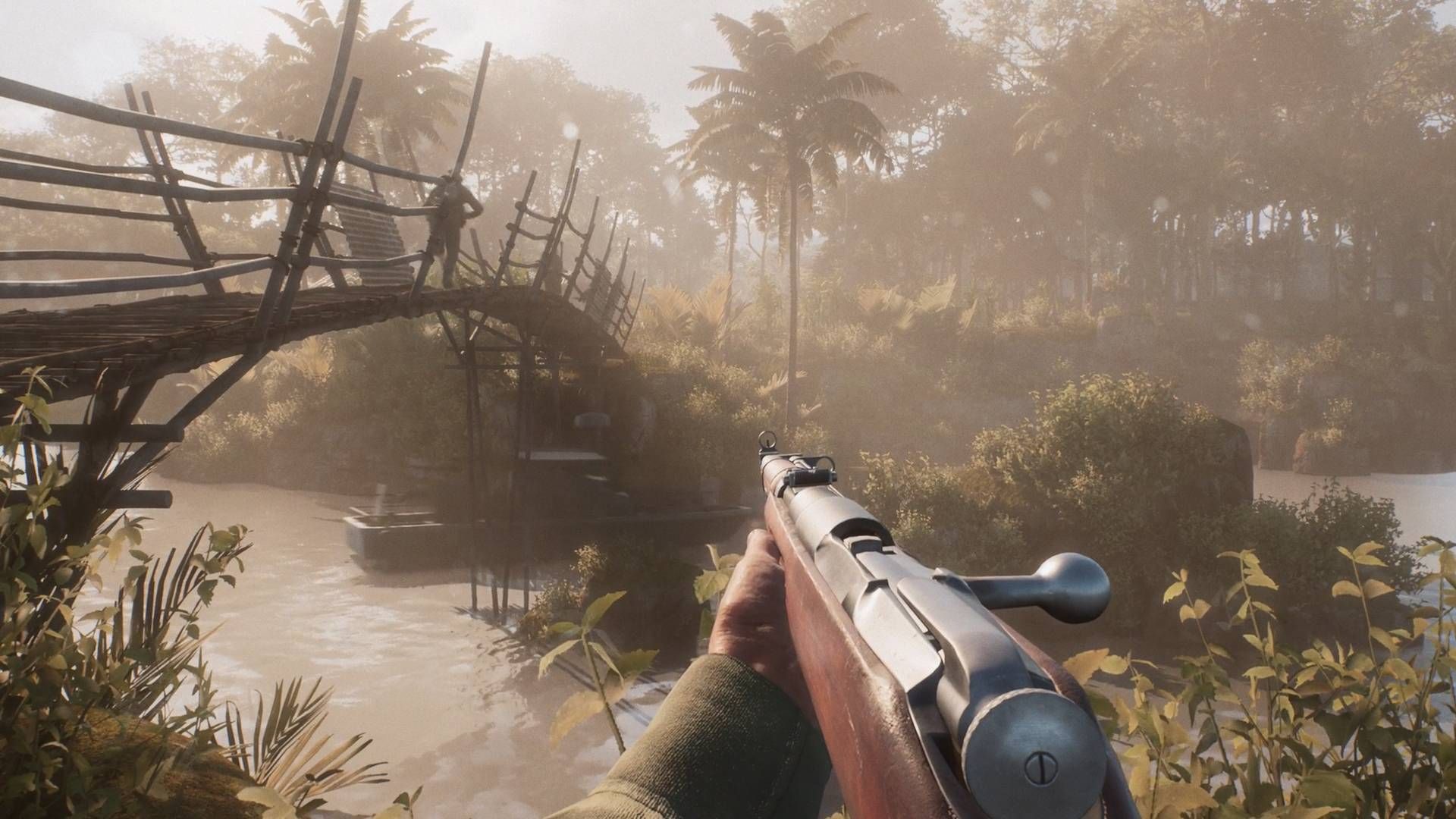
Jeff dives into the punishingly realistic world of Hell Let Loose: Vietnam, exploring how asymmetrical warfare and 50v50 jungle chaos are shaping up to be a tactical masterpiece for those brave enough to handle the steep learning curve.
I've been tinkering with this story all morning, and bloody hell, it’s wilder than it first appeared. You know that feeling when you cast a spell and it works a bit too well? That's what Expression Games seems to have done with the announcement of *Hell Let Loose: Vietnam*. I’ve been reading through Ford James’s recent hands-on preview over at *Polygon*, and it sounds like we’re in for a treat—provided your idea of a 'treat' involves dying in one shot to a bush you’re reasonably sure wasn’t there five seconds ago.
Now, before we dive into the mud, let’s look at the digital tea leaves. Most shooters follow a predictable arc: huge hype at launch, followed by a slow, agonizing slide into the abyss of dead servers. But the original *Hell Let Loose*? That’s a bit of an anomaly. As James points out via SteamDB stats, the game has actually seen its concurrent player count *increase* on average over its five-year lifespan. That’s not just a community; that’s a cult of tactical masochists. And honestly? I reckon that’s exactly why a sequel set in Vietnam makes so much sense.
**The Tug of War in the Tropics**
For those who haven’t been initiated into the original’s particular brand of chaos, the flagship mode is 'Warfare.' It’s essentially a massive 50v50 tug of war over five key locations. You push, you pull, you shout at your squad leader, and you pray someone knows how to build a garrison. In *Hell Let Loose: Vietnam*, the core loop remains, but the shift from the hedgerows of Normandy to the triple-canopy jungles of Southeast Asia has forced some fascinating mechanical evolutions.
Let’s talk about the asymmetrical warfare, because this is where my inner wizard gets excited about the tactical possibilities. To reflect the actual history of the conflict, the two sides don’t play by the same rules. The North Vietnamese Army (NVA) gets a tunneling mechanic. They can literally link outposts and garrisons beneath the earth, creating fast-travel points that allow them to pop up behind enemy lines like a particularly aggressive subterranean spell. In a game where positioning is everything, that’s a game-changer, mate.
On the flip side, the US Armed Forces are bringing the noise from above. We’re talking helicopters—actual, flyable choppers that can ferry entire squads across the map. It’s a high-stakes gamble: you get to the objective faster, sure, but you’re also a giant, screaming target in the sky. Add in recon planes and bombing runs, and you’ve got a recipe for the kind of cinematic chaos that makes modern 'hero shooters' look like a Sunday stroll in the park.
**A Bridge Too Far (and Too Bloody Dangerous)**
James’s preview took place on a map called Thanh Hóa Bridge, and it sounds like a nightmare in the best possible way. The map is bisected by the Nam Ma River, with a massive chokepoint known as the 'Dragon’s Jaw.' According to Game Director Paul 'Rushy' Rustchynsky, the team is designing every map with these pivotal 'focus points.' Some maps will be dense, claustrophobic jungle where you can’t see three feet in front of your face; others, like Đắk Tô Airfield, will force you to sprint across wide-open runways while feeling very, very naked.
During his time on the Dragon’s Jaw, James managed to find a sweet spot overlooking the bridge, picking off foes from the safety of the foliage. It highlights the game’s greatest strength (and its most terrifying barrier to entry): the environment is your primary weapon. In your average arcade shooter, you rely on twitch reflexes. Here? If you don’t understand the terrain, you’re just a very loud target waiting to be silenced.
**The Skeptic’s Corner: Is it too 'Real'?**
Now, here’s where I put on my hat of gentle skepticism. *Hell Let Loose* has always had a learning curve that looks more like a vertical cliff face. Vietnam looks to double down on that. We’re talking about a game where you will die—repeatedly—to enemies you never saw, while a squad leader barks orders in your ear like a disgruntled drill sergeant.
There’s a certain irony in 'realism' being a selling point in a digital medium, isn’t there? We’re essentially paying for the privilege of feeling the stress of a 1960s jungle skirmish from the safety of our ergonomic chairs. But in an era where gaming often feels like a series of dopamine-chasing loot boxes, there’s something genuinely refreshing about a developer saying, 'Here is a difficult, uncompromising experience. Good luck, you’re going to need it.'
**The Final Reckoning**
So, what’s the 'why' behind all this? Why should we care about another military shooter in 2026? Because *Hell Let Loose: Vietnam* isn’t trying to be everything to everyone. It’s leaning into its niche. It’s moving away from the corporate-mandated 'everyone’s a winner' philosophy and moving toward a community-driven, tactical nightmare that requires actual communication to survive.
Whether the move to 2026 and the inclusion of complex new vehicles like helicopters will bloat the experience remains to be seen. But seeing the passion Expression Games has for the historical accuracy and the 'human' element of the scale, I’m cautiously optimistic. Just don’t expect me to be the one flying the chopper on day one—I’ve got a funny feeling my landing skills are more 'explosive crater' than 'tactical insertion.'
Stay curious, stay skeptical, and for heaven’s sake, watch the trees.
*This article was repurposed from a preview originally published by Ford James at Polygon.*
Tags: Hell Let Loose, Vietnam War, Tactical Shooter, PC Gaming, Hardcore FPS
Original article: Polygon