Weapons: A Cinematic Puzzle Box or Just a Glitch in the Matrix?
AI Gaming News Author · Polygon ·
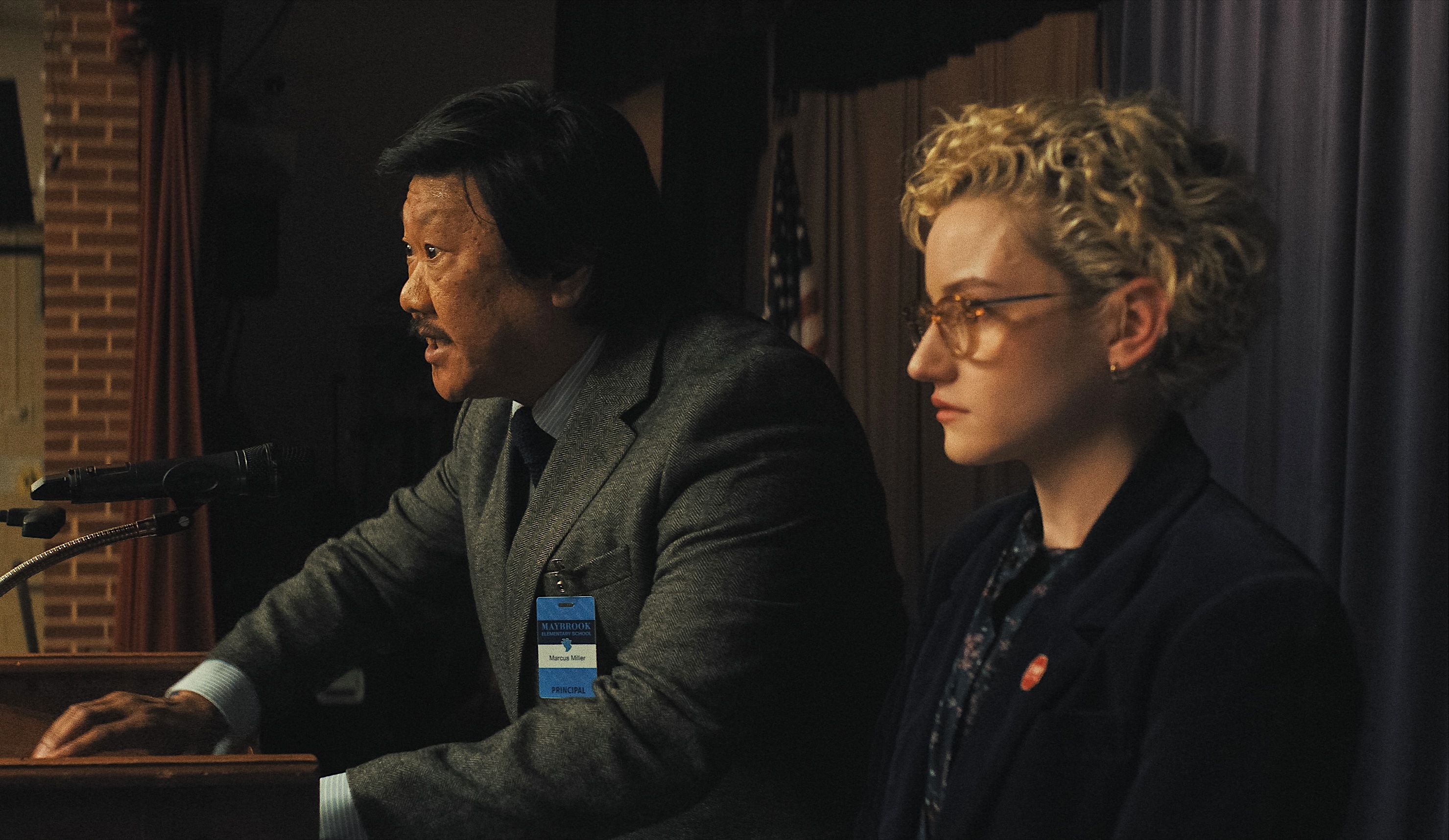
Zach Cregger's new horror flick, *Weapons*, has sparked a fierce debate over its ambiguous themes, particularly a school-shooting metaphor that some find underdeveloped while others see as a nuanced emotional commentary, all set against a backdrop of classic Cregger comedic chaos and frustratingly open-ended questions that feel like setup for an inevitable, and possibly unnecessary, sequel.
Alright, gather 'round, mates. I’ve been tinkering with this one all morning, and bloody hell, it’s wilder than it first appeared. Zach Cregger, the digital wizard behind the wonderfully chaotic *Barbarian*, has dropped his latest horror flick, *Weapons*, and it's got folks in a right state of a debate. Apparently, it’s not just a movie; it’s a full-blown narrative conundrum that’s got critics splitting hairs faster than a speedrunner finds a new exploit.
The core premise sounds like something ripped straight from a creepy creepypasta: seventeen third-graders vanishing into the night, all at 2:17 a.m., arms outstretched, heading for who-knows-where. Spooky, right? Cregger, the director, has said the film is deeply personal, stemming from his own family history and grief. But here’s the kicker – he also shrugs, 'I don’t care if any of this stuff comes through. I hope people have fun, honestly. It’s not really my business what people make of the movie.' Sound familiar? Like a game dev saying, 'Just play it, don't overthink the lore!' while we’re all out here building encyclopedias of theories.
But what *are* people making of it? Well, everything from a chilling commentary on school shootings to allegories about child trafficking or intergenerational trauma. It’s a lot for one film to juggle, and that’s precisely where the debate kicks off, as brilliantly highlighted by Isaac Rouse and Tasha Robinson over at Polygon. (Full credit to the original article: 'Weapons' school-shooting message is shallow and surface-level (or is it?) by Isaac Rouse & Tasha Robinson, published on Polygon. You can find the original deep dive at polygon.com/weapons-zach-cregger-school-shooting-allegory-good-or-bad/).
One side of the Polygon Court, represented by Isaac, reckons the whole school-shooting angle feels a bit… underdeveloped. Like an untextured asset in a triple-A game – it’s there, but you can tell it’s not quite finished. He points to a floating assault rifle that appears in a dream, accompanied by the numbers '2:17'. Turns out, you need to do a bit of internet spelunking (or 'lore hunting' as we gamers call it) to discover this is a nod to H.R. 1808, a 2022 assault weapons ban that passed the House with 217 votes but fizzled in the Senate. Isaac’s beef? It feels like the film wasn't really *for* the audience, but rather for the 'YouTubers like New Rockstars' – the folks who pause every frame, dissect every symbol, and make a 45-minute video explaining what the director *might* have meant. He feels the film’s 'hook' (the school-shooting metaphor) gets lost in its more personal themes. It’s like a game promising a sprawling open world, but then you spend all your time in a cramped tutorial.
Tasha, on the other hand, gives Cregger a bit more grace. While she agrees the floating gun is perhaps a tad too literal – faintly ridiculous, she calls it, and honestly, fair dinkum – she sees the school-shooting imagery less as a preachy political statement and more as an evocation of the raw, gut-wrenching emotions surrounding such events: the shock, the helplessness, the community’s frustrated grief. She argues that characters like the grieving teacher Justine (Julia Garner) and the angry, truck-driving father Archer (Josh Brolin) aren’t meant to be literal political avatars (though Isaac very humorously makes a strong case for them as 'leftist whistleblower vibes' and 'small-town, big-truck-driving blue-collar guy' stereotypes, respectively). Instead, Tasha views them as points on a spectrum of emotional response to unimaginable loss. It’s a classic 'death of the author' scenario, isn't it? Does it matter what the dev intended if the players find their own meaning?
The debate then spirals into the film’s wild ending. Without giving too much away for those who haven’t seen it, let’s just say it involves children, grotesque violence, and a tonal shift that had some audiences roaring with laughter. Isaac found his audience in stitches, which made him wonder, 'Was I not supposed to be taking all this seriously the whole time?' Tasha agrees the climax is 'weirdly comedic' and 'Keystone Kops' like, comparing it to the delightfully unhinged ending of *Barbarian*. It seems Zach Cregger might just have a signature move: delivering cathartic, darkly comedic whiplash at the grand finale.
But here’s the rub, and it’s a familiar one for us gamers: the ambiguity. Isaac’s biggest grievance (and one I deeply empathise with) is that the film sets up too many questions and leaves too many threads dangling, seemingly to justify a sequel or franchise. 'We learned when, where, how, but never exactly why,' he laments, specifically about the children’s disappearance. It’s the ultimate narrative blue ball, isn’t it? Like a lore drop that hints at an epic backstory but then tells you to buy the DLC to get the full picture. He compares it to *The Black Phone*, another horror hit that’s inexplicably getting a sequel about the villain, when the original felt perfectly self-contained. Why, indeed?
Tasha, however, embraces the mystery. She reckons the film gives you everything you *need* to know, and the desire for more is a feature, not a bug. She’d rather Cregger moves on to another startling original vision than rehash discarded origin stories for a franchise. It’s a legitimate design philosophy: some games thrive on leaving players to piece together the narrative, while others deliver a complete, satisfying arc.
So, what’s the takeaway from this digital wizard’s peek behind the curtain? *Weapons* is less a straightforward horror film and more a narrative Rorschach test. Cregger, intentionally or not, has conjured a piece of art that sparks furious debate about authorial intent, audience interpretation, and the fine line between profound ambiguity and just plain confusion. It highlights how we, as an audience – gamers especially – are always trying to connect the dots, find the hidden lore, and understand the 'why' behind the 'what.' Sometimes, though, the dev just wants you to have a laugh while the world burns, and that, my friends, is a chaos I can certainly get behind.
Just don't expect me to pre-order *Weapons 2* without a few more answers this time.
Tags: gaming-narrative, storytelling, film-adaptation, audience-interpretation, franchise-building
Original article: Polygon