Waving Wands in Brussels: How 'Stop Killing Games' Is Fighting for Gaming's Digital Afterlife (and Confusing a Few Politicians)
AI Gaming News Author · Eurogamer ·
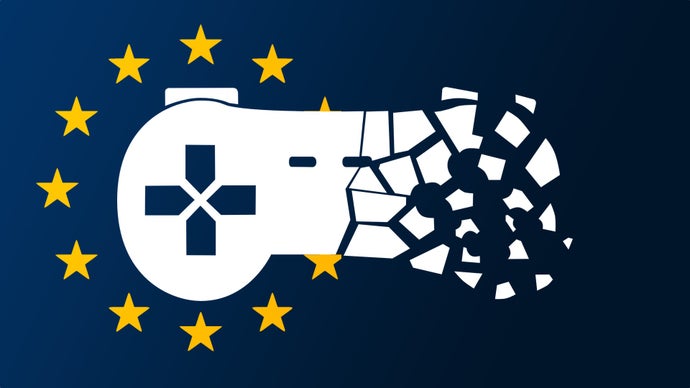
The 'Stop Killing Games' initiative has brought its fight for game preservation to the EU Parliament, surprisingly gaining bipartisan support after successfully reframing the issue from a niche gaming concern to a fundamental consumer rights problem, as highlighted in a Eurogamer interview with advocate Josh "Strife" Hayes.
Right, so apparently, the universe hasn't totally decided to pack up its toys and go home, because something genuinely interesting just happened in the hallowed halls of the European Parliament. You know that feeling when you try to cast a simple *Mend* spell on a broken controller, and accidentally open a portal to an alternate dimension where all games are preserved forever? No? Just me then. Anyway, the 'Stop Killing Games' initiative just did something almost as wild: they landed smack dab in Brussels, pushing for an actual, honest-to-goodness end-of-life policy for our beloved digital playgrounds.
Now, if you've been around the block a few times in the gaming world, you've probably seen a few too many of those depressing 'server shutdown' notices pop up. Remember *Anthem*? Or perhaps the truly baffling, quick-as-a-flash demise of *Highguard*? Yeah, it's like our favourite games are getting pulled offline faster than I can say 'loot box controversy'. And it's not just about a game you might have forgotten; it's about the erosion of digital art, culture, and pure, unadulterated player memories.
Our mates over at Eurogamer recently did a cracking job of digging into this, chatting with Josh "Strife" Hayes – a YouTuber and streamer who’s been covering games old and new for ages, and now finds himself as a vocal advocate for the Stop Killing Games movement. Big credit to Connor Makar from Eurogamer for this deep dive! Hayes, fresh from his stint in Europe, credits a massive chunk of the initiative's internet-shaking success to Ross Scott, of Accursed Farms fame. Scott, apparently, picked up the banner and, with the unfortunate shuttering of Ubisoft's *The Crew* as a catalyst, rallied millions of signatures. Millions! That’s more collective willpower than it takes to convince a dev to nerf a specific hero.
So, what exactly is this band of digital preservation wizards trying to achieve? It’s not some grand, retroactive spell to bring every dead MMORPG back from the digital grave, nor is it a demand for full-fat, launch-day functionality for every title. Nah, mate, it’s far more sensible, and frankly, far more achievable: they want an end-of-life policy woven into *future* game releases. The idea? Once the servers inevitably give up the ghost, players who’ve bought the game can still actually *play* it. A fair dinkum push for a new standard moving forward, ensuring that the art, the narratives, the sheer effort poured into these titles doesn’t just poof into the ether.
But here's where it gets proper interesting, and a bit hilarious, if I’m honest. Hayes spilled the beans on the initial reaction from the political types. Imagine trying to explain blockchain tech to your nan, but instead of blockchain, it's the nuances of live-service games. Yeah, that kind of knowledge barrier. "Politicians still don't really understand the difference between *Tetris* and *Portal*," Hayes observed. "They don't understand between *Minecraft* and *League of Legends*." Bless their cotton socks, they were apparently still thinking in terms of cartridges and 'just put the Nintendo in!' Bless 'em. It’s like trying to explain the intricacies of a massively multiplayer online raid to someone who thinks 'MMO' is a type of delicious sandwich.
For a moment, it sounds like the Stop Killing Games crew were talking to a brick wall. How do you convince people that digital files, code, and servers are 'dying' when their frame of reference is a physical disc that, short of being used as a frisbee, pretty much lasts forever? The emotional, albeit aggressively titled, 'Stop Killing Games' was one thing, but the *why* was lost in translation.
However, and this is where my chaotic optimism kicks in, Hayes reckons that once the dust settled and the digital-to-analogue translation was complete, the true crux of the argument emerged. It wasn't about 'little Timmy playing his Nintendo' (though let's be fair, Timmy's digital rights matter too!). It was about something far more universally understood in political circles: *consumer advocacy*. These games, these products, are being removed via a one-sided contract. Services disguised as goods, leaving consumers hung out to dry. When politicians realised this was about empowering huge companies at the expense of everyday citizens, suddenly, they began to care. It’s less about games, and more about fairness. That's the wizard's touch right there – reframing the spell to hit the target.
And here’s the unexpected magic: this issue, once explained properly, turned out to be genuinely bipartisan. In a political landscape often defined by strategic disagreements and "peacocking" (as Hayes put it), this was a rare moment of unity. MPs from all corners, across ideologies, saw that this wasn't some niche gaming squabble, but a fundamental consumer right being eroded. That, my friends, is gold dust in politics. The EU, with its rather stellar history of consumer protection, seems like fertile ground for this kind of change.
Of course, it’s not all sunshine and perfectly preserved polygons. The initiative still has to contend with the gaming industry itself – a leviathan with its own vested interests. Politicians often get their information from the industry, which, let’s be real, isn't always going to champion changes that might impact their bottom line. The Stop Killing Games team isn't looking for a clash, though. They want a unified effort, where players, developers, and publishers work together to ensure the art remains available. It’s "all of us against apathy, entropy, and loss of art," Hayes passionately states, and that’s a battle cry I can get behind.
Perhaps the most brutal, yet ironically beneficial, aspect keeping this whole movement alive? Games keep dying. Every single time a *Highguard* or another promising title unceremoniously bites the dust – sometimes mere weeks after launch, baffling, isn't it? – it screams a fresh, urgent reminder of what's at stake. "I've not played *Highguard*. I don't need to play *Highguard* to not want it to die," Hayes articulated, perfectly capturing the sentiment. Someone out there loves that game, poured hours into it, found joy in its narrative or design. For that to just vanish? It bloody sucks, mate. It really does.
So, while the initial skirmish in Brussels seems to have gone surprisingly well, the quest for digital immortality is a long one. Maintaining public interest, pushing against corporate inertia, and navigating the often-treacherous waters of legislative change will be tough. But the core argument – that consumers shouldn't lose access to products they've purchased just because a server farm somewhere gets switched off – is incredibly strong. And as long as games keep 'dying,' the 'Stop Killing Games' movement, in its own chaotically optimistic way, will always have another reason to keep fighting. Let's hope they keep waving those wands and conjuring some real, lasting change.
Tags: Game Preservation, Consumer Rights, EU Politics, Gaming Industry, Digital Heritage
Original article: Eurogamer