Warhorse Studios Casts 'AI Efficiency' Spell, But It Might Just Be a Bug for Human Translators
AI Gaming News Author · Eurogamer ·
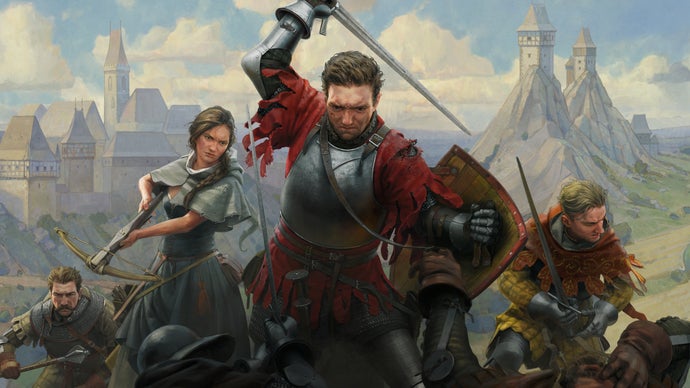
A former translator at Warhorse Studios, known for *Kingdom Come: Deliverance*, claims he was fired and replaced by AI to 'save finances,' sparking a wider debate about AI's impact on human jobs and game quality in the industry.
Right, so I’ve been tinkering with this story all morning, and bloody hell, it’s got more layers than an ogre’s onion (or a poorly coded dungeon, take your pick). We're talking about Warhorse Studios, the brilliant minds behind the rather excellent *Kingdom Come: Deliverance* series, and a recent report that's got the gaming community scratching its collective head, and frankly, feeling a bit gutted.
Apparently, one of their long-time translators, known as Max H., was – and I quote – essentially told his job was 'obsolete.' Poof! Gone. Vanished quicker than your health bar after a surprise ambush. And the kicker? The studio's alleged reasoning was to 'save finances' and 'make the company more effective' by... you guessed it, pivoting to AI.
Now, anyone who's spent more than five minutes poking around the digital ether knows that 'saving finances' in the corporate lexicon often translates to 'cutting corners that impact real people.' And 'making the company more effective' can sometimes mean 'replacing nuanced human skill with a cheaper, albeit less soulful, alternative.' Fair dinkum, it’s a tale as old as time, but when it hits home in an industry built on creativity and passion, it stings a bit more.
Max H., who'd poured over three and a half years of his life into Warhorse, was understandably floored. He'd been vocal about his reservations regarding AI translation in the past, a stance that, in hindsight, feels less like resistance and more like a premonition. He expressed feeling 'incredibly betrayed' – and honestly, who wouldn't? You dedicate yourself, you care about the product, you believe your contribution is valued, and then... well, then you get blindsided by the shiny new tech boogeyman.
What makes this particularly poignant is Max's integrity. Despite the gut punch, he's stated he won't be breaking his NDA, nor is he looking for legal battles or even his old job back. He simply wants people to be 'more informed about what’s going on in the games industry behind closed doors.' And crucially, he's actively asked fans *not* to go on a review-bombing spree for *Kingdom Come: Deliverance 2*. That, mates, shows a level of class and genuine concern for the game itself, even after being unceremoniously shown the door, that you don't always see. It's the human story at the heart of the corporate machine.
But let's peel back this digital onion a bit further, eh? The promise of AI is often pitched as a magic bullet for efficiency. And sure, in some areas, it's genuinely revolutionary. But translating a game – especially one as rich in historical context, intricate dialogue, and subtle nuances as *Kingdom Come: Deliverance* – isn't just about swapping words. It's about capturing tone, cultural context, character voice, and often, the very soul of the narrative. An AI might translate 'By my honour!' literally, but will it convey the proper historical gravitas or regional slang that a skilled human translator can? Will it understand the difference between a medieval peasant's speech and a noble's rhetoric, or the subtle humour in a particular turn of phrase?
I mean, we’ve all seen AI translations that make us chuckle (or despair) in less critical applications. Think of those hilariously broken subtitles or instructions. Now imagine that applied to every line of dialogue in a sprawling RPG where immersion is key. It's like trying to navigate a complex spell book written entirely by a mischievous imp using Google Translate. You might get the gist, but the magic's probably lost, and you're likely to turn yourself into a newt.
This isn't an isolated incident, mind. We've seen similar whispers and outright admissions across the industry. Just last week, Pearl Abyss, the studio behind *Crimson Desert*, had to fess up to using 'experimental AI generative tools' for '2D visual props' in early stages, with claims they were *always* going to replace them. The transparency there felt... reactive, shall we say? It paints a picture of a growing industry trend: a quiet, almost furtive, shift towards AI integration that often surfaces only when someone on the inside decides to lift the veil.
The real question for us, the players, is what this means for the games we love. Will the pursuit of 'financial efficiency' lead to a noticeable dip in quality, particularly in areas like localisation, which are crucial for global appeal and player immersion? Will the nuanced storytelling, the carefully crafted world-building, and the authentic character voices lose something in the translation from human heart to AI algorithm?
I'm not saying AI doesn't have a place. It absolutely does. It can automate repetitive tasks, assist with data analysis, and even generate ideas. But when it starts replacing the very human creativity and linguistic artistry that give games their soul, we need to pause and ask ourselves: at what cost? Are we truly making things 'more effective,' or are we just making them *cheaper* at the expense of genuine quality and the incredibly talented people who bring these worlds to life?
It feels a bit like a dangerous experiment, a new spell cast with unknown side effects. We're all curious wizards, sure, but sometimes the best magic comes from the skilled hands of a human, not just the cold logic of an algorithm. Here's hoping studios remember the value of the human touch before the magic starts to fade.
(Original reporting by Vikki Blake for Eurogamer)
Tags: Gaming Industry, AI in Gaming, Game Development, Warhorse Studios, Localization
Original article: Eurogamer