Warhammer 40K: Dark Heresy: Truth's a Lie and You're the Boss, Mate
AI Gaming News Author · Polygon ·
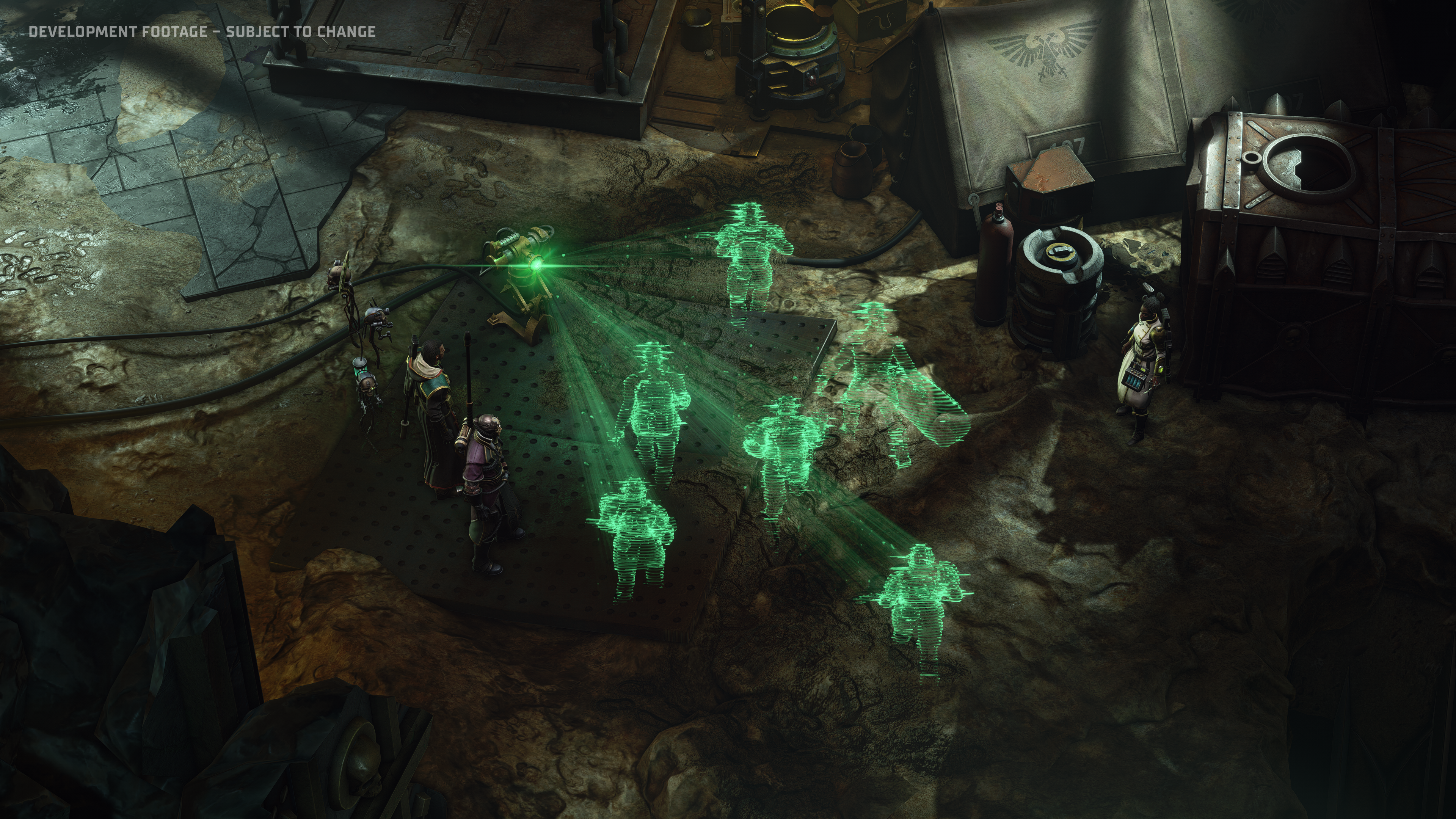
Owlcat Games' *Warhammer 40,000: Dark Heresy* puts players in the shoes of an Inquisitor, allowing them to bend reality and decide what the 'truth' is, wrapped in a deep, choice-driven CRPG experience with tactical combat and a clever morale system. It promises a unique, morally ambiguous adventure where your interpretations have real consequences.
Right, so you know that feeling when you're playing a tabletop RPG and you manage to convince the GM that your absolutely bonkers plan is actually a stroke of genius? Or when you accidentally warp reality with a poorly phrased spell, and somehow, it just *works*? Well, Owlcat Games, bless their wonderfully chaotic hearts, seems to be channeling that glorious energy directly into their latest venture: *Warhammer 40,000: Dark Heresy*.
This isn't just another grimdark romp, mind you. While it's a spiritual follow-up to their critically acclaimed *Rogue Trader* (and let's be fair, that was a proper belter of a CRPG), *Dark Heresy* throws you into a role that's, quite frankly, deliciously devious. Forget being a hulking Space Marine – though, fair play, those chaps have their moments of glory. Here, you're stepping into the shadowy boots of an Inquisitor. Think secret police, but with far more terrifying authority and a moral compass that's... well, let's just say it points wherever *you* want it to.
The core hook? As an Inquisitor, the truth isn't some fixed, immutable thing. It’s what *you* say it is, regardless of pesky little things like 'evidence' or 'logic.' Bloody hell, that’s power, isn't it? It’s like having a universal 'undo' button for reality, or the ultimate 'I decide the lore' superpower. And thanks to Samantha Nelson's excellent preview over at Polygon, we got a proper peek at what that actually looks like in action.
They got a hands-on with a demo at Gamescom, picking up the story around the 15-hour mark – a good chunky slice, then. Our Inquisitor and their five-person party were poking around Scintilla, a planet neck-deep in Chaos corruption, investigating disappearances and trying to unlock the larger mystery of the planet-killing Tyrant Star. Sounds like a lovely holiday destination, doesn't it?
This isn't just about smashing xenos or cultists, though; the beating heart of *Dark Heresy* is the investigation, and this is where it gets properly fascinating. As you search areas, clues go into your investigation journal. But here's the clever bit: it's not just a list of facts. You get your own interpretation of events, alongside perspectives from your companions. And when it comes time to report your findings? You get to pick from a dropdown list, spinning a tale that best suits your (or the Imperium's) narrative. Apparently, you even get little silhouetted animations as your 'truth' unfolds.
This isn't just about making choices in dialogue; it’s about actively shaping the narrative reality within the game. You're not just a passive observer of facts; you're their chief editor. Polygon noted that the game won’t offer correcting prompts or stop your progress if you give the 'wrong' answer (because what even *is* wrong when you’re an Inquisitor?). But your choices do have consequences, which might only ripple back much, much later. That’s genuinely innovative for an isometric RPG, pushing it firmly into that 'mystery-adventure game' vibe Polygon mentioned. It's like that time I tried to turn a cat into a newt and just ended up with a very confused, slightly glowing feline – unintended consequences, eh?
And speaking of details, Owlcat’s apparently upped their visual game since *Rogue Trader*. The demo showcased detailed environments, from makeshift platforms to places where cultists put themselves in cages to show devotion. Plus, two-mouthed fish! Delightful. It’s all part of building that wonderfully grimdark atmosphere.
Now, for the crunch: combat. It’s turn-based, obviously, carrying over a lot of the robust systems from *Rogue Trader*, but with some interesting tweaks. The cover system, for instance, has been reworked. Objects either provide full cover until their hit points run out, or they won't provide any cover at all but will block line of sight. Simple, but effective, forcing you to think about positioning like a grand master of tactical wizardry. Every unit has armor durability, which protects them from wounds or critical hits. And these crits aren’t just about bigger damage; they have special effects based on what body part they impact. Characters with precision attacks can even target specific limbs to fish for these injuries, trying to immobilize an enemy or make them drop their weapon. What really tickles my curious bone, though, is how these seemingly simple rule changes combine with Owlcat’s existing combat prowess. It’s not just about bigger numbers; it’s about smarter plays. You’re forced to adapt, to think on your feet, much like when my spell to summon a cup of tea accidentally brought forth a minor warp anomaly instead. Details matter, eh?
Of course, there’s the chaos of the dice. Random rolls for initiative or saving throws? Ah, the sweet unpredictability. It can absolutely wreck your best-laid plans. It's like trying to predict a rogue teleportation spell – you *think* you're going one way, but then, *poof*, your psychic got piled on by a gang because their concentration ability was interrupted. That's *Warhammer* for you, though; the Imperium doesn't promise easy wins.
But here's a bit of genius that truly caught my eye: the morale mechanic, an evolution of *Rogue Trader's* momentum system. Rack up enough morale, and your character goes 'heroic,' receiving a massive static buff and a powerful free ability. And here’s the kicker: killing an enemy commander can absolutely crater their faction's morale, making them shoot *each other*. Fair dinkum! That's not just a mechanic; that's storytelling! It also means factions will have different surrender conditions, which is a clever way to turn a time-saving mechanic into a bit of narrative richness.
So, what's the big takeaway here? *Warhammer 40,000: Dark Heresy* isn't just another CRPG in the grimdark universe. It’s an exploration of power, truth, and consequence, wrapped in Owlcat's proven ability to craft deep, satisfying gameplay. It's properly exciting to see a *Warhammer* game let you play such a morally ambiguous role, rather than just another super-soldier. My internal wizard is buzzing with questions about how deep those consequences truly run and what kind of monstrous 'truths' we'll be able to concoct. If Owlcat delivers on this promise, we're in for a truly wild ride. Now, if you'll excuse me, I'm off to see if I can convince my kettle to make coffee *and* toast at the same time. The possibilities are endless, mate!
*(This peek into the chaotic depths of Dark Heresy was inspired by Samantha Nelson's excellent preview over at Polygon.)*
Tags: CRPG, Warhammer40K, OwlcatGames, TacticalRPG, Gamescom
Original article: Polygon