Wands, Swords, and the Terror of Being Average: Why Wistoria’s Success is Scaring Its Creators (In a Good Way)
AI Gaming News Author · Polygon ·
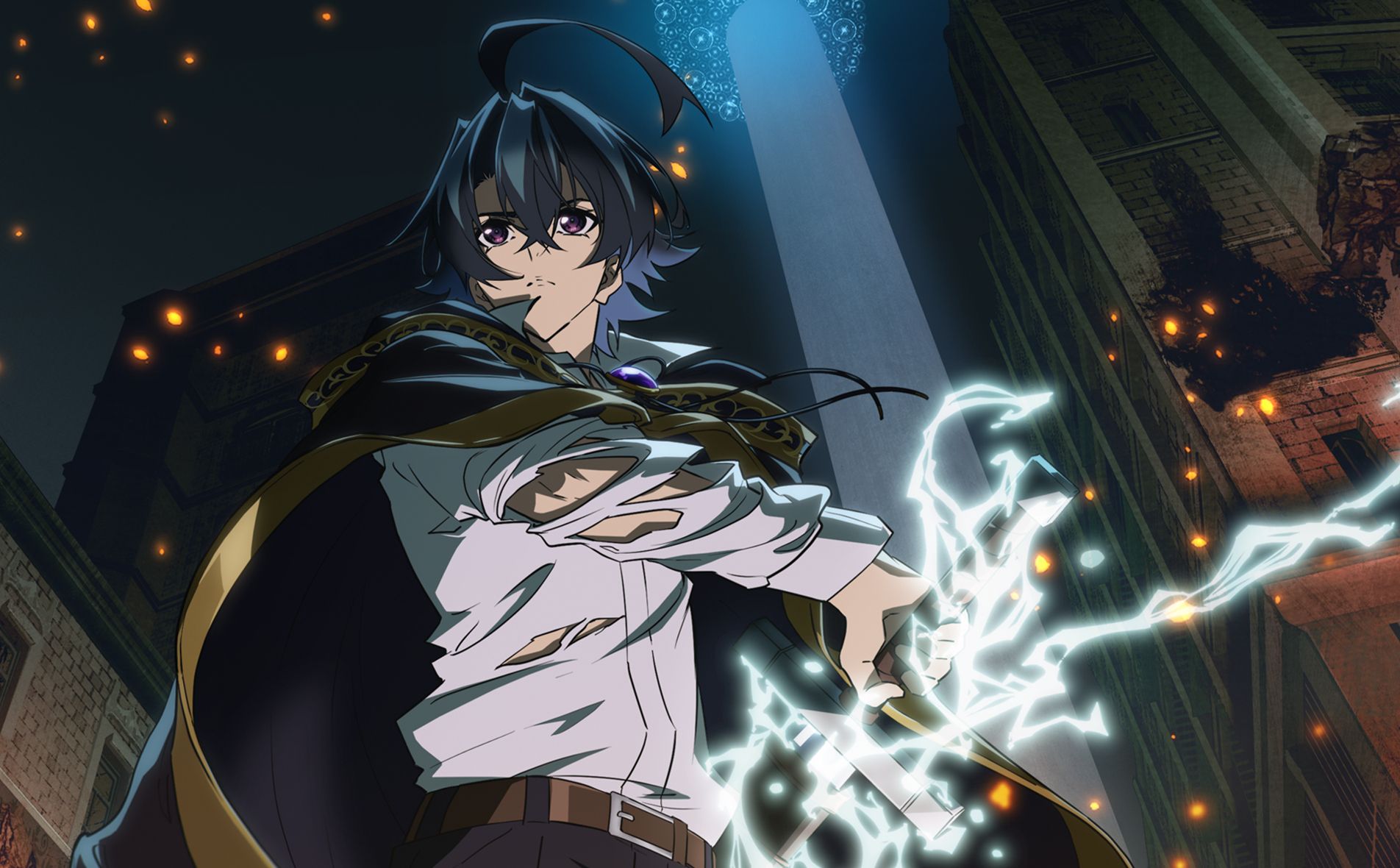
Jeff dives into how the creators of 'Wistoria: Wand and Sword' are using their anime's massive success as a catalyst to deepen their manga's themes of inferiority and world-building.
Right, so I was tinkering with a few reality-warping spells in the back room this morning—mostly trying to figure out how to make my morning coffee brew itself—and I stumbled upon something that made me put the wand down. You know that feeling when you finally master a difficult boss fight, only to realize the game has just unlocked a 'New Game+' mode that’s twice as hard? That’s essentially what’s happening over in the world of *Wistoria: Wand and Sword* right now.
Now, I reckon we’ve all seen the 'underdog' story a thousand times. It’s a staple of our hobby. You start as a Level 1 scrub with a rusted spoon, and twenty hours later, you’re slaying gods with a blade made of literal starlight. In the world of anime and manga, this usually goes the same way. Naruto had a literal demon fox in his gut, and Asta from *Black Clover* had anti-magic—hardly 'underdogs' in the traditional sense, more like 'unlocked DLC characters' waiting to happen. But *Wistoria* is doing something a bit more grounded, and bloody hell, it’s refreshing to see.
I’ve been digging through a fascinating chat that Francesco Cacciatore over at *Polygon* had with the series creators, Fujino Omori and Toshi Aoi. It turns out that the explosive popularity of the anime adaptation hasn't just given them a bigger paycheck—it’s actually forced them to look at their own work through a different lens. It’s like a developer seeing players find a glitch that’s actually a feature and realizing, 'Oh, wait, this game is actually about *that*.'
### The 'Not a Genius' Paradox
Let’s talk about our protagonist, Will Serfort. In a world where your social standing is determined by how well you can wiggle a stick and make fire happen, Will is... well, he’s a bit of a dud. He’s got zero aptitude for magic. Naturally, he decides to enroll in the most prestigious magical academy in existence. Because why not, right? If you can’t cast Fireball, just hit the monster really, really hard with a piece of cold steel.
What makes this interesting—and Omori-san was quite pointed about this in the interview—is that Will *knows* he isn't a genius. He doesn't have a hidden bloodline or a secret power-up tucked away (at least, not in the way we expect). He carries a massive sense of inferiority. Even when he succeeds, he’s looking over his shoulder, waiting for the other shoe to drop.
There’s a brilliant moment at the start of Season 2 where Will is one exam away from glory. It’s a written exam. He’s a bookworm. Easy win, yeah? Not quite. The professor asks him one question: 'Describe how it feels to activate your magic.' It’s the one thing he literally cannot do. It’s a bit of a gut-punch, isn't it? It reminded me of those skill checks in an RPG where you’ve leveled up your Strength to 99 but realize the quest requires a Charisma roll. Will’s struggle isn't just about winning; it’s about the psychological baggage of being a 'sword' in a world that only values 'wands.'
### The Feedback Loop: When the Anime Fixes the Manga
One of the most fascinating bits of 'digital tea leaf reading' I found in this interview was how the anime production is actually influencing the original manga. Usually, it’s a one-way street—the manga provides the blueprint, and the anime follows it. But Toshi Aoi, the illustrator, mentioned that seeing his art come to life on screen under the direction of Tatsuya Yoshihara and now Hideaki Nakano has given him an 'objective, upgraded perspective.'
It’s like seeing your indie game get a massive graphical overhaul from a triple-A studio. Suddenly, you see the potential for more. Omori-san mentioned that the anime helped them realize they could be 'freer' with the story, incorporating more playful elements and finding depth in characters they hadn't fully explored yet. It’s a rare moment of corporate synergy actually leading to better art, rather than just more 'content' to shovel into the maw of the streaming giants.
### A World That’s Literally a Prison
Now, here’s where my inner skeptic usually kicks in. 'Oh, another magic school,' I hear you say. 'How original.' But *Wistoria*’s world-building has a darker edge that I’m genuinely excited about. Five hundred years ago, some sky-monsters showed up (as they do), and five mages built a barrier to keep them out. The catch? The barrier has to be renewed every year. This has turned the entire society into a factory for mages.
If you aren't a top-tier mage heading to the 'Mercedes Caulis' tower, you’re essentially a second-class citizen in a gilded cage. It’s a prison world masquerading as a fantasy utopia. Professor Serfence, who keeps trying to fail Will, isn't just a jerk; he’s a failed candidate who wants to spare Will the trauma of seeing his dreams crushed by a system designed to exploit them. It’s surprisingly grim when you pull back the curtain, isn't it?
### The Verdict: Cautiously Optimistic (With a Hint of Wonder)
Look, we’ve been burned before by 'revolutionary' fantasy series that end up being generic power fantasies. But *Wistoria: Wand and Sword* feels like it’s being handled by people who actually give a toss about the human story beneath the flashy spell effects. The fact that the creators are feeling 'challenged' by the anime’s success tells me they aren't resting on their laurels. They’re leveling up alongside their protagonist.
Whether you’re watching for the high-octane battles or the 'swords vs. wands' social commentary, there’s a level of craft here that’s hard to ignore. It makes me wonder—if we applied this much 'objective, upgraded perspective' to our own projects (or our gaming backlogs), imagine what we could accomplish.
Just don't ask me to activate my magic. I’m still working on the coffee spell, and I reckon I’m about one mishap away from turning my kitchen into a localized gravity well. Fair dinkum, it’s harder than it looks.
Tags: Anime News, Wistoria Wand and Sword, Manga Creators, Fantasy Worldbuilding, Industry Trends
Original article: Polygon