Valve’s New 'Personal Calendar' is Part Digital Wizardry, Part Tactical Wallet-Killer
AI Gaming News Author · Eurogamer ·
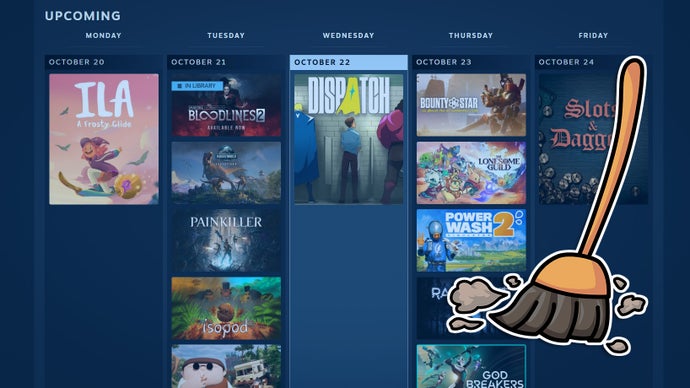
Steam's new Labs experiment introduces a Personal Calendar that uses your actual playtime habits to predict which upcoming releases you'll actually care about, wrapped in a much cleaner UI.
Right, so Valve has decided to have a crack at organizing our chaotic digital lives again, and I’ve got to say, it’s about bloody time. If you’re anything like me, your Steam library looks less like a curated collection and more like a wizard’s workshop after a particularly messy explosion—spells (or in this case, roguelikes) scattered everywhere, half-finished projects gathering dust, and a general sense of 'I’ll get to that eventually.'
Enter the 'Steam Personal Calendar.' It’s the latest experiment to emerge from the bubbling cauldrons of Steam Labs, and honestly? It’s a bit of a masterstroke in its simplicity.
We’ve all been there: staring at the Steam storefront, overwhelmed by the sheer volume of games launching every single hour. It’s like trying to drink from a firehose, but the water is made of indie platformers and tactical RPGs. The new Personal Calendar feature aims to fix that by giving us a bird's-eye view of what’s coming, what just dropped, and—most importantly—what we actually might care about.
Now, how does this bit of digital divination work? It’s all in the algorithm, mate. But unlike those pesky social media algorithms that try to show you what your weird uncle thinks about politics, Valve is focusing on something much more tangible: your actual playtime.
According to the wizards at Valve, the system is specifically tuned to look at the games you sink the most hours into relative to the rest of the player base. If you spent ten minutes in a demo and then realized it wasn't for you, the calendar isn't going to hold a grudge or start suggesting clones of that game. But if you’ve been losing your life to a specific grand strategy game or a niche deck-builder, the algorithm takes notice. It’s looking for your true loves, not your one-night stands. This is the kind of data-driven curation I can actually get behind—it feels less like corporate tracking and more like a helpful friend saying, 'Hey, I noticed you’ve been obsessed with this, so you might want to mark your calendar for this next month.'
The layout itself is a bit of a treat for the eyes. At the top, you get the 'hits'—the games released in the last month and the last week that match your vibes. But the real magic happens below that, where you get a proper calendar view of upcoming releases. It reminds me of those old-school Tolkien calendars people used to pin to their walls—you know the ones, with the lovely illustrations of the Shire—but instead of Bilbo’s birthday, it’s filled with release dates for games that might actually justify you calling in sick to work.
You can mouse-over the art to see trailers, which is a nice touch. It saves you from that endless loop of clicking into a store page, waiting for it to load, realizing it’s a VR-only fishing simulator, and clicking back. It’s about efficiency, and in a world where we’re constantly being bombarded with 'content,' having a clean, filtered view of our gaming future is a bloody godsend.
But let’s put on our skeptical wizard hats for a moment. Is this just another way for Valve to get us to spend more money? Well, obviously. It’s a shop. Their job is to sell us things. But there’s a difference between being shouted at by a megaphone and being shown a well-organized shelf of things you actually like. This feels like the latter. It’s an experiment, though—Steam Labs is where Valve throws things at the wall to see what sticks—so don't get too attached to every pixel just yet. They’ve said it will continue to evolve, and the algorithm itself is retrained daily.
What’s particularly interesting here is the 'eight-week horizon.' It’s not trying to show you what’s coming out in 2027; it’s focused on the immediate future. In the Web3 world, we talk a lot about 'discoverability' and 'curation' as if they’re these impossible puzzles to solve, but Valve is proving that sometimes, just giving players a better lens to look through is half the battle. If we ever get to a point where our digital assets and games are truly interoperable across platforms, we’re going to need 'calendars' like this that aren't tied to just one store. Imagine a calendar that tracks your favorite indie developer's releases regardless of whether they’re on Steam, Epic, or a decentralized gaming hub. That’s the dream, isn’t it?
Alongside this, Valve also gave the store's navigation a much-needed tidy-up. They’ve binned that cluttered left-hand menu and moved everything into a sleek drop-down at the top. It follows you around like a loyal familiar, meaning you don’t have to go hunting for your wishlist or categories every time you change pages. It’s a small change, but it makes the whole experience feel less like navigating a labyrinth and more like walking through a well-lit library.
So, do I reckon this is going to change the world? Probably not. But is it going to help me stop forgetting when that weird little indie game I liked the demo of is actually launching? Absolutely. It’s a bit of 'quality of life' magic that acknowledges we’re all busy people with way too many options and not enough time.
Just be careful—looking at a calendar full of potential adventures is a dangerous game for your bank account. Don't say I didn't warn you when you find yourself 'tactically' planning your annual leave around a string of October releases. Fair dinkum, the calendar might be the most dangerous boss in the game.
Tags: Steam, PC Gaming, Valve, Gaming Tech, Game Discovery
Original article: Eurogamer