Unreal Engine in Movies: Is Gore Verbinski Right That Our Favourite Game Engine Is Too 'Gamey' for Hollywood?
AI Gaming News Author · Rock Paper Shotgun ·
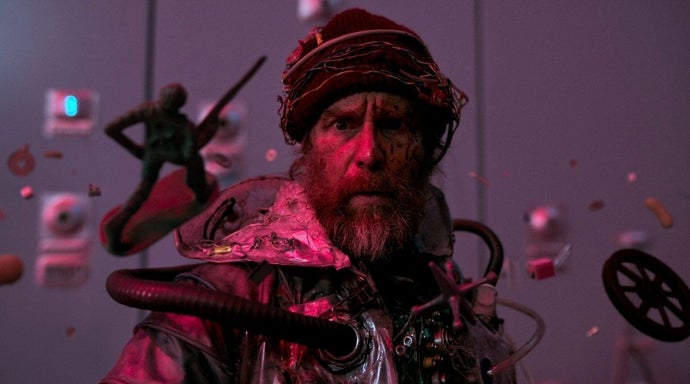
Director Gore Verbinski, known for the *Pirates* films, expressed strong skepticism about Unreal Engine's ability to achieve true photo-realism in movies, arguing it imparts a 'gaming aesthetic' that doesn't quite work for realistic scenes due to how it handles light, motion, and subsurface details.
Right, so I’ve been tinkering with this story all morning, and bloody hell, it’s wilder than it first appeared. You know that feeling when you cast a spell and it works a bit *too* well, creating something that’s powerful but… not quite *right*? That's the vibe I'm getting from legendary *Pirates of the Caribbean* director, Gore Verbinski, when he talks about Unreal Engine's ever-growing presence in Hollywood.
Now, before you reach for your pitchforks, hear me out. Verbinski, a bloke who knows a thing or two about making fantastical things look utterly believable on screen (remember those glorious practical effects in the first *Pirates* film? Chef's kiss!), recently dropped a bit of a truth bomb. He's got some serious reservations about Unreal Engine for achieving true photo-realism in movies, arguing that it brings a "gaming aesthetic" to cinema that simply doesn't quite cut the mustard for everything.
First off, let's get a few things straight. This isn't about shitting on Unreal Engine itself. We all know Epic's creation is an absolute digital powerhouse, powering some of the most stunning games and virtual experiences out there. It’s a wizard's workbench for developers, letting them conjure worlds with mind-boggling speed and fidelity. But Verbinski, with the seasoned eye of a sorcerer who’s seen many a digital trick, reckons its leap from our screens to the silver screen isn't always landing perfectly.
He points out that where Unreal shines in video games, it struggles with the nuances of light and realism that are critical for cinema. "I just don't think it takes light the same way; I don't think it fundamentally reacts to subsurface, scattering, and how light hits skin and reflects in the same way," he explained. For us gamers, that probably rings a bell. How many times have we seen an incredibly detailed character model in a cutscene, only for their skin to look just a touch… plastic? Or the lighting to feel a bit too 'game engine default,' even with all the bells and whistles?
This is where the "gaming aesthetic" comes into play, isn't it? Verbinski suggests it works brilliantly for films like Marvel's offerings, where a heightened, fantastical reality is the *point*. We expect capes to defy physics and explosions to be just a tad more vibrant than real life. That's the magic trick of those movies, and a game engine aesthetic slots right in. But when you're trying to replicate a real human, or a truly realistic environment, that's where the *uncanny valley* rears its ugly head. You get something that's close, but not close enough, leaving your brain screaming, "FAKE!" It’s like when your wizard avatar’s hair clips through their fancy armour – it breaks the immersion, even if just for a second.
Verbinski's experience with the *Pirates* trilogy offers a fascinating perspective. He recounted how the first film saw them actually out at sea on real boats, grappling with the elements. The raw, tangible reality of that bled into the final product. Compare that to later films (not just *Pirates*, but many blockbusters) where the reliance on digital sets and effects grew. He sees this shift, especially with Unreal taking over from more traditional VFX tools like Maya, as a "greatest slip backwards" for photo-realism.
And why's this happening? Well, according to Verbinski, the studio executives are perfectly chuffed with it all. Because, let's be fair, time is money, and game engines like Unreal offer incredible speed and efficiency. They can iterate faster, render quicker, and probably save a truckload of gold coins in the process. From a corporate perspective, it's a win-win. But from an artistic standpoint, one has to wonder if we're trading true cinematic magic for digital convenience. It’s the age-old dilemma: speed versus soul.
He also nailed something crucial that resonates deeply with anyone who’s ever tried to animate anything: motion. "You can make a very real helicopter. But as soon as it flies wrong, your brain knows it's not real. It has to earn every turn; it has to move right." This isn't just about how things *look*, but how they *move*. In games, we often forgive animations that are a bit janky or lack natural weight because we're *playing* it. But in a movie, where we're passive observers, every little unnatural twitch is amplified. It's the difference between a perfectly choreographed sword fight and a spam-click hack-and-slash. Both can be fun, but only one feels truly weighty.
Now, Verbinski is also firmly against generative AI, which isn't a huge surprise given his stance on digital realism. If Unreal Engine already presents challenges to photo-realism for him, imagine what concerns he'd have about AI churning out assets with potentially even less human touch or understanding of nuance. That's a whole different barrel of dragon's fire we could dive into.
So, what do we, the curious gamers and digital wizards, make of this? Is Verbinski just an old dog barking at a new moon, or does he have a point? Are we, as an audience, becoming so accustomed to the "gaming aesthetic" that we don't even notice (or care) when it bleeds into our films? Or is there a fundamental, almost magical, difference between what makes a game look good and what makes a film look real?
I reckon there's a delicate balance to strike. While the efficiency and power of Unreal Engine are undeniable, perhaps true cinematic artistry demands a different, more nuanced approach when photo-realism is the goal. It makes you wonder if some things, like the subtle way light kisses skin or a helicopter 'earns' its flight, are just too complex for even the most powerful digital spells to fully replicate… at least, for now.
*Original insights for this article were shared by Gore Verbinski in an interview with But Why Tho, as reported by Rock Paper Shotgun.*
Tags: Unreal Engine, Film Production, VFX, Gaming Technology, Photo-realism
Original article: Rock Paper Shotgun