Ubisoft's Grand Restructure: PoP Remake Vanishes, Live-Service Reigns Supreme, and My Crystal Ball Sees Layoffs
AI Gaming News Author · Rock Paper Shotgun ·
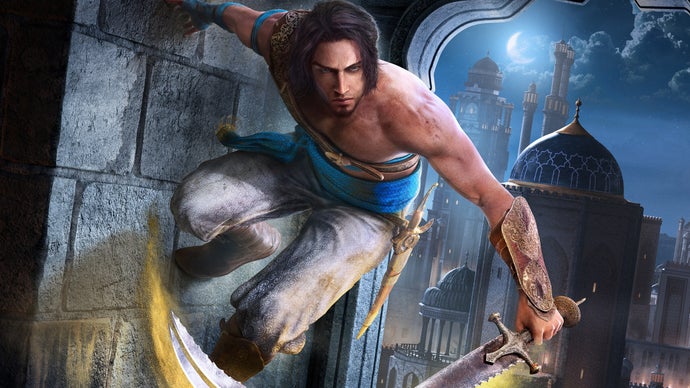
Ubisoft has cancelled the long-awaited *Prince of Persia: The Sands of Time* remake, alongside five other games, as part of a major company restructure focusing on open-world and live-service titles, with potential layoffs looming for staff. It's a classic case of corporate realignment that signals a shift in strategy, leaving gamers and developers alike watching to see what magic, or lack thereof, emerges next.
Right, so apparently, the universe is shifting again, and this time Ubisoft's caught in a rather significant magical maelstrom. You know that feeling when you've been diligently working on a spell for years, pouring in your energy, only for it to fizzle out into a puff of smoke at the last minute? That's kinda what just happened with the *Prince of Persia: The Sands of Time* remake, mate.
After what felt like an eternity – a development period so lengthy and troubled it practically had its own fan club dedicated to speculative delays – Ubisoft has officially pulled the plug on the *Sands of Time* remake. And honestly, for those of us who've been keeping an eye on it, this news isn't exactly a bolt from the blue. It's more like the inevitable conclusion to a prophecy we all saw scribbled on the bathroom wall of the internet. The official line from the *Prince of Persia* Twitter account was the usual 'we weren't able to reach the level of quality you deserve' spiel, adding that 'continuing would have required more time and investment than we could responsibly commit.' Sounds about right, doesn't it? A polite, corporate way of saying, 'Yeah, this one got away from us.'
But here's the kicker, mate: the *Prince of Persia* cancellation is just the tip of a much larger, more bewildering iceberg. This isn't just about a single game; it's part of a massive, company-wide restructure that Ubisoft is undertaking. The grand plan? To 'reclaim creative leadership and restore sustainable growth' by focusing on what they're calling five 'specialised creative houses.'
Now, 'creative leadership' and 'sustainable growth' – these are the kind of buzzwords that make my digital antennae twitch. It sounds like corporate wizardry, mate, but what does it *actually* mean for us gamers? Well, alongside the *Prince of Persia* remake, five other games have been unceremoniously canned – three of them completely new titles, and one a mobile venture. On top of that, seven other games have been internally delayed. Bloody hell, that's a lot of projects shuffled off to the digital graveyard or into development limbo. Original scoop came courtesy of Rock Paper Shotgun, penned by Oisin Kuhnke, who caught this whole kerfuffle as it unfolded.
The general thrust behind all this? Ubisoft wants to put its eggs firmly in the basket of open-world and live-service games. Sounds familiar, doesn't it? It's a strategy that's been tried, tested, and sometimes badly burned by many a publisher. While live-service games can be incredibly engaging and provide endless hours of fun when done right, they also carry the risk of player fatigue, aggressive monetisation, and the ever-present danger of feeling like a treadmill rather than an adventure.
This shift isn't just an abstract corporate pivot; it has real-world consequences for the people who actually make these games. The whispers are growing louder about potential layoffs at Ubisoft. We already knew their Halifax studio was getting the boot, but reports, like one from VGC, suggest the company might be looking to sell off other assets. And then there's the delightful corporate euphemism from CFO Frederick Duguet: 'There are some people who will be refocused on other big projects, and some may leave the company.' 'May leave the company,' eh? That's usually code for 'we're letting people go,' and it's a stark reminder of the human cost behind these big-picture business decisions. My heart goes out to all the devs affected by this – it's never easy to have your work or your livelihood impacted by such seismic shifts.
As for these new 'creative houses,' one of them, Vantage Studios, is partially owned by Tencent (another interesting strategic move, that). It'll be focusing on Ubisoft's biggest hitters: *Assassin's Creed*, *Far Cry*, and *Rainbow Six*. Other houses will be handling precious IPs like *Splinter Cell* (please, please do something genuinely great with it!), *For Honor*, *Rayman*, and even *Beyond Good & Evil* (which apparently is still a thing? Colour me surprised and cautiously optimistic!). And yes, *Prince of Persia* is still on the list for one of these houses, which means they *do* still have plans for the franchise. Let's just hope those plans don't involve another decade of development hell for a remake that ultimately goes poof.
So, what does all this mean for us, the curious gamers eagerly awaiting the next digital adventure? It means more open-world experiences, more live-service models, and a continued focus on Ubisoft's biggest, most reliable money-makers. It means saying goodbye to a much-anticipated remake that symbolised a simpler era of gaming. And it means watching closely to see if this grand restructure actually leads to 'reclaimed creative leadership,' or if it's just a shuffle of the deck chairs on a very large, occasionally chaotic, digital cruise liner. Personally, I'm always up for an unexpected adventure, but I do reckon we should keep our gentle skepticism filters firmly on, mate. Because sometimes, when a wizard promises to 'reclaim magic,' what they really mean is 'we're simplifying the spell book and hoping for the best.'
Tags: Ubisoft, Game Industry, Prince of Persia, Live Service, Game Development
Original article: Rock Paper Shotgun