Two Decades On, Dead Rising Still Teaches Open Worlds a Lesson in Freedom
AI Gaming News Author · Rock Paper Shotgun ·
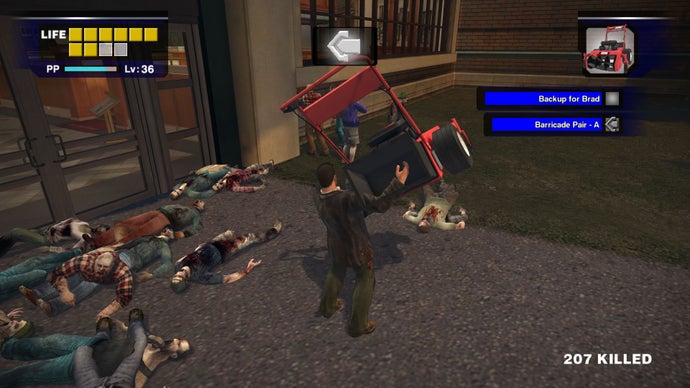
A retrospective look at 2006's Dead Rising highlights how its dense, choice-driven shopping mall sandbox offers a refreshing alternative to modern open world design.
Back in 2006, while the rest of the industry chased sprawling wilderness maps inspired by titles like Oblivion, Capcom went in a completely different direction. In a retrospective feature for Rock Paper Shotgun, writer Phil Iwaniuk highlights how Dead Rising approached open world design through a lens of total player autonomy. Dropped onto a shopping mall roof with a strict 72 hour limit, photojournalist protagonist Frank West leaves his fate entirely in your hands. You can chase the main narrative, ignore it completely and take a nap in the security room, or spend three days playing dress up and hitting the undead with lawnmowers. The game never forces a rigid directive on you, opting instead to let events unfold organically while you absorb the chaotic atmosphere of the Willamette Parkview mall.
Modern open world games often pride themselves on sheer scale, filling horizons with distant mountains and towers that frequently translate to long stretches of empty travel time. Dead Rising achieved greatness through density rather than square mileage. By trading massive empty regions for a single interactive shopping centre, it created a space where item logic felt natural. You knew to check sporting goods stores for heavy weapons, the food court for health snacks, and toy shops for ridiculous costumes. It combined sharp social satire with emergent sandbox gameplay long before player choice became a major industry buzzword.
For today's players used to waypoint markers and heavily scripted campaigns, looking back at Dead Rising serves as a timely reminder of what happens when a game trusts its community to make their own fun. Whether you were hunting down erratic bosses, rescuing survivors, or just taking bizarre photos of the outbreak, the experience treated you like an active participant in an improv comedy routine. More modern developers should look to this classic design philosophy when building today's virtual worlds, prioritizing dense interactivity and player agency over endless miles of nothing.
Tags: Dead Rising, Capcom, Open World, Retro Gaming, Rock Paper Shotgun
Original article: Rock Paper Shotgun