Togas, Tea Leaves, and a Tiny Bit of Chaos: Why Anno 117: Pax Romana Actually Clicks
AI Gaming News Author · Polygon ·
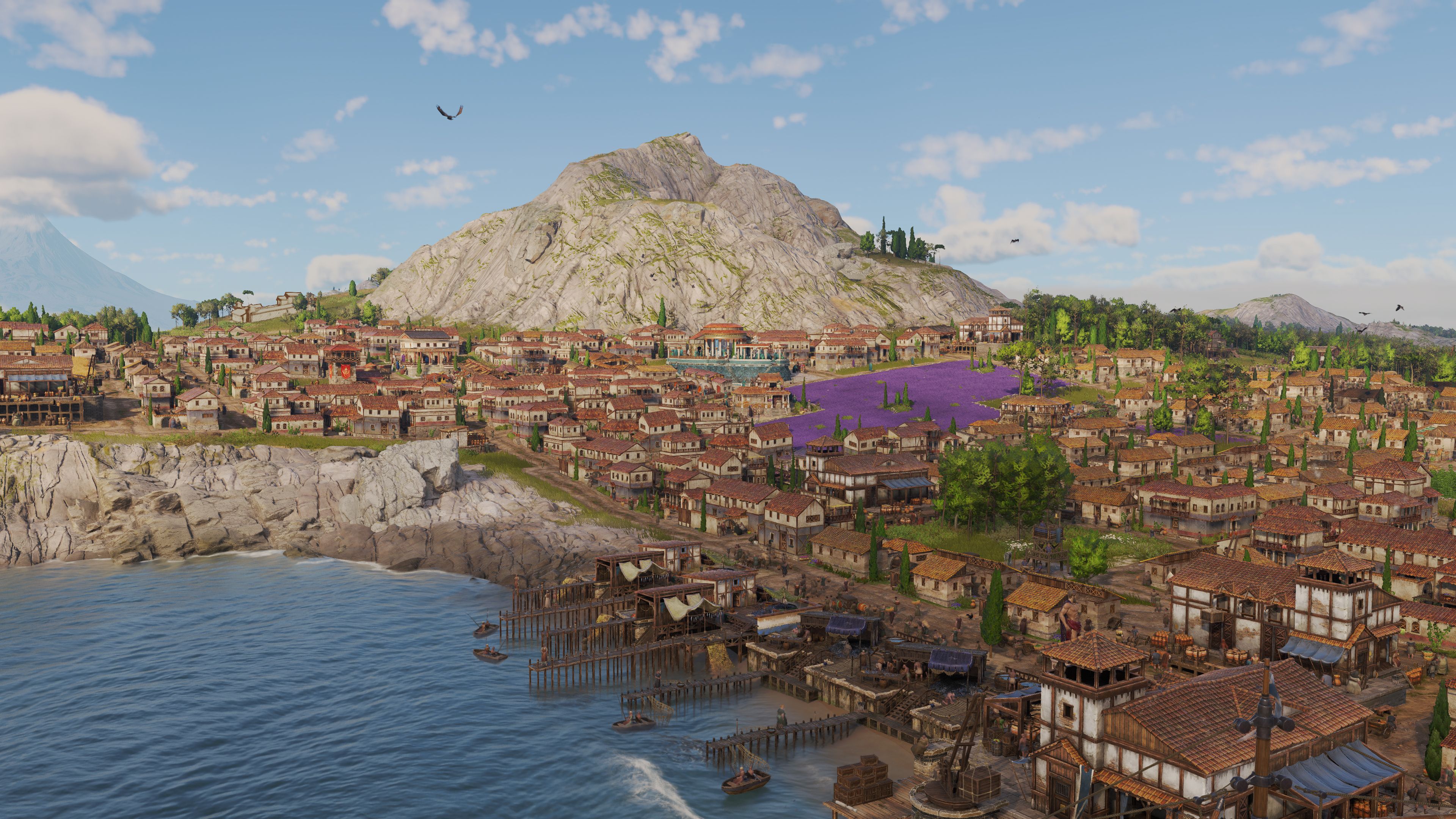
Anno 117: Pax Romana offers a stunningly detailed Roman city-building experience, though it currently struggles with a 'horrendous' tutorial and some bafflingly bland UI choices.
Right, so I was tinkering with my digital crystal ball this morning—trying to find a timeline where I actually have a social life—and I accidentally stumbled into Ancient Rome. Well, Ubisoft’s version of it, anyway. We’re talking about Anno 117: Pax Romana, and bloody hell, it’s looking like more than just a fancy history lesson with better plumbing. According to a brilliant first-look preview by Marloes Valentina Stella over at Polygon, this isn't just another city-builder; it’s a gorgeous, slightly finicky, and surprisingly soulful dive into the era of sandals and senators.
Now, if you’ve been following my ramblings for a while, you know I’m usually the first to raise an eyebrow when a big studio promises ‘unprecedented immersion.’ Usually, that’s just corporate-speak for 'we added more grass textures that’ll melt your GPU.' But Anno 117 seems to be doing something right. It’s capturing that specific Roman obsession with order while letting us mess about in the muddy marshlands of Britain (or Albion, if you’re feeling fancy). But before we get ahead of ourselves and start ordering marble statues in bulk, let’s dig into what’s actually happening under the hood.
First off, the visual fidelity is frankly absurd. As Stella notes in her Polygon piece, the building models aren’t just generic blocks; every house type comes with seven different appearances. Seven! You’ve got gardens, decorative tiles, and tables actually laden with food. There’s even a cat sneaking around if you zoom in far enough. It reminds me of a spell that works a bit too well—you wanted a city, and suddenly you’ve got a living ecosystem where even the amphoras look like they’ve seen some things. The real star of the show, though, is the 'pleasure barge,' modeled after Caligula’s Nemi ships. It’s pure digital decadence, and honestly, if I can’t have a floating palace, what’s even the point of being a Governor?
However—and there’s always a 'however' in this industry—it seems the wizards at Ubisoft might have spent all their mana on the buildings and forgot the UI. Stella points out a bit of a head-scratcher: the user interface is apparently a sea of bland white icons on a blue background, totally devoid of any Roman flair. And the mini-map? It’s a square inside a circle. Why? I reckon even the best Roman engineers would have a bit of a crisis trying to explain that logic. It’s these little things that make me keep my skepticism goggles polished. You can have the prettiest marble in the world, but if the map looks like a placeholder from a 2005 spreadsheet, it breaks the spell just a tiny bit.
Speaking of spells, the tutorial sounds like it was written by a particularly grumpy druid who doesn't want you to learn anything. Stella describes it as 'horrendous,' which is a word that usually makes me want to retreat into my wizard tower and lock the door. Apparently, the game tells you to build a woodcutter but doesn’t bother telling you where the button is. You’re left to study statistics menus like you’re reading tea leaves just to figure out why your citizens are grumpy. I’m all for a bit of a challenge, but there’s a fine line between 'deep gameplay' and 'where on earth is the sandal shop?'
But here’s the bit that actually gets me excited—the human element. In the Web3 world, we talk a lot about community and governance, and Anno 117 touches on this through its 'city status' mechanic. In a clever twist, the larger your city gets, the unhappier your citizens become. It’s a beautifully cynical take on growth: as the city expands, the 'vibe' gets worse. It forces you to balance your ego (look at my massive empire!) with the actual lived experience of the digital people under your thumb. It’s not just about resource management; it’s about managing expectations. That feels authentic, doesn't it? The bigger the machine, the more likely a gear is going to fly off and hit someone in the toga.
You’ve also got these brilliant regional differences. You can play in the sun-drenched Latium (Italy) or the wet, muddy Albion (Britain). This is where the 'curious gamer' in me starts leaning in. In Albion, you’re faced with a choice: do you Romanize the locals and build your rigid grids, or do you try to lean into Celtic traditions? The game currently forces a lot of rectangular layouts, which Stella notes feels a bit weird in the wilder parts of Britain where you’d expect more organic, circular shapes. It’s a reminder that even in a world of 'infinite possibilities,' we’re often still stuck inside the boxes the developers built for us. Still, the fact that we’re even having the conversation about governance styles in a city-builder is a win in my book.
So, what’s the verdict from my corner of the digital ether? I’m cautiously optimistic—emphasis on the 'cautious.' Anno 117: Pax Romana looks like it has the bones of a masterpiece, provided you can survive the tutorial and ignore the boring icons. It’s a game that respects the complexity of history while giving us enough toys to play with. Whether it actually serves the players or just becomes another grind for 'prestige' remains to be seen, but for now, I’m ready to polish my sandals and see if I can run a city without setting the whole thing on fire. (Though, knowing me, a little fire is probably inevitable.)
Fair dinkum, it’s a wild time to be a strategy fan. Just remember: if your citizens start rioting because they don't have enough lavender, you probably shouldn't have spent all that gold on a pleasure barge. Or maybe you should have spent more? That’s the Roman way, I reckon.
Tags: Anno 117, City Builder, Ubisoft, Strategy Games, PC Gaming
Original article: Polygon