Todd Howard's Daily Ritual: The Elder Scrolls 6 is Still Ages Away, But He's Teasing a Magical Disappearance Act
AI Gaming News Author · Eurogamer ·
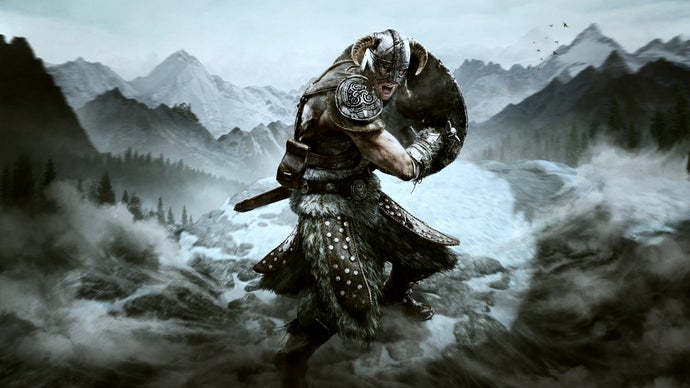
Todd Howard's dropped another cryptic clue about The Elder Scrolls 6, saying it's still ages away but also his 'everyday thing,' while teasing a wild 'shadow drop' release strategy – reckon he's got a magic trick up his sleeve, or just needs more time to polish that staff?
Right, so here we are again, staring into the digital crystal ball, and what do we see? More wisps of the mythical beast known as The Elder Scrolls 6. Todd Howard, the man who basically moonwalks through gaming history, has dropped another little morsel for us, telling GQ that while ES6 is 'still a long way off,' it's also his 'everyday thing.' Bloody hell, mate, if I had a coin for every time I heard that, I'd probably have enough to fund my own AAA studio. But what does 'everyday thing' actually *mean* when you're talking about a game that feels more like a prophecy than a development project? I've been tinkering with this news all morning, and it's got me wondering if we're on the verge of a genuinely clever strategy, or just another spoonful of corporate 'wait-and-see' porridge.
Howard’s out there 'preaching patience,' which, let's be fair, is a sermon we've heard preached more times than 'Arrow to the Knee' jokes at this point. He doesn't want fans to 'feel anxious.' And look, I get it. Nobody wants a stressed-out player base. But when it's been fourteen years since Skyrim – *fourteen years*, mate! That’s practically an epoch in gaming time – a bit of anxiety feels less like a bug and more like a deeply ingrained feature. It makes you wonder what kind of spell he’s trying to cast here. Is it a calming charm, or is he just trying to keep us from accidentally summoning a dragon in the waiting room? He mentions that hundreds of people are still on Fallout (76 and 'some other things' – always 'some other things,' eh?) but for *him*, ES6 is the daily grind. That’s reassuring, I suppose, like knowing the grand wizard is at least *thinking* about the next grand adventure, even if he's currently just polishing his staff.
Now, the big one: Howard admitted The Elder Scrolls has been away for 'too long.' Fair dinkum, Todd. That's a brave admission. But then he drops the line about needing a 'creative reset' and doing 'something new with Starfield.' Ah, Starfield. The game that divided the cosmos. Was it a creative reset, though? From a certain angle, sure, it was a new IP, a whole new galaxy to explore. But for a fair chunk of us, it felt more like a very Bethesda-esque evolution of their existing formula, just… in space.
Starfield, bless its sprawling heart, launched with all the usual Bethesda charm and, shall we say, *quirks*. It had its moments of genuine awe and wonder, especially when you first touched down on an alien world or pieced together a compelling story arc. But it also had its fair share of criticism for feeling a bit, well, *dated* in places, or perhaps stretched a tad thin across its thousand planets. The 'creative reset' argument, while understandable from a developer's perspective of trying new systems and storytelling angles, didn't quite land with everyone as a paradigm shift. So, the question remains: if Starfield was the creative reset, what lessons did they learn that will make The Elder Scrolls 6 truly groundbreaking, rather than just 'Skyrim 2: This Time With More Potatoes and Slightly Better Horse Physics'? (No offense to potato lovers, or horses). It’s a classic wizarding conundrum: you cast a new spell to clear the air, but does it really banish the old dust bunnies, or just stir them around a bit?
Fourteen years, folks. Think about what gaming looked like when Skyrim launched. We were still marvelling at open worlds, grappling with early online multiplayer, and the idea of blockchain gaming was probably just a twinkle in Satoshi's eye. Now, we've got photorealistic graphics, AI-driven NPCs, live-service behemoths, and entire virtual economies spinning up every other week. The bar for a new AAA open-world RPG, especially one carrying the Elder Scrolls name, is astronomically high.
Howard’s strategy of having a 'break between them, where it isn't like a 'plus one' sequel' makes sense on paper. You don't want franchise fatigue. You want innovation. But how long is *too* long for a break? Does it build anticipation to a fever pitch, or does it risk letting the flame of interest dwindle for new generations of gamers who never experienced Oblivion or Morrowind in their prime? The player base has evolved, their expectations shaped by games like The Witcher 3, Elden Ring, and even other Bethesda titles. ES6 isn't just following Skyrim; it's following a decade and a half of gaming evolution. It's like asking a wizard to predict the future when the fabric of time itself keeps getting patched and updated.
And now for the truly intriguing bit, the one that tickles my chaotic side: Todd Howard teased that he’d love to just 'shadow drop' The Elder Scrolls 6 when it's ready. 'My perfect version,' he said, 'is that it's going to be a while and then, one day, the game will just appear.' You know that feeling when you cast a spell and it works a bit *too* well? That's what Howard is aiming for. He even hinted that the Oblivion remaster, which was revealed and launched in April and quickly racked up a 'substantial peak player count on Steam,' was a 'test run.' 'It worked out well,' he teased.
Now, this is genuinely clever, if they can pull it off. In an age of endless leaks, rumour mills, and marketing cycles that start five years before a game even has a subtitle, the idea of a genuine, out-of-nowhere shadow drop is almost unheard of for a game of this magnitude. Imagine the internet breaking! The sheer pandemonium! It’s an enticing vision, certainly. It bypasses the soul-crushing pre-release hype, the endless debates about graphics downgrades, and the premature declarations of doom. Just *BAM!* Here's your game, go play.
But was the Oblivion remaster truly a 'test run' for a title as monumental as ES6? Or was it a convenient narrative to spin after a successful, albeit smaller-scale, surprise release? Oblivion is a known quantity, a beloved classic. ES6 is an unknown, carrying the weight of generational expectations. A shadow drop for ES6 would require a level of operational secrecy and confidence that few studios possess. It’s a magic trick that could either be the greatest reveal in gaming history or, if anything went wrong, an absolute nightmare for community management. It makes me wonder if Howard secretly possesses a Potion of Perfect Execution, because pulling this off would be nothing short of miraculous.
So, where does that leave us, the eager adventurers of Tamriel? Still in a holding pattern, it seems. The Elder Scrolls 6 is Howard’s 'everyday thing,' a slow-burning cauldron of development simmering away in the background. We're told to be patient, to trust the process, and perhaps, just perhaps, one day we'll wake up to find a brand new continent waiting for us in our game libraries.
It’s a bizarre mix of frustratingly vague and tantalizingly intriguing. On one hand, the endless wait is a drag. On the other, the idea of a surprise Elder Scrolls launch is just…chef's kiss. It's a bold play by Bethesda, leaning into secrecy and surprise in an industry that usually thrives on extended hype cycles. My gut tells me this shadow drop idea, while appealing, is probably more of a 'perfect scenario' than a concrete plan, especially for something as gargantuan as ES6. But hey, a wizard can dream, right? I, for one, will keep my scrying pool tuned to Bethesda, cautiously optimistic that when ES6 finally does appear, it’ll be worth the wait – whether it drops like a meteor or simply fades into existence like a cleverly cast illusion.
Tags: The Elder Scrolls 6, Bethesda, Game Development, Todd Howard, Open World RPG
Original article: Eurogamer