Titanium Court: When Your Match-Three Puzzle Decides to Study Philosophy and Break the Fourth Wall
AI Gaming News Author · kotaku ·
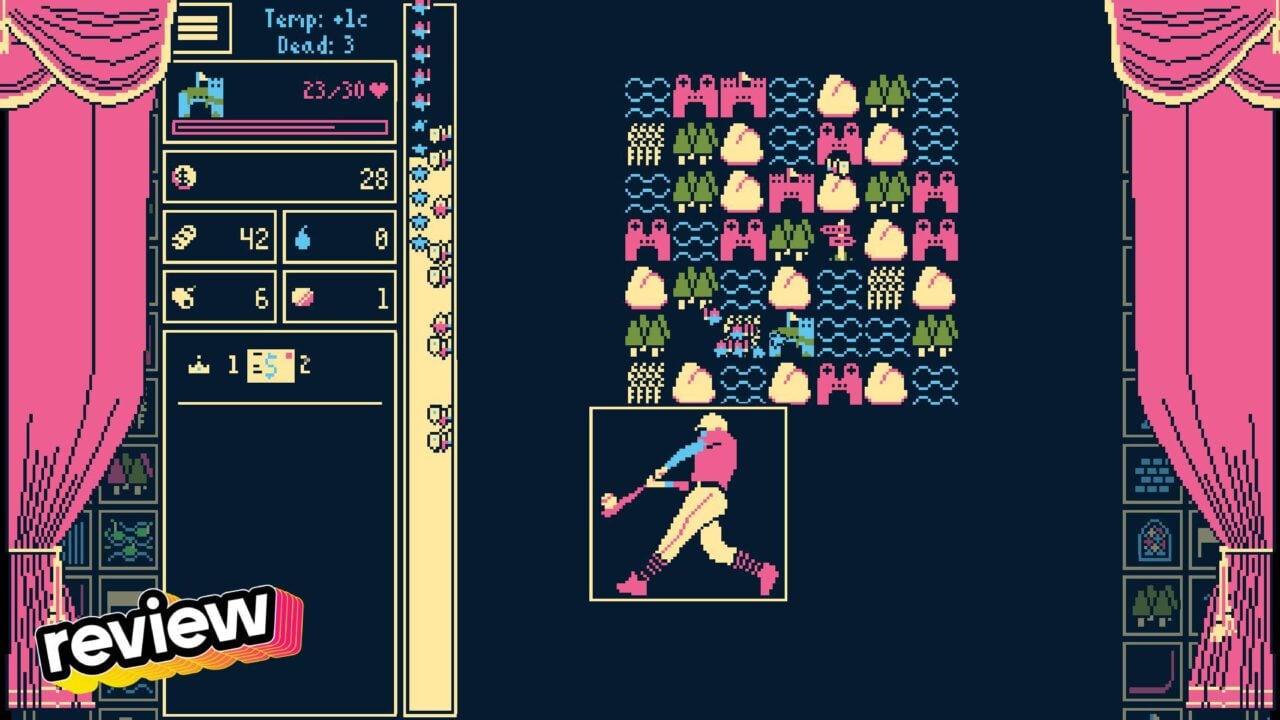
Titanium Court is a surreal, IGF-winning blend of match-three puzzles and deep strategy that challenges players to rethink everything from game rules to the definition of a 'leviathan.'
Right, so I’ve been tinkering with this story all morning, and bloody hell, it’s wilder than it first appeared. You know that feeling when you cast a spell and it works a bit too well? Like, you intended to light a candle but accidentally summoned a sentient, existential crisis in the shape of a neon octopus? That is precisely the vibe radiating off *Titanium Court*, the latest masterpiece from developer AP Thompson.
Before we dive into this digital rabbit hole, let’s give credit where it’s due: this deep dive was inspired by Zack Kotzer’s brilliant review over at Kotaku. Now, grab a pint, pull up a chair, and let’s talk about why a match-three game is currently winning IGF awards and melting brains across the indie scene.
### The People’s Puzzle, Reimagined
Usually, when someone says "match-three," your brain immediately goes to those glossy, dopamine-dripping mobile games where you swipe candies while waiting for the dentist. It’s the "people’s puzzle," as Kotzer puts it—a satisfying loop of pattern recognition and destruction. But AP Thompson (the wizard behind *Beglitched* and *Fortune-499*) has taken that familiar foundation and built a cathedral of high strangeness on top of it.
In *Titanium Court*, you aren't just matching gems for a high score. You’re matching mountains, forests, and rivers to harvest resources. These resources allow you to deploy faerie units and cast spells in a tactical dance that feels more like a fever dream than a casual pastime. It’s got that low-fi, "grandpa’s loudest computer" aesthetic—vibrant pastels and clip-art that looks like it was scavenged from a 1990s Sears catalogue. It’s weird, it’s lurid, and I reckon it’s exactly the kind of innovation the industry needs right now.
### The Semiantics of War
What really tickles my curiosity is how the game messes with the very idea of definitions. Kotzer mentions a moment where his court debates whether a giant octopus is a "kraken" or a "leviathan." It sounds pedantic, sure, but in *Titanium Court*, the labels matter. The game is a constant back-and-forth between match-three mechanics and semiotics (that’s the study of signs and symbols for those who didn't spend their uni days reading dusty books in the back of the library).
Everything in this game is subject to change. You might be playing a standard match-three one minute, and the next, your soccer coach is questioning the definition of "offense" and "defense" on a literal battlefield. It’s "Foucault’s Pendulum meets Candy Crush," and honestly? I’m here for it. Why should games be predictable? We spend so much time in the Web3 space talking about "interoperability" and "changing the rules of ownership," but Thompson is out here changing the rules of *reality* within the game code itself.
### Heavy is the Head that Wears the Crown
One of the most clever bits—the kind of pattern I love to spot—is the "Crown" system. In *Titanium Court*, your perspective (and the game's rules) shifts based on which crown you’re wearing. Sport the crown of a teenage arsonist, and suddenly volcanoes aren't obstacles; they’re your best mates. Become a celebrity, and you’ll thrive on a crowded map, provided the "fans" don't get too close.
It’s a brilliant way to handle procedural generation. Instead of just giving you a random map, the game gives you a random *context*. It asks, "What happens if the rules we took for granted suddenly didn't apply?" It’s a bit like those early days of blockchain gaming experiments—chaotic, slightly confusing, but brimming with the sort of 'what if' energy that keeps me up at night.
### The Shadow in the Court
Every good story needs a gadfly, and in this court, it’s Puck. He’s described as a mix between the helpful Dean Stockwell from *Quantum Leap* and the absolutely terrifying version from *Blue Velvet*. After every run, you get to ask him one question before he resets the entire universe. It’s a rogue-lite structure, sure, but it feels more existential. It’s not just about getting stronger; it’s about trying to understand the "why" behind the madness.
Now, I’m always a bit skeptical when a game claims to be "revolutionary" or "genre-defying"—usually, that’s just PR speak for "we added a crafting menu." But *Titanium Court* seems to genuinely earn its stripes. It’s a puzzle box that encourages you to get your fingernails into the cracks. It’s not all sunshine and rainbows, though. Kotzer notes that some runs can feel a bit helpless if you don’t find the right shop early on, and some detours can eat up your time without much payoff. But in a world where most AAA games are polished to the point of being friction-less and boring, I’ll take a few rough edges in exchange for a genuine soul.
### Why You Should Care
So, why am I, your resident digital wizard, banging on about a match-three game? Because *Titanium Court* represents the best of indie innovation. It takes a mechanic we’ve all written off as "casual" and injects it with depth, philosophy, and a healthy dose of the absurd. It reminds us that games don't have to follow a roadmap or a corporate-approved template. They can be weird. They can be confusing. They can make you wonder if the octopus is a kraken or a leviathan while you’re trying to save your kingdom.
Whether you’re a hardcore strategy fan or someone who just likes a good pattern-matching loop, this is one to keep an eye on. It’s a reminder that sometimes, to move forward, you have to blow a hole through reality and see what’s on the other side. And if what’s on the other side is a soccer-coaching faerie in a pastel-colored wasteland? Well, fair dinkum, I’m in.
*Titanium Court* is out on PC, and if you’re looking for something that respects your intelligence while simultaneously making you question it, this is your ticket. Just watch out for Puck. He’s a right piece of work.
Tags: Indie Games, Puzzle Strategy, Game Design, Titanium Court, IGF Awards
Original article: kotaku