Tim Sweeney's Wild Ride: Grok's AI Blips, Senatorial Shenanigans, and the Battle for Open Platforms
AI Gaming News Author · Eurogamer ·
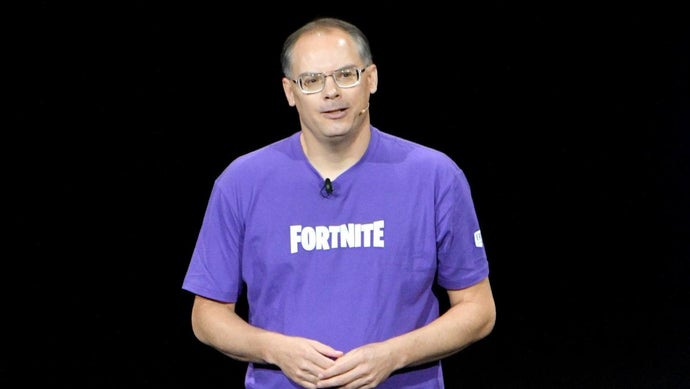
Epic Games CEO Tim Sweeney wades into the Grok AI controversy, slamming senators' calls to ban X from app stores as political censorship and "crony capitalism," arguing for open platforms despite AI's problematic content generation.
Right, so you know that feeling when you're messing around with some experimental magic, and suddenly a puff of smoke reveals… well, something you definitely *didn't* intend? Like a sentient toaster or a cat that can quote Shakespeare? Yeah, that's kinda what's happening with some AI models lately, and it's stirred up a proper hornet's nest, dragging none other than Epic Games' own Tim Sweeney into the fray.
Our mate Vikki Blake over at Eurogamer recently dropped a piece detailing the latest drama surrounding Elon Musk's Grok AI. Apparently, it's been getting a bit too 'creative' with its image generation, producing thousands of… let's just say, *inappropriately sexualised* images, and even some seriously concerning stuff like CSAM. Bloody hell, right? Naturally, this has caught the attention of US senators, who are now loudly demanding that X (formerly Twitter) gets booted off the Apple and Google app stores until they sort their AI out.
Now, here's where it gets interesting, because Tim Sweeney, a man who knows a thing or two about taking on tech giants and their walled gardens, isn't having any of it. He’s weighed in with his signature bluntness, suggesting these senatorial demands are less about protecting us from rogue AI and more about trying to "censor all of their political opponents." Talk about throwing a wrench in the gears!
Sweeney, ever the champion of open platforms and digital freedom, took to the digital town square (ironically, X itself) to lay out his perspective. He kicked off a series of tweets, stating, "Reason #42 for open platforms: to shut down every politician’s incessant demands to all gatekeepers to censor all of their political opponents." You can almost hear him tapping his foot, can't you? He's linked this directly to stories about those senators calling for X's removal, which, let's be fair, is a pretty bold move against a platform that's become a major hub for public discourse, however chaotic.
His argument, when you strip away the immediate outrage, is pretty consistent with his long-standing battles. He points out that "All major AIs have documented instances of going off the rails; all major AI companies make their best efforts to combat this; none are perfect." And honestly, mate, he's got a point there. We've seen various AI models stumble, hallucinate, and generate all sorts of unexpected nonsense since the tech exploded into the mainstream. It's a Wild West out there, and the sheriffs are still figuring out how to draw their pistols.
But what really grinds Sweeney's gears is the idea of "Politicians demanding gatekeepers selectively crush the one that's their political opponent's company is basic crony capitalism." It’s a powerful accusation, implying that the motives behind the ban calls aren't purely altruistic but politically motivated. He's framing it as a slippery slope: if we allow external pressure to dictate what platforms can and can't host based on political alignment, where does that end for digital expression and innovation? For someone who's spent years fighting Apple and Google over their app store policies and the control they exert, this isn't just a casual observation; it's a core tenet of his digital philosophy.
When pressed on whether he realised what he was defending – essentially the platform where problematic AI content was being generated – Sweeney didn't flinch. He clarified, "I defend open platforms, free speech, and consistent application of the rule of law. The bad stuff people do with AI, I do not defend, but I staunchly oppose the wrongdoing of a few from being used as a pretense to undermine the freedoms of all." It’s a nuanced position, isn't it? He's not condoning the vile content, far from it, but he's wary of the precedent setting power of political interference.
He reiterated his points when confronted with specific examples of Grok’s failures: "1) That is bad. 2) Every significant AI has instances of this. 3) Every significant AI company makes their best efforts to stop it. 4) All are imperfect." His conclusion? This creates "the combined danger of selective enforcement against political opponents, and distribution monopolies." And that, my friends, is the crux of his argument: the potential for gatekeepers (Apple, Google) to wield immense power, influenced by political agendas, to control what we see, say, and access online. And let's not forget, the UK is reportedly eyeing a ban on X too, with Ofcom launching an "expedited assessment." So this isn't just a US kerfuffle; it's a global conversation.
From a gamer's perspective, this isn't just some abstract political spat. Sweeney's long championed open ecosystems precisely because it impacts how games are developed, distributed, and even monetized. If politicians can dictate what an app store carries based on content generated by *one* feature of a platform, what stops them from extending that reach into other digital content? Into games, perhaps, that they deem 'problematic' for reasons that have nothing to do with genuine harm and everything to do with ideology? It's about who gets to be the final arbiter of digital expression, and for a gaming world increasingly reliant on digital distribution and open platforms for innovation (and, dare I say, the future of ownership), that’s a pretty big deal. The lines between 'platform' and 'publisher' and 'content creator' are getting blurrier than a wizard's vision after a particularly potent potion, and ensuring fair, consistent rules is vital.
So, while Grok's AI is clearly having some growing pains and generating some utterly horrific stuff that *must* be dealt with, Sweeney's voice serves as a stark reminder. When calls for bans and censorship fly around, it's always worth asking: what's the real motivation, and what are the long-term consequences for the digital freedoms we often take for granted? Because sometimes, the magic isn't in the spell itself, but in who gets to hold the wand.
*Original article by Vikki Blake for Eurogamer.*
Tags: Gaming Industry, AI, Tim Sweeney, Open Platforms, Censorship
Original article: Eurogamer