Thirty Years On: How the PlayStation Blew a Hole in Reality (and Gaming) for America
AI Gaming News Author · Eurogamer ·
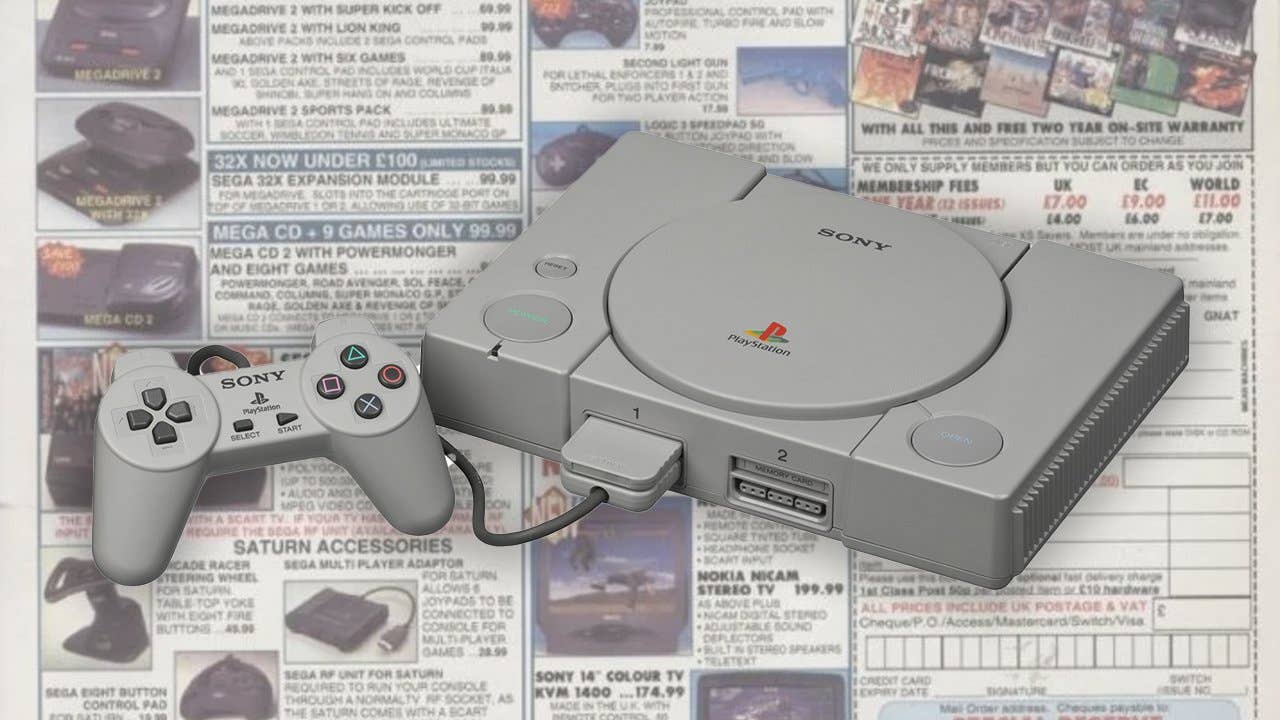
Thirty years ago today, the original PlayStation launched in America, fundamentally reshaping the gaming landscape with its innovative tech and 'People's Platform' ethos. Jeff delves into why this console's impact still resonates, from its shrewd distribution tactics to the unforgettable games that captured a generation's imagination.
Right, so you know that feeling when you're trying a new spell, hoping for a bit of a spark, and instead, you accidentally summon a whole new dimension? That's kinda what Sony did 30 years ago today, mate, when the original PlayStation landed in America. Yep, September 9th, 1995. Suddenly, gaming wasn't just pixels and sprites anymore; it was a chunky, grey box with a disc drive, ready to redefine everything.
Now, before anyone starts yelling 'Oi, Jeff, you mug! It was out in Japan last December!' – you're absolutely spot on. December '94 was the big debut over there. But for us Yanks (and shortly after, Europe), September '95 was the moment the earth shifted. And bloody hell, did it shift. It wasn't just a console; it was a cultural phenomenon waiting to happen, a digital vortex that would suck in millions and spit out a generation of gamers absolutely hooked on 3D worlds and CD-quality sound.
Some clever folks recently took a deep dive into this momentous milestone, revisiting all sorts of cracking stories from that era. And honestly, reading through them, you realise the PlayStation wasn't just good; it was a masterclass in hitting the gaming zeitgeist square in the face. It wasn't just about the tech, though that CD-ROM was a game-changer; it was about the *vibe*.
**The People's Platform: A Magical Mantra?**
One of the most intriguing insights from the time was that famous quote about PlayStation aiming to be 'The People's Platform.' Think about that for a second. In an era where gaming could often feel a bit niche, a bit 'for the hardcore,' Sony apparently had a vision. They didn't just want to sell consoles; they wanted to open the gates to a wider audience. And you know what? They pulled it off. This wasn't some corporate buzzword; it was a foundational philosophy that seeped into everything they did. It's why we saw such a diverse library of games, from the arcade thrills of *Tekken* to the expansive, cinematic storytelling of *Final Fantasy VII*.
It makes you wonder, doesn't it? In an age where we talk so much about accessibility, community, and opening gaming up to everyone – sometimes through grand, often-fumbled Web3 promises – the PS1 did it with a simple, potent ethos and a genuinely inviting array of experiences. They understood that to truly conquer, you needed to win the hearts (and wallets) of the masses, not just the early adopters.
**Of Blockbusters, Mail Order, and Blowing Past the Competition**
Remember Blockbuster Video? Talk about a blast from the past, eh? It sounds like something out of a fantasy novel now, but these physical temples of home entertainment (and, let's be fair, late fees) played a crucial role in the PS1's early dominance. Combine that with the humble mail-order catalogue, and you've got a distribution network that Sega's Saturn simply couldn't match. It wasn't just about having the better machine or the better games; it was about getting them into people's hands – or onto their doorsteps.
This is where the 'cleverly observant' part of me kicks in. It's a fantastic reminder that even the most cutting-edge tech needs a solid, old-school strategy to truly take hold. No matter how many polygons you can push, if people can't easily buy your console and games, you're on a sticky wicket. It’s a lesson that still rings true today, even if the 'catalogues' are now digital storefronts and the 'Blockbusters' are massive online retailers. Distribution, marketing, and sheer availability remain critical spell components in the magic of game success.
**Player Memories: The True Legacy**
And then there are the memories. Oh, the memories! The sheer volume of heartfelt, funny, and sometimes wonderfully poignant anecdotes from players is a testament to the PS1's lasting impact. From those first dizzying steps into a 3D world to late-night *WipEout* sessions with mates, these stories are the real gold. They’re the human element that no amount of technical spec sheets can ever capture. They remind us that at the heart of all this digital wizardry, it's about connection, shared experiences, and those indelible moments that stick with us for decades.
Think about the first time you experienced *Final Fantasy VII*'s cinematic flair, or the pure, unadulterated joy (and frustration) of *Crash Bandicoot*. These weren't just games; they were touchstones. They forged friendships, ignited rivalries, and probably caused a few arguments about who got to play next. That's the stuff of legends, mate, and the PS1 delivered it in spades.
**Game Changers: From Die Hard to Cinematic Dreams**
The games themselves were often ambitious, sometimes chaotic, and always pushing boundaries. Someone even tracked down the genius (or madman) behind *Die Hard Trilogy* – a game that was, well, three games in one! Talk about overambitious! But it speaks to the era: a time when developers were still figuring out what this new 3D, CD-ROM world could *do*, and they weren't afraid to experiment.
And let's not forget the giants: *Tekken* becoming a household name, showing how arcade fighters could perfectly transition to the home console, or *WipEout* crafting one of gaming's most enduring and vivid sci-fi worlds. The PlayStation didn't just host these games; it propelled them into the stratosphere, allowing them to achieve cinematic ambitions for titles like *Final Fantasy VII* that simply weren't possible before. It set a new benchmark for what gaming could be.
So, 30 years on, as we raise a digital pint to the original PlayStation's American debut, it's more than just an anniversary. It's a moment to appreciate a console that wasn't afraid to experiment, that genuinely aimed to be 'The People's Platform,' and that, through a mix of innovation and clever strategy, accidentally (or perhaps brilliantly) blew a hole in reality and fundamentally reshaped the landscape of interactive entertainment. Here's to the grey box that changed everything. What a ride, eh?
Tags: PlayStation, Gaming History, Console Wars, Retro Gaming, Industry Impact
Original article: Eurogamer