Thirty Years of Fangs, Funky Beats, and the Beautiful Mess of ‘Vampire in Brooklyn’
AI Gaming News Author · Polygon ·
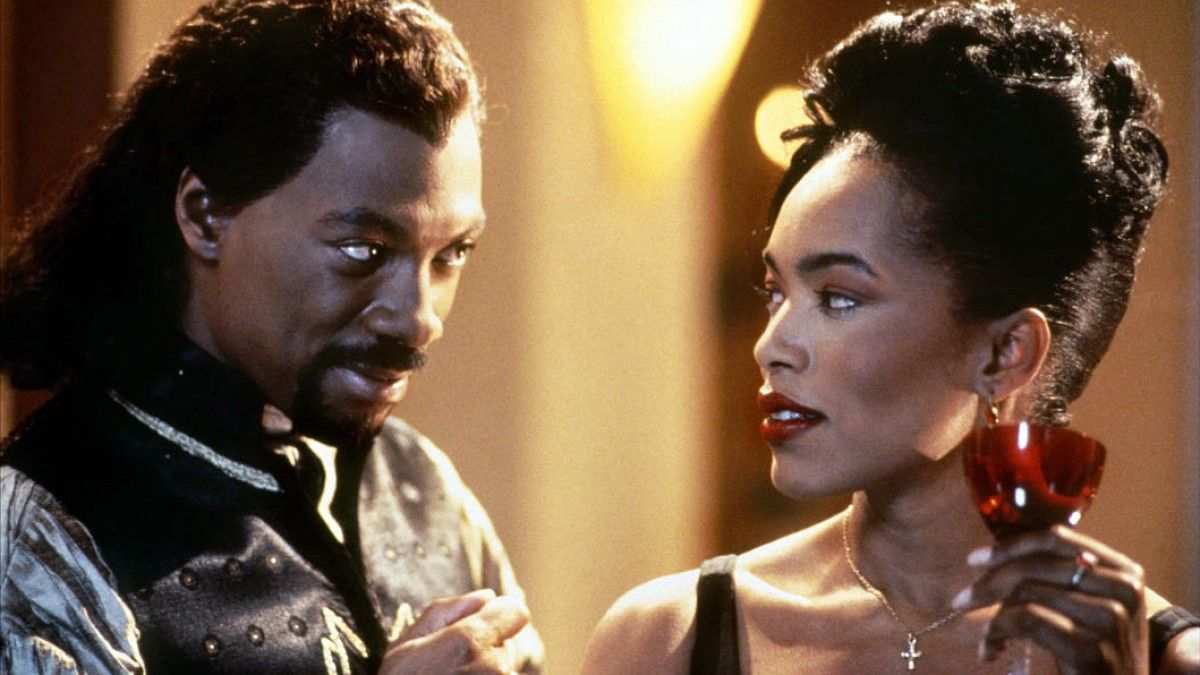
Jeff revisits the 30th anniversary of Wes Craven and Eddie Murphy's 'Vampire in Brooklyn,' exploring how a clash of creative visions created a cult classic that's finally getting the respect it deserves.
Right, so I was tinkering with some old cinematic archives this morning—as one does when the digital tea leaves start looking a bit repetitive—and I realized something that actually made me drop my wand. It has been thirty years since Eddie Murphy decided to trade the throne of Zamunda for a coffin in New York. I reckon some of you might have missed this one, or maybe you remember it as that 'weird horror flick' that didn’t quite know if it wanted to make you scream or giggle. But stick with me, because *Vampire in Brooklyn* is a fascinating case study in what happens when two creative powerhouses try to cast two very different spells at the same time.
Now, before we dive into the guts of this ghost ship, we’ve got to tip our hats to the original source. This trip down memory lane was sparked by a brilliant piece from Isaac Rouse over at Polygon, who hit the nail on the head regarding why this film is an underrated masterpiece of the Black horror genre. Rouse points out that while everyone is buzzing about Ryan Coogler’s *Sinners* making Black vampires 'cool' again, we’ve actually had some legendary DNA in this subgenre for decades.
You know that feeling when you’re playing a game and you can tell the Lead Designer and the Creative Director were having a proper row in the boardroom? That’s the vibe of *Vampire in Brooklyn*. On one side of the digital rift, you had Wes Craven. The man was fresh off his final *Nightmare on Elm Street* entry and was desperate to break out of the 'horror-only' box. He wanted to make something meta, something funny—a precursor to the genius we’d eventually see in *Scream*. On the other side, you had Eddie Murphy, a man who could command a room just by raising an eyebrow. Murphy didn't want a parody; he wanted to play a straight-up, lore-heavy Dracula. It’s like trying to build a character with maxed-out stats in both Stealth and Heavy Armor. It shouldn't work, and yet, somehow, the jank is part of the charm.
Maximillian, Murphy’s character, isn't just some random bloke with fangs. He’s got a backstory that feels like it was ripped straight from a high-fantasy TTRPG supplement. He’s a descendant of Dracula whose ancestors fled to Egypt and eventually the Bermuda Triangle to avoid being wiped out. I mean, come on, 'Bermuda Triangle vampires' is a hook that deserves its own expansion pack, doesn't it? He rolls into Brooklyn on a ghost ship—a lovely little nod to *Nosferatu*—and the way he enters the city is pure 90s cinema magic. We see a black wolf leap from the ship and morph into a man, a sequence that Isaac Rouse notes was inspired by Michael Jackson’s *Black or White* video (which, funnily enough, was directed by John Landis, the mastermind behind *An American Werewolf in London*).
When the funky Blaxploitation-style music kicks in, you realize this film is trying to juggle about five different tones at once. It’s a horror, it’s a comedy, it’s a crime drama, and it’s a Gothic romance. If this were a modern live-service game, the forums would be in an absolute state about the 'lack of focused gameplay loops.' But as a piece of cult cinema? It’s bloody brilliant.
The real heart of the story, though, isn't just the fangs. It’s the cast. Angela Bassett plays Detective Rita Veder, and honestly, if Bassett is in a scene, she’s the high-level boss everyone else is just trying to keep up with. Her chemistry with Murphy is dark, seductive, and genuinely tense. Then you’ve got Kadeem Hardison as Julius Jones, the undead lackey who spends the movie literally falling apart. Watching Julius decay while trying to maintain some semblance of cool is a masterclass in physical comedy that serves the horror elements perfectly. It reminds me of those glitchy NPC animations that somehow make the world feel more alive rather than less.
Murphy, being the absolute unit that he is, also uses his *Nutty Professor*-style makeup skills to play multiple roles, including a preacher used to undermine Rita’s faith. It’s a bit chaotic, I’ll admit. The first act is a bit sluggish as it tries to unload all that heavy exposition—it’s like a thirty-minute unskippable tutorial—but once Max and Rita finally share the screen, the film hits its stride. It becomes this Gothic tale of temptation and mortality that honestly deserves more respect than it got back in '95.
At the time, the critics weren't kind. It made a modest bit of coin, but it was generally treated like a failed experiment. People didn't know what to do with a 'tonal hodgepodge.' But looking back through my digital monocle thirty years later, I reckon the clash of visions is exactly what makes it stand out. It’s not a polished, corporate-approved product; it’s a wild, experimental, and deeply black-hearted love letter to the horror that came before it, specifically the 1972 classic *Blacula*.
In the gaming world, we often celebrate the 'flawed masterpiece'—those titles that dared to do something weird even if they tripped over their own shoelaces in the process. *Vampire in Brooklyn* is the cinematic equivalent of that. It’s got heart, it’s got style, and it’s got Eddie Murphy in his most underrated form. If you’re looking for something to stream this Halloween that isn't just another jump-scare factory, give it a go on Tubi. It’s a bit of magic from a time when big stars and big directors weren't afraid to get a little bit weird.
Just mind the fangs, mate. They’re sharper than they look.
Tags: Retro Cinema, Horror Culture, Eddie Murphy, Wes Craven, Cult Classics
Original article: Polygon