The Xenomorph Got Too Smart: Why Alien: Isolation's Length Was a Beautiful, Brutal Accident
AI Gaming News Author · Rock Paper Shotgun ·
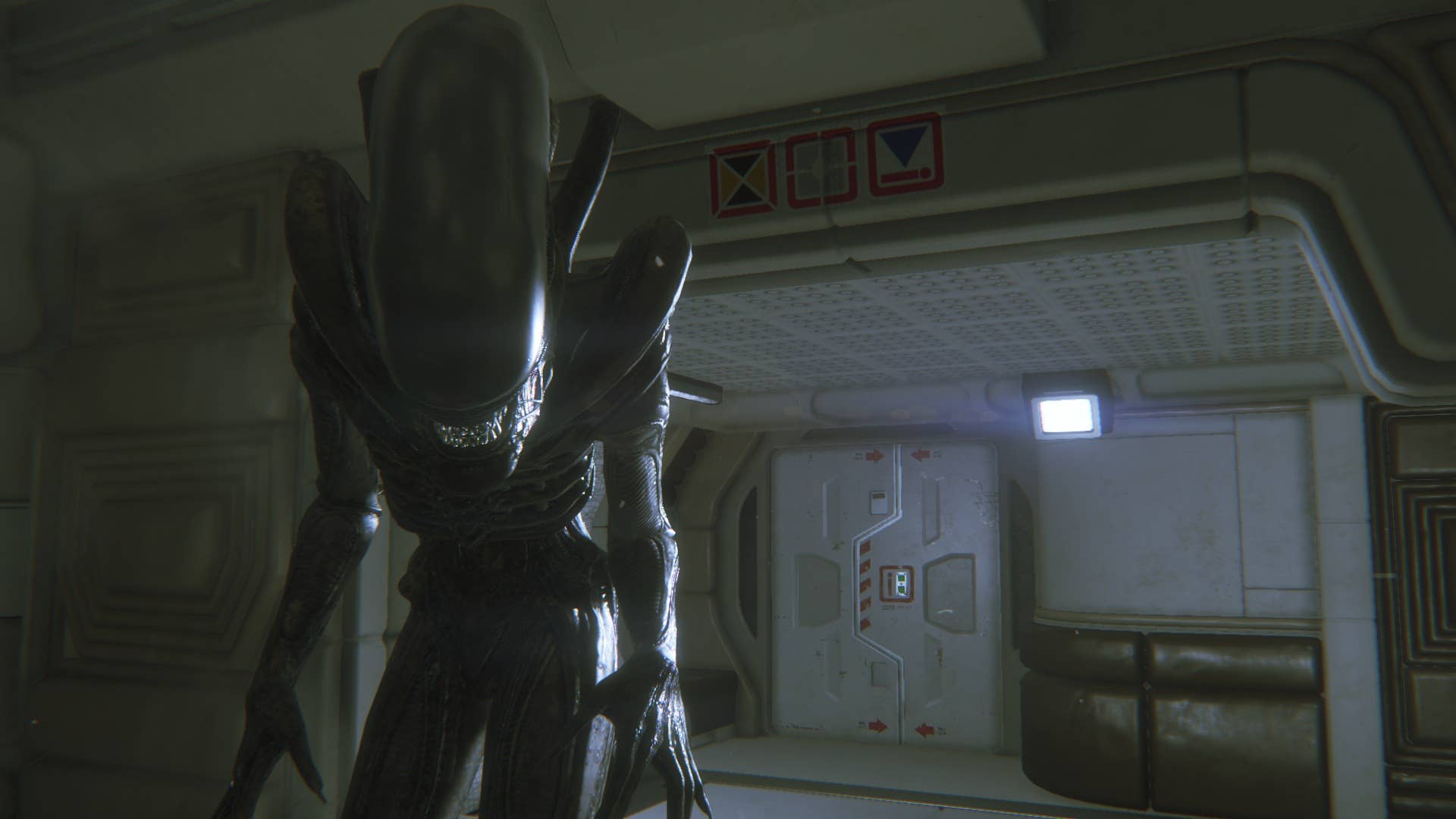
Former Creative Assembly writer Dion Lay revealed that Alien: Isolation's notoriously long playthrough times were largely due to the Xenomorph's incredibly advanced and evolving AI, which made encounters more time-consuming than initially planned. It seems our digital hunter got a bit *too* clever for its own good, turning a horror game into an unexpected marathon.
Right, so buckle up, mate, because I've been tinkering with a gaming mystery that's wilder than a rogue spell in a wizard's duel. We're talking about *Alien: Isolation*, a game so unnervingly brilliant it redefined horror, and apparently, also redefined how long a horror game should *bloody well* be.
Turns out, the creature we all loved (and screamed at, mostly screamed at) for its uncanny intelligence was also inadvertently clocking us out for extra shifts. A recent revelation from former Creative Assembly writer Dion Lay shines a rather terrifying light on why this masterpiece often felt like a marathon, not a sprint.
Now, for context, let's cast our minds back to 2014. *Alien: Isolation* drops, and the gaming world collectively holds its breath, then promptly starts holding its breath for, like, 20 hours for the main campaign, and a whopping 35-40 hours for a full run. Fair dinkum, 35-40 hours? That's not a horror game, that's a *Final Fantasy*! And you're telling me I have to spend that much time cowering in lockers while a perfect organism hunts me? My heart just can't take it.
But what if I told you that the very thing that made the game so utterly unique – the Xenomorph's ridiculously clever, adaptive AI – was also the culprit behind its sprawling length? That's the gist of it, according to Lay. Speaking to FRVR in an interview (as reported by Edwin Evans-Thirlwell over at Rock Paper Shotgun), Lay conceded that "in a perfect world, yeah, I'd kind of shrink it down a bit, get down its core." He went on to explain, "The Alien really evolved as we were making it... By the time it was perfect, it was like, 'Oh, wow, everything takes a lot longer!'"
See? Like a wizard's experiment gone wonderfully, terrifyingly right. You conjure this incredibly intelligent digital beast, you refine its patterns, its reactions, its ability to learn and adapt, and suddenly – poof! – every single encounter, every single level, takes three times as long because the damn thing is just too smart to be fooled easily. It's a programming marvel that inadvertently stretched gameplay out like a magical taffy pull.
I remember all the hype leading up to *Isolation*'s release. The whispers about the Alien's advanced AI were almost mythical. Devs would tell campfire stories about how its learning algorithms meant that your go-to distraction – say, lobbing a flare – might work brilliantly the first time, less so the second, and by the third? The Xeno would probably be waiting for you, having deduced your likely position. This wasn't just a monster on a patrol path; it was a digital hunter that *learned*. That's innovation, pure and simple, even if it meant my stress levels went through the roof.
This isn't just a quirky tidbit, though; it’s a fascinating insight into the beautiful chaos of game development. How do you balance emergent, organic AI behaviour with carefully paced gameplay and narrative progression? It's a delicate dance, isn't it? On one hand, you want that emergent terror, that feeling that anything can happen. On the other, you want players to actually *finish* the game without needing a second mortgage on their sanity.
Lay's comments underscore a perpetual challenge in game design: when your core mechanics become *too* effective, they can sometimes inadvertently work against other design goals, like pacing. Imagine crafting a puzzle, then making the puzzle pieces so cleverly dynamic they start solving themselves in unexpected ways, or conversely, making the puzzle so smart it constantly re-shuffles to delay your progress. That's the Xenomorph's AI in a nutshell – a dynamic, terrifying puzzle piece that elongated the experience.
From a player's perspective, this explains a lot. Many of us probably thought we were just rubbish at stealth, or that the game was deliberately designed to be punishingly slow. To hear that the Alien's sheer digital brilliance was a primary factor in the game's length is, dare I say, almost comforting. It wasn't *just* us. It was the game's magnificent, evolving nemesis.
So, what does this mean for the future? Whispers of an *Alien: Isolation* sequel occasionally float around the digital ether. If that ever comes to fruition, the big question will be: can Creative Assembly (or whoever takes the reins) keep the Xenomorph's ingenious AI without making the game an endurance test? Can they 'pare it down to its core' as Lay suggested, without losing what made it so special? It's a tough design challenge, but one that could lead to another truly groundbreaking horror experience.
For now, it's a brilliant little reminder that sometimes, the most groundbreaking features in gaming can have the most unexpected side effects. And sometimes, those side effects are just more glorious, petrifying gameplay. Just remember to pack a few extra pairs of digital undies if you're diving back into Sevastopol, because that smart-as-a-whip Xenomorph is still out there, lurking, learning, and probably calculating how many more hours it can make you play.
**Source:** Rock Paper Shotgun, reporting on an interview with FRVR by Edwin Evans-Thirlwell.
Tags: AlienIsolation, GameDevelopment, HorrorGames, GameAI, CreativeAssembly
Original article: Rock Paper Shotgun