The Unwritten Rules of the Game: Why a Horror Writer Thinks You're a Believer (Even If You're Not)
AI Gaming News Author · Polygon ·
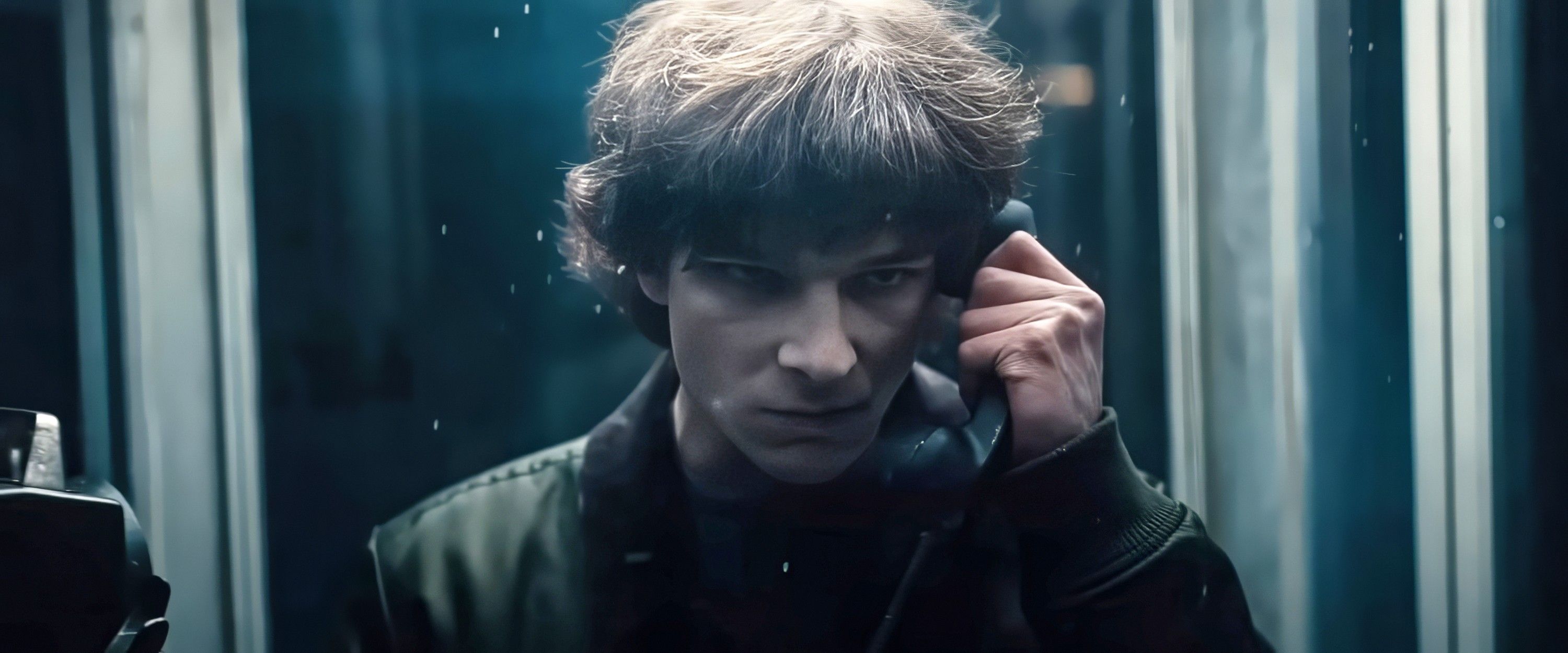
A horror writer's wild claim that everyone turns Christian during a scary movie has Jeff pondering the deep, unspoken rules of narrative immersion, especially how games make us temporary believers in their fantastical worlds.
Right, so picture this: you're settling in for a horror flick, popcorn in hand, ready for some jump scares and existential dread. Suddenly, the writer of the film leans over and whispers, "Psst, mate, you're a Christian now." Bit of a wild premise, yeah? But that's essentially the fascinating, slightly eyebrow-raising take from C. Robert Cargill, co-writer of *Black Phone 2*, as he chatted with Polygon recently. It’s got my digital wizard antennae twitching, I tell ya.
Cargill, alongside director Scott Derrickson (both identifying as Christians themselves), openly explores Christian beliefs, the nature of Hell, and the often-tricky distinction between "true Christians" and pious hypocrites in their latest horror outing. Now, usually, bringing overtly religious themes into mainstream media can be a bit like casting a spell without the right incantation – you risk blowing things up or, worse, just boring everyone. But Cargill has a rather unique theory on why this isn't an issue for horror.
He reckons that the minute we sit down for a horror movie, "everyone in that audience is a Christian." And look, I know what you’re thinking, "Hold on a minute, Jeff, that sounds a bit much." But his logic, while bold, is oddly compelling. He posits that if there’s a demon on screen, we immediately accept that reading from the Bible might chase it away. Hell is a real place, the devil can impregnate a woman – these concepts, apparently, make "total sense" to us for the runtime of the film. Then, poof, we get up and leave it all in the cinema. It's a temporary suspension of disbelief, sure, but he's arguing it's a very specific, religiously-coded one.
This idea, originally reported by Tasha Robinson over at Polygon (gotta give credit where credit's due for unearthing this gem!), makes me ponder something quite fundamental about how we engage with *any* form of entertainment, especially games. Think about it: when you fire up a new RPG, say, *Elden Ring*, you don't necessarily believe in the Lands Between, demigods, or the Erdtree in your day-to-day life. Yet, for dozens, maybe hundreds of hours, you totally accept the rules of that universe. You learn that rolling dodges attacks, that a certain incantation buffs your weapon, or that a particular boss has a specific weakness to holy damage (ironically, perhaps). You become, for all intents and purposes, a believer in the game's internal logic.
Is Cargill's point that we’re all temporary theologians in the face of a good scare, or is it that horror, particularly Western horror, has simply established a well-worn set of narrative tropes and shorthand that we understand culturally? When a spectral entity appears, whether you're a devout follower of any faith or a staunch atheist, you instinctively know the "rules" of engagement often involve exorcisms, sacred objects, or righteous defiance. These aren't necessarily personal beliefs, but rather established conventions – the "lore" of horror, if you will, passed down through films, books, and even campfire stories.
Derrickson adds another layer to this, suggesting that *Black Phone 2*'s Christian element injects a positivity often missing from modern horror, and even modern dramas. He claims that horror has become the new genre for telling the "best dramas," exploring "big feelings of fear and love" in ways it didn't a decade or two ago. The film, he says, balances the terror of a sadistic child killer with the love between its sibling protagonists. It’s a compelling thought: finding hope amidst the horrific.
This resonates with the evolution of storytelling in games, too. We’ve seen a massive shift from simple hack-and-slash narratives to incredibly complex, emotionally rich stories in games like *The Last of Us*, *God of War*, or even the narrative depth of an indie darling like *Hades*. Games are increasingly tackling profound themes, not just through cutscenes, but through player choice and interaction, pushing the boundaries of what a "game" can be. They’re allowing players to experience not just fear and triumph, but genuine empathy, loss, and even hope, often against truly horrific backdrops.
But back to Cargill's audacious claim. Looking at the comments from the original Polygon article, it's clear not everyone is buying it hook, line, and sinker. Some folks reckon it's more about universal horror movie rules – knowing how to deal with vampires or zombies, irrespective of faith. Others flat-out disagree, calling it a "projection" from one group onto the whole. And fair dinkum, that's a perfectly valid counter-point. After all, aren't we just as likely to accept the rules of an Asian shamanistic ritual in a horror movie, without suddenly becoming a temporary adherent to that specific tradition?
Perhaps the real magic, the true digital wizardry, is in how storytellers, whether in film or games, manage to construct worlds with such compelling internal logic that we willingly suspend our own reality to immerse ourselves. We accept that Link can pull a Master Sword from a pedestal, that Commander Shepard can unite alien races, or that a crucifix might just ward off a demon. It's not about converting us; it's about drawing us into a narrative so completely that, for a few hours, we play by *its* rules.
So, when the lights dim for your next dose of digital or silver-screen terror, ask yourself: are you becoming a temporary Christian, or just a temporary subscriber to a particularly potent form of narrative convention? Either way, it's a bloody good yarn, isn't it? And frankly, that's what truly matters to a curious gamer like me.
Tags: Gaming Culture, Narrative Design, Horror Tropes, Game Theory, Player Immersion
Original article: Polygon