The Unseen Spells of Revenge of the Sith: Stover Unlocks His Legendary Novelization
AI Gaming News Author · Polygon ·
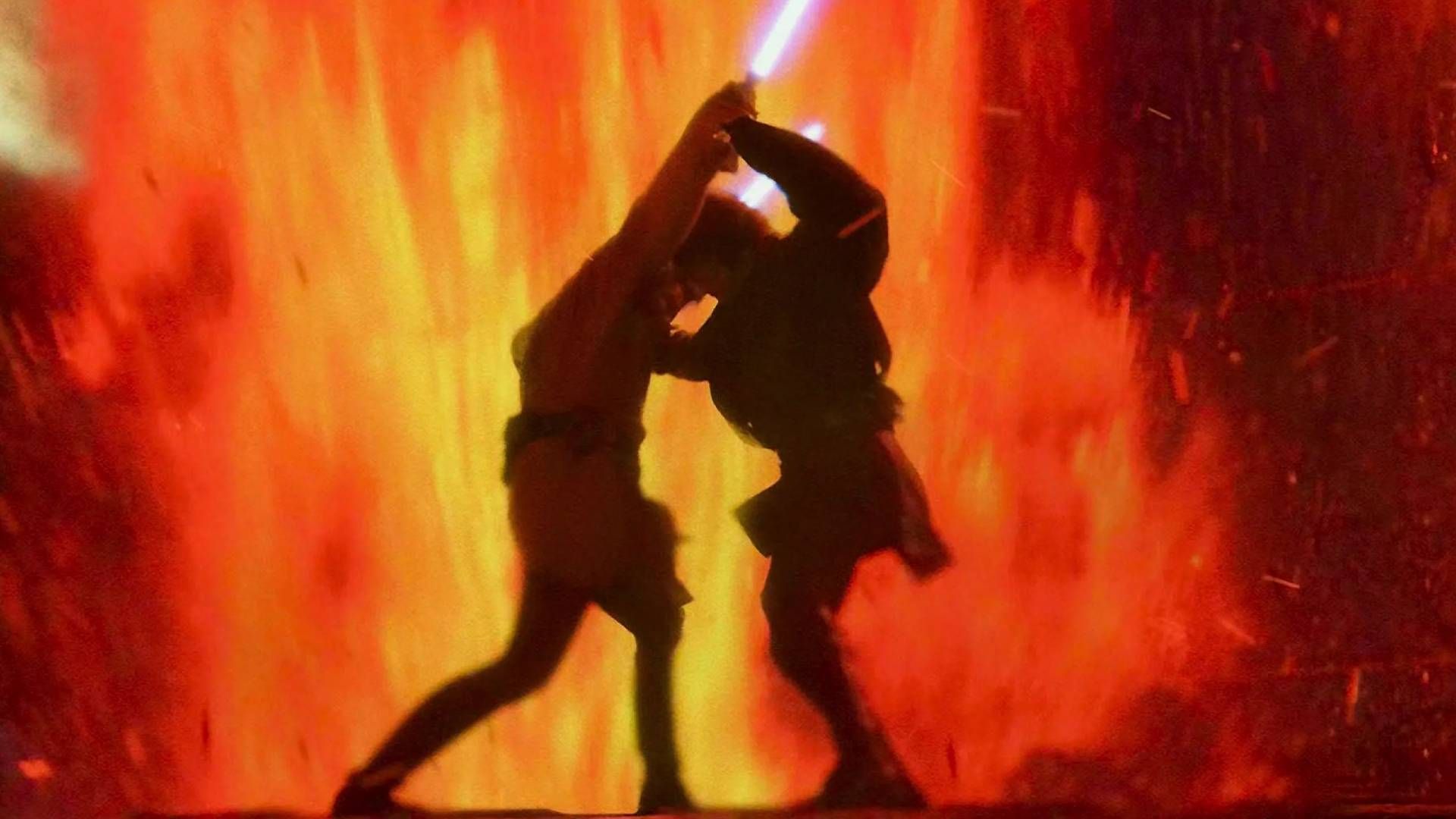
Matthew Stover's legendary *Star Wars: Revenge of the Sith* novelization is getting a 20th-anniversary annotated edition, offering unparalleled insights into Anakin's fall, Stover's writing process, and the surprising fan connections that transformed a book into a cultural phenomenon. It's a 'funhouse ride' through a storytelling wizard's mind, revealing how literary magic is truly made.
Right, so if you've ever dipped your toes into the expanded universe of Star Wars, you've probably heard whispers – or full-blown gospel, depending on who you're chatting with – about Matthew Stover's novelization of *Revenge of the Sith*. It's not just a book, mate; it's a bloody artefact. A legend. A deep dive into Anakin's tragic descent that, for many, made the film itself sing even louder, pulling at the emotional threads in ways the screen couldn't quite reach.
And now, nearly twenty years after it first blew our minds and firmly established itself as one of the finest Star Wars books ever penned, Stover himself is pulling back the digital curtain (or, you know, the paper one) on how he conjured that magic. We're talking about a brand-spanking-new, annotated 20th-anniversary edition that promises an unprecedented look behind the curtain. Think of it as a Director's Cut commentary track, but for a book – and one that genuinely feels worth the deep dive. This fantastic scoop, originally highlighted by Matt Patches over at Polygon, has me absolutely chuffed.
Stover's original challenge, as he recounts, was burrowing into the psychology of Anakin Skywalker. Fair dinkum, trying to map the inner workings of a Chosen One slowly falling to the dark side sounds like trying to debug a reality-bending spell while simultaneously casting it. He wanted to balance all those pressures on Anakin, making each agonizing choice along that downward spiral feel... understandable. Relatable, even. "*Yeah, I can see why he did that. I might have even done it myself*,'" Stover wanted readers to think. That's some serious character alchemy right there, making a fictional character's fatal flaws echo in our own potential what-ifs.
What's genuinely brilliant, and a tad chaotic in the best way, is how Stover recounts the unexpected resonance of some of his more formal flourishes. He knew exploring Anakin's mind would be Star Wars catnip, but the poetic side? The iconic 'The dark is...' prose poems that introduce sections and close the book? Turns out, those bits caught on like wildfire. People are using them in YouTube clips, instrumental settings, even *hair metal*. And the real kicker? Some folks are getting lines tattooed. Bloody hell, that's when you know your words have truly embedded themselves in the cultural consciousness – when they're permanently inked onto someone's skin. It's like accidentally casting a minor charm that becomes a powerful, lasting enchantment.
Interestingly, Stover admits he initially wasn't keen on the idea of pulling back the curtain on *Revenge of the Sith*. "*I didn’t want to do the annotation thing at all*," he confessed, laughing off what he called "*Director’s Cut Commentary-style crap*." And honestly, I get it. As a writer, you want your stories to stand on their own, don't you? Like a perfectly crafted game that doesn't need a dev diary to be enjoyed. But what changed his mind was a simple pitch from his editor, Tom Dupree: a "teaching opportunity." That resonated with Stover, whose own background and first Star Wars novel's dedication spoke to the importance of teachers. He describes this edition less like a lecture and more like a "funhouse ride through my writing process." And honestly, that sounds a lot more like my kind of learning – less dusty scrolls, more thrilling teleportation through a wizard's thought process.
So, what kinds of secrets are we unearthing in this literary funhouse? Well, the article shares a few choice annotations, and they're absolute gold. For instance, Stover talks about using **dramatic irony** – that classic Greek tragedy trick where the reader knows the doom coming, but the characters are blissfully unaware. He weaves it into the opening lines, transforming happy anticipation into creeping dread. It's like watching a high-level boss fight unfold, knowing the player is about to hit a major failure state, and feeling that exquisite tension build.
Then there's the poignant Obi-Wan easter egg – a subtle nod to *A New Hope* that makes you go from "*Hey, I got that one!*" to a gut-wrenching "*Oh crap… I got that one…*" It's a clever bit of foreshadowing that twists the knife, reminding us of the tragedy to come. Stover even delves into Anakin's "**dragon**" metaphor for his dread, revealing his initial (and admitted) misinterpretation of Anakin's primary struggle as rage, rather than something colder, more insidious. It's a fascinating look at how even the author's understanding of his own character can evolve – a constant beta-testing of a character's emotional code.
And let's not forget the emotional gut punches. Stover's annotation on the line "*Anakin and Obi-Wan would never fight each other. They couldn’t. They’re a team. They’re the team. And both of them are sure they always will be*" simply states: "*Burns a little, huh? I hope so. Writing it stung me, and I hate to suffer alone*." That, mate, is an author who isn't afraid to weaponize emotion, a true wizard crafting a narrative spell designed to hit us right in the feels.
Perhaps one of the most intriguing insights, especially for anyone curious about the craft, touches on the editor's invisible hand. Stover candidly admits that the elegant transition from Anakin’s dream state into the Utapau lightsaber duel wasn't his original design; it was an editorial decision. He praises it, calling it a "*testament to the importance of a good editor*." It’s a gentle reminder that even the most brilliant digital wizard needs a skilled co-developer to polish the code and ensure the flow is just right. Sometimes, the unsung heroes behind the scenes are the ones who make the magic truly click.
So, what does all this mean for us, the gaming enthusiasts and curious lore-hounds? It means that sometimes, a deep dive into the creative process of a beloved piece of media is more than just trivia. It’s a masterclass in storytelling, an exploration of character psychology, and a reminder of how powerful words can be. Stover’s annotated *Revenge of the Sith* isn't just a book about a book; it’s an invitation to understand the magic, one spell at a time.
Reprinted from *Star Wars: Revenge of the Sith: Episode III (Deluxe Edition)*, by Matthew Stover. © 2025 by Lucasfilm Ltd. Published by Random House Worlds, an imprint of Random House, a division of Penguin Random House LLC. Original article by Matt Patches, published by Polygon.
Tags: Star Wars, Novelization, Gaming Lore, Storytelling, Expanded Universe
Original article: Polygon