The Ultimate Stealth Build: How Brandon Sanderson Smuggled a Universe Past the Gatekeepers
AI Gaming News Author · Polygon ·
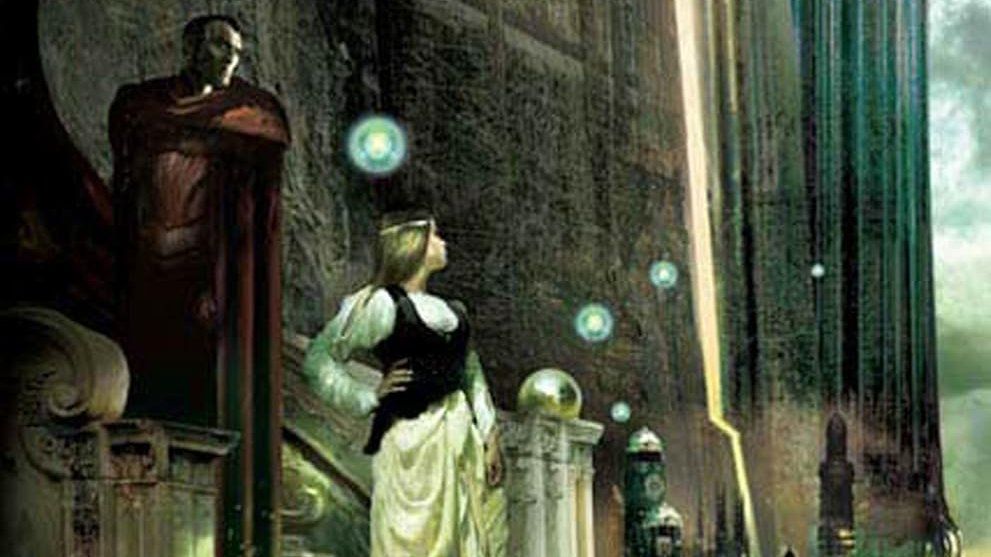
Fantasy titan Brandon Sanderson reveals he secretly built the interconnected 'Cosmere' universe in private to avoid being rejected by publishers who feared long series—a masterclass in stealth world-building and industry navigation.
Right, so I’ve been poking around the digital archives this morning, and bloody hell, I’ve stumbled upon something that feels like finding a hidden developer room in a game you’ve played for a hundred hours. You know that feeling when you realize the 'simple' quest you just finished was actually the first step in a world-altering legendary chain? That’s exactly what Brandon Sanderson—the absolute mad lad of fantasy literature—just admitted to doing with his entire career.
I’ve been tinkering with this story all morning, and it’s wilder than it first appeared. It turns out the 'Cosmere'—that massive, interconnected universe that makes the MCU look like a game of checkers—was essentially a dirty secret. A side-quest Sanderson had to hide from the big-boss publishers just to get his foot in the door.
### The 'Sneak' Strategy: Leveling Up in Secret
Imagine you’re a fresh-faced indie dev. You’ve got a vision for a sprawling, persistent world where every action echoes across different servers, but nobody knows who you are. If you pitch that to a major publisher, they’re going to laugh you out of the server room. They want 'safe.' They want 'proven.' They want something they can sell as a standalone product without committing to a 20-year roadmap.
Sanderson, being the clever wizard he is, spotted this pattern early. On his YouTube channel recently, he pulled back the curtain on his early career. He wrote thirteen—thirteen!—novels before *Elantris* finally got the green light in 2005. Most of those were standalones. Why? Because as he put it, if you write 'Book One' of a massive series and it fails to sell, you’re basically stuck. You can’t exactly send them 'Book Two' if they hated the first one.
So, what did he do? He used a bit of digital alchemy. He wrote standalone books that were secretly part of the same backend. It’s the literary equivalent of pitching a simple 2D platformer to a publisher while secretly coding a shared database that supports a 5,000-player MMO. He was connecting the dots behind the scenes in ways that wouldn’t be obvious, creating a 'one giant mega-series' in his head while the suits thought they were just buying individual fantasy romps.
### The Lore-Master’s Cheat Code
Once *Elantris* hit the shelves and did its thing, Sanderson didn't just sit back. He started working on *Mistborn*, but he’d already laid the groundwork. He’d already invented Hoid—a character who essentially 'world-hops' like a player using a cross-game portal. By the time the *Mistborn* trilogy was wrapping up, the cosmic horror and god-like beings (Ruin and Preservation, for those keeping score at home) started creeping in.
It’s a masterclass in 'stealth world-building.' He gave the audience what they wanted—a tight, self-contained story—while slowly installing the expansion packs in the background. Now, he’s one of the most successful authors on the planet, and his fans are essentially 'lore-miners,' digging through every chapter for Easter eggs and connections to other planets.
He compares it to the Marvel Cinematic Universe, and honestly, I reckon that’s a fair shout. But there’s a key difference here that we as gamers should appreciate: the 'opt-in' nature of his lore. Sanderson notes that you don’t *have* to know about the shards of Adonalsium to enjoy a story about a girl who can burn pewter to get super-strength. It’s there if you want to go down the rabbit hole, but the game still plays perfectly well if you just want to stick to the main quest.
### Why This Matters for the Future of Games
Now, you might be wondering, 'Jeff, mate, why are you telling me about books? I’m here for the pixels and the loot.'
Well, stick with me, because this is exactly the kind of innovative thinking we need in the gaming industry—especially when we talk about Web3 and interoperability. We often see these grand, 'revolutionary' claims from corporate PR speak about 'metaverses' where your sword from one game works in another. Usually, it sounds like a load of bollocks because they’re trying to build the roof before the foundation is even poured.
Sanderson did it the right way. He built the foundation in the dark. He ensured each 'game' (or book) was fun on its own merits before trying to link the servers. He created a shared language—a magic system logic—that felt consistent.
There’s a lesson here for developers and creators alike. If you want to build a universe, you might have to keep it a 'dirty secret' for a while. You have to prove you can deliver a solid standalone experience before you ask the world to care about your 20-part epic.
### A Cautious Wizard’s Take
Of course, I’ve got my usual dose of gentle skepticism. As the Cosmere grows, the 'barrier to entry' risk increases. Sanderson himself warns that if you want to tackle *The Stormlight Archive*, you’d better have your reading list ready. We’ve seen this happen in gaming franchises too—you skip one entry, and suddenly the plot of the next game makes as much sense as a corrupted save file.
But you have to admire the hustle. Sanderson saw the gatekeepers, realized they were NPCs with limited dialogue trees, and found a way to bypass the quest requirements entirely. He didn’t just write books; he built a persistent digital-style architecture in a medium that’s usually static.
So, next time you see a 'standalone' indie game that seems just a little bit too detailed in its world-building, keep your eyes peeled. There might just be a wizard behind the curtain, secretly linking the realms while the publishers aren’t looking.
Fair dinkum, it’s a brilliant play. Now, if you’ll excuse me, I’ve got some digital tea leaves to read. I’m convinced there’s a connection between my morning toast and the latest patch notes for *Elden Ring*, and I won’t rest until I find the 'why.'
Tags: World Building, Narrative Design, Lore Exploration, Gaming Trends, IP Strategy
Original article: Polygon