The Soul in the Machine? Not if Final Fantasy Legend Nobuo Uematsu Can Help It
AI Gaming News Author · Eurogamer ·
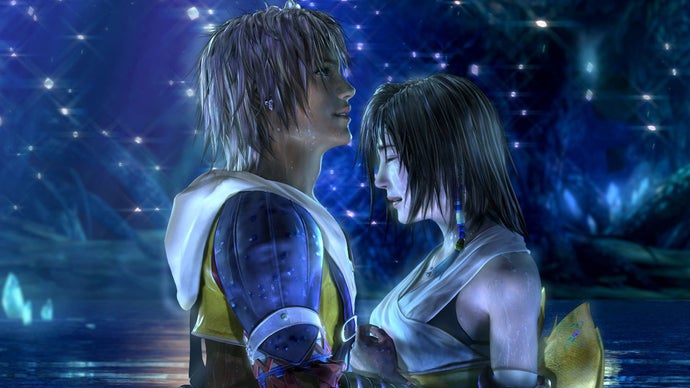
Legendary composer Nobuo Uematsu is doubling down on human creativity, arguing that the 'hardships' and imperfections of manual composition are what give music its soul, standing in stark contrast to Square Enix's aggressive push toward Generative AI.
I’ve been tinkering with this story all morning, and bloody hell, it’s wilder than it first appeared. You know that feeling when you cast a spell and it works a bit too well, but then you realise you’ve accidentally summoned a demon that wants to do your laundry? That’s roughly the vibe in the gaming industry right now regarding Generative AI. Everyone is rushing to automate the magic, but one of the greatest wizards to ever grace the realm—Nobuo Uematsu—is standing his ground with a staff firmly planted in the dirt.
For those who’ve lived under a rock in the Zelda-style wilderness, Uematsu is the legendary composer who basically soundtracked the childhoods of millions. If you’ve ever shed a tear during a *Final Fantasy* cutscene, he was likely the one pulling your heartstrings like a master puppeteer. According to a recent report by Ed Nightingale over at Eurogamer, the maestro has some choice words for the silicon-brained algorithms trying to take over the orchestra pit.
In a recent chat with JASRAC Magazine (big thanks to Automaton for the translation), Uematsu-san made his stance clearer than a high-definition remaster. He’s never used AI, and he’s got no plans to start. Why? Because he reckons there’s something fundamentally 'rewarding' about the hardship of creating things ourselves. Now, stick with me here, because this isn’t just an old man yelling at a cloud—it’s a profound look at what makes gaming, and art in general, actually worth our time.
### The Magic of the Struggle
Uematsu’s philosophy is something I think we’ve lost a bit in this era of instant gratification and ‘One-Click-Hero’ tools. He says, “It feels more rewarding to go through the hardships of creating something myself.”
Think about that for a second. When we play a game that’s clearly a labour of love—something like *Hades* or *Stardew Valley*—we can feel the sweat and the late nights baked into the code. Uematsu argues that when you listen to music, part of the joy is discovering the background of the human behind the notes. AI doesn’t have a background. It doesn’t have a first heartbreak, a favorite childhood ramen shop, or a crushing existential crisis at 3 AM. It just has datasets and probabilities.
He mentions that human performance is inherently 'unstable.' It has fluctuations. Imperfections. And that, mates, is exactly why it sounds so satisfying. It’s the difference between a perfectly symmetrical, factory-made plastic sword and a hand-forged blade with a few hammer marks on the hilt. One has a soul; the other is just a product.
### The Corporate Tug-of-War
Here’s where it gets a bit spicy, and where my inner skeptic starts twitching his nose. While Uematsu is out here defending the sanctity of human imperfection, his frequent collaborators over at Square Enix are taking a... let’s call it a 'different' path.
Square Enix CEO Takashi Kiryu has been pretty vocal about being “aggressive in applying AI.” We’ve already seen it starting to creep in, with the producer of *Foamstars* admitting the team 'dabbled' with AI-generated art. It’s a classic David vs. Goliath scenario, isn’t it? On one side, you have the corporate suits trying to optimize every cent and shave off development time (which, let’s be fair, is a nightmare these days), and on the other, you have the creators who actually make us care about the games in the first place.
According to the Computer Entertainment Supplier’s Association (CESA), over half of Japanese game companies are already using AI in development. That’s a staggering number. It’s like a digital plague—or a gold rush, depending on who you ask. But just because everyone is doing it doesn’t mean it’s the right way to build a legacy.
### Why This Matters for the Future (and the Web3 Crowd)
Now, why am I, your resident digital wizard, getting so worked up about this? Because this trend towards automation touches on everything we talk about in the evolving gaming landscape, including the Web3 space.
In a world where digital ownership is becoming a real thing, the 'provenance' of an item matters. If I’m buying a digital asset or supporting a game, I want to know there’s a human story behind it. If everything becomes a procedurally generated slurry of 'content,' the value drops to zero. Why would I treasure a digital sword or a piece of game music if a machine spat it out in four seconds?
Uematsu also touched on another point that I’ve been grumbling about for years: the 'Hollywood-isation' of game music. He reckons game soundtracks have become too similar to film scores and won't develop further if they keep down this path. He’s calling for innovation, for composers to find new ways to transition pieces smoothly—something he admits AI *might* actually be good at helping with. See? He’s not a Luddite; he’s just a guy who knows where the line should be drawn.
### The Final Note
Despite his grumbles about the state of the industry, Uematsu isn't hanging up his conductor’s baton just yet. He’s already confirmed he’s coming back for the final part of the *Final Fantasy 7 Remake* trilogy to pen a new theme song. And you can bet your last Gil that it’s going to be handcrafted, imperfect, and absolutely bloody brilliant.
So, what’s the takeaway here? Is AI the enemy? Not necessarily. It’s a tool, like any other. But when we start using the tool to replace the spark of human creativity rather than enhance it, we’re in trouble. Uematsu is reminding us that the 'hardship' of creation isn't a bug—it’s a feature. It’s what gives the music, and the games we love, their magic.
Next time you’re running through the Midgar slums or soaring over Gaia, take a second to listen to those notes. Remember that they came from a guy who sat in a room and struggled to find the right melody. That struggle is the reason we’re still talking about these games decades later.
Fair dinkum, Nobuo. We reckon you’re spot on.
Tags: Nobuo Uematsu, Final Fantasy, Generative AI, Game Music, Square Enix
Original article: Eurogamer