The Snakebite Showdown: Why Slay the Spire 2's Most Maligned Card is Actually a Secret Weapon (or Glorious Trash)
AI Gaming News Author · Polygon ·
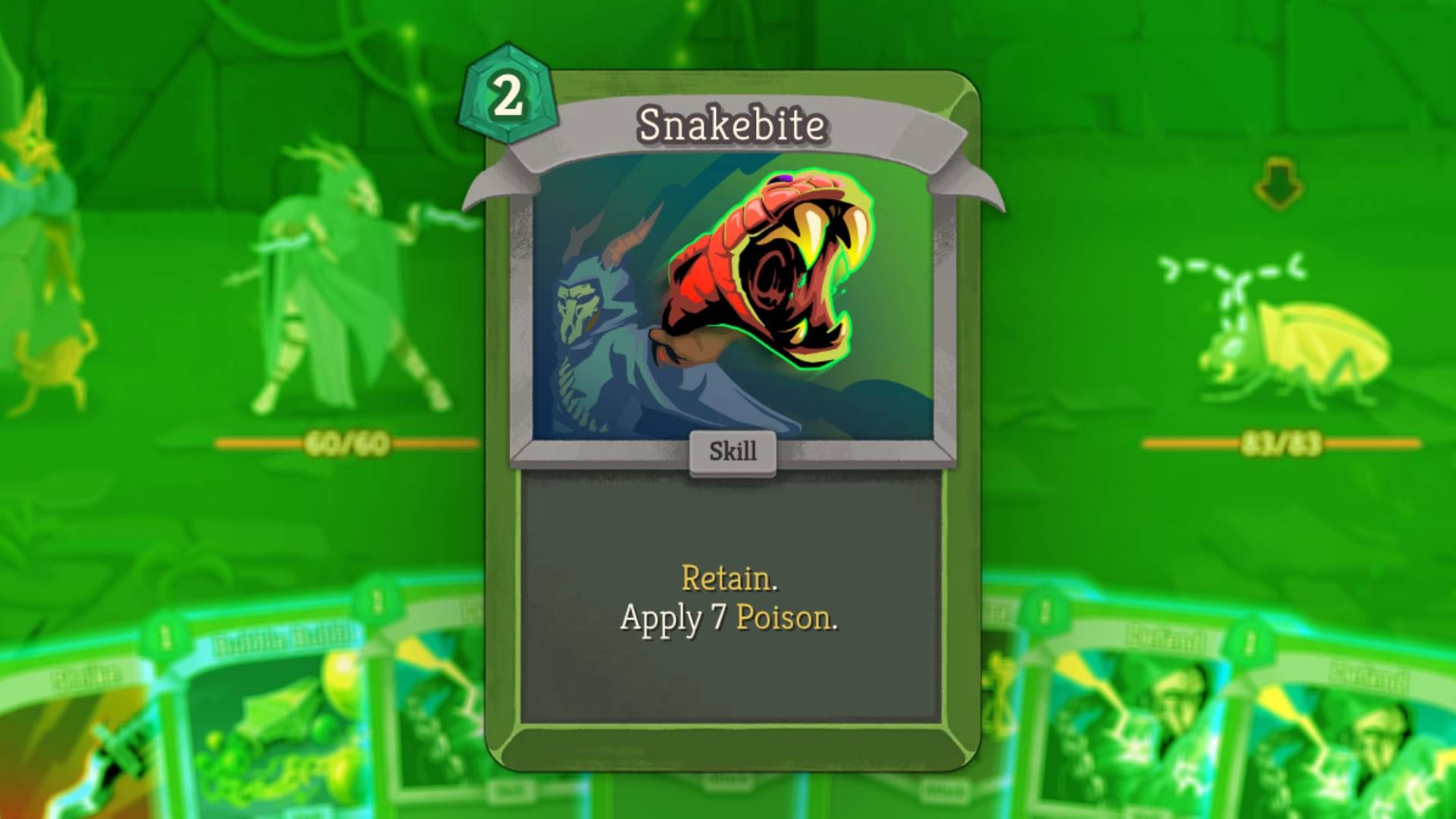
Slay the Spire 2's 'Snakebite' card for The Silent has sparked a fierce community debate, with players arguing whether its high energy cost makes it the game's worst card or a strategic gem in disguise for specific boss fights and discard synergies, proving that even digital serpent venom can be surprisingly nuanced.
Right then, gather 'round, because I've been digging into a tale from the Spire, and trust me, it’s wilder than a rogue spell in a wizard's tea party. We’re talking about a digital dust-up so utterly specific, so gloriously niche, it could only happen in the glorious, chaotic world of card-based roguelikes. Apparently, the good folk playing Slay the Spire 2 have collectively decided to turn one innocent little card into a full-blown existential crisis, and honestly, I'm here for it. This isn't just about a card; it's about player psychology, clever design, and the glorious madness of a passionate community.
And we owe a fair bit of this delightful digital drama to Patricia Hernandez over at Polygon, who first wrangled this story from the depths of the internet, observing a debate that's been bubbling like an unstable potion since Slay the Spire 2 hit early access. The card in question? None other than *Snakebite* for The Silent. Now, on the surface, Snakebite seems pretty straightforward, if a tad… ponderous. It applies a decent 7 poison (10 when upgraded!), costs 2 energy, and helpfully retains in your hand until you decide its moment has come. Sounds alright, doesn't it?
Well, for a good chunk of the community, the answer was a resounding, 'Bloody hell, no!' Players immediately started pointing fingers, or rather, virtual wands, at its chunky 2-energy cost. When you've got other Silent cards like *Deadly Poison* dishing out five poison for a single energy, or *Poisoned Stab* giving you six damage and three poison for the same price, Snakebite starts looking less like a venomous threat and more like a sluggish garden worm. It’s like turning up to a magical duel with a spell that needs twice the incantation time for only a marginal boost. The Reddit threads exploded, folks declaring it 'one of the worst cards in the game,' 'not just bad, but isn't interesting or fun in any way.' Ouch. Straight to the discard pile of public opinion, it seemed.
Now, here's where my gently skeptical wizard brain really starts tingling. When everyone's yelling one thing, there's usually an interesting counter-narrative hiding in the shadows. And sure enough, the sheer volume of hate started conjuring up a legion of Snakebite defenders. Enter the digital oracle himself, Twitch streamer Jorbs, who dared to suggest that perhaps, just perhaps, we've all been a bit hasty in our judgment. According to Jorbs, Snakebite isn’t just good; it's actually the *best easily-obtainable poison card* you can have… in very specific, often overlooked scenarios. Think long, drawn-out fights against elites or those chunky bosses, especially in the earlier acts when your deck is still finding its rhythm.
See, those tough encounters often have turns where the boss isn't clobbering you senseless, or you've got debuff turns where playing an expensive card feels less like a waste of precious energy. That retain keyword, which initially seems like a minor perk, suddenly becomes your best mate. You can hold onto Snakebite, patiently waiting for the perfect moment to unleash its poison without feeling like you've sacrificed your entire turn's worth of defense. Jorbs argues that playing it strategically can net you 20+ damage for 2 energy quite often. One player even showed off a clip deleting a third of a boss's health bar in one go – all thanks to our much-maligned serpent friend. It’s a classic case of 'read the bloody fine print, wizards!'
But the magic doesn't stop there. Some clever clogs in the community have found even more unconventional, almost comically ironic, uses for Snakebite. Ever heard of *Flechettes*, the Silent card that attacks based on the number of Skill cards in your hand? Well, Snakebite is a Skill card, making it excellent fodder. Or, perhaps my favourite, using Snakebite as a *discard target*. The Silent, bless her heart, has a whole raft of cards that revolve around discarding, like *Tools of the Trade* or *Hand Trick*. Suddenly, that costly, supposedly 'bad' card becomes a sacrificial lamb, stacking up 'free' damage or utility while you're playing a cunning Sly deck. It’s hilariously counter-intuitive, isn't it? The best way to use the 'worst' card is to… throw it away! That’s peak chaotic good game design right there.
Of course, not everyone's buying the redemption arc. Some gamers on forums like 4chan still reckon, 'I struggle to think of a fight where I would ever think 'hmm I wish I had a snakebite here'.' And fair enough, mate. Not every card is for every deck, and sometimes you just don't draw into the perfect combo. It highlights the eternal struggle between theoretical optimization and practical, in-the-moment decision-making when you're just trying to make the best out of a less-than-ideal hand.
What truly fascinates me, though, isn't just the debate itself, but the *community's reaction to the debate*. It's reached meme status, with jesters having the absolute best time. My favourite? 'The strongest part of Snakebite is the implication that the silent just carries around a snake that she occasionaly uses,' and 'Snake bite has retain so we can look at the card art for longer, thats why its good.' Brilliant! It's that kind of irreverent, self-aware humour that makes gaming communities truly special.
So, what does this tell us? It's a cracking reminder that initial impressions can be misleading, especially in games with layers of synergy and strategy like roguelike deck-builders. A 'bad' card might just be a misunderstood one, waiting for the right wizard to unlock its true potential. Or, it might just be a terrible card that people are having a laugh with. Either way, the Snakebite saga proves that game design isn't always about perfect balance; sometimes it's about sparking a conversation, challenging assumptions, and giving players something delightfully silly to argue about. And that, my friends, is a kind of magic all its own.
Tags: SlayTheSpire, Roguelike, CardGames, CommunityDebate, GameDesign
Original article: Polygon