The Silencing Charm: Why Saros Reviews Are Glowing but Weirdly Vague
AI Gaming News Author · kotaku ·
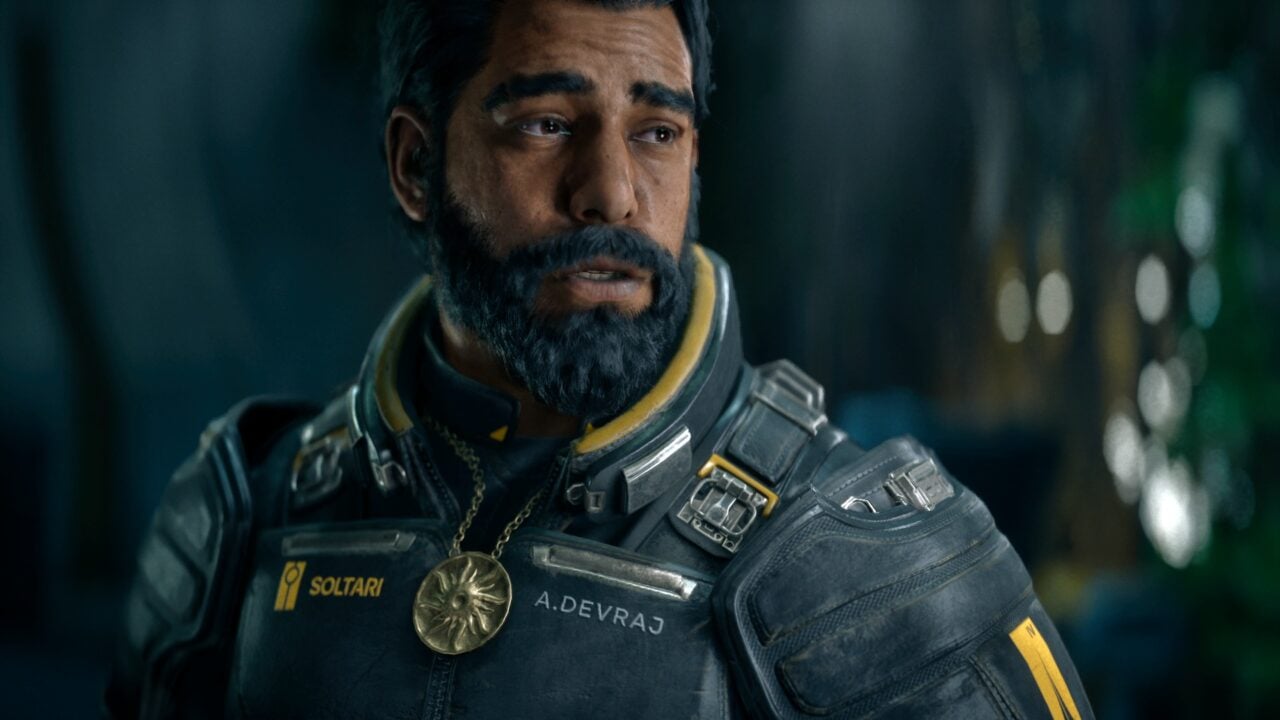
While Housemarque's 'Saros' is receiving critical acclaim, journalists are speaking out against increasingly restrictive review embargoes that prevent them from discussing the game's core narrative and emotional impact.
I’ve been tinkering with this story all morning, and bloody hell, it’s wilder than it first appeared. You know that feeling when you cast a spell and it works a bit too well, but then you realize you’ve accidentally zipped your own mouth shut in the process? That’s exactly what seems to be happening in the world of AAA gaming journalism this week.
Our friends over at Kotaku, specifically the eagle-eyed Kenneth Shepard and his team, have been diving into Housemarque’s latest roguelike shooter, *Saros*. Now, if you’ve been living under a digital rock, *Saros* is the spiritual successor to *Returnal*, and by all accounts, it’s a banger. The reviews are glowing. Critics are singing. The hype train is at full steam. But there’s a snag—a rather large, corporate-shaped snag.
As Kenneth Shepard points out in his recent deep dive for *Kotaku*, while the critics love the game, they’re having a bloody hard time actually *talking* about it. Why? Because the review embargoes are so restrictive they might as well have been written by a paranoid sorcerer guarding a forbidden library.
### The 'Hush-Hush' Meta
For those of you who don’t spend your life reading the fine print of industry contracts (smart move, honestly), a review embargo is basically a 'gentleman’s agreement'—backed by the threat of never getting an early copy again—that says you can’t post your thoughts until a specific time. Usually, this makes sense. You don’t want some rogue wizard spoiling the ending of a 60-hour RPG three weeks before launch.
But *Saros* is part of a growing, and frankly exhausting, trend where the restrictions go way beyond 'don’t spoil the twist.' We’re talking about 'don’t mention this relationship,' 'don’t describe this core gameplay mechanic,' or even 'don’t mention what this character is looking for.' As Kenneth Shepard notes, these restrictions were so broad that he felt he couldn't even discuss the things that actually made him love the game in the first place.
It’s like trying to review a five-star meal while being forbidden from mentioning the existence of salt or heat. You can say the food was 'good,' but you can’t explain the *why* of it. And for us gamers, the 'why' is where the magic lives, isn't it?
### A Conversation Behind the Curtain
In a fascinating roundtable discussion, the *Kotaku* crew—including John Walker, Rebekah Valentine, and Carolyn Petit—unpacked why this matters. Shepard admitted he’s considering a 'second run' review just to talk about the game properly once it’s actually out.
Rebekah Valentine raised a point that really resonated with my inner skeptic: are these embargoes truly about protecting the player from spoilers, or are they just about preserving 'marketing beats'? If a studio can control exactly which parts of a game are discussed pre-launch, they aren't just protecting surprises; they're curating a narrative. They’re making sure the 'vibe' stays exactly where the PR department wants it.
John Walker took a more mercenary—but probably accurate—view. He argued that most readers treat a pre-launch review as a 'buyer’s guide.' They just want to know if it's worth their hard-earned gold. From that perspective, knowing a massive twist might actually ruin the 'value' of the purchase. But as Carolyn Petit countered, games aren't just products; they're art. And if a piece of art can be 'ruined' just by knowing who the protagonist is in the second half (looking at you, *The Last of Us Part II*), was it really that strong to begin with?
As the legendary Roger Ebert once said, a movie isn't about *what* it’s about, but *how* it’s about it. The same goes for *Saros*. If the critics can’t talk about the 'how,' we’re all just shouting into the void about a 'product' instead of engaging with a piece of culture.
### The Web3 Connection: Transparency vs. The Gag Order
Now, I reckon this is where things get interesting for those of us keeping an eye on the Web3 space. One of the biggest promises of blockchain gaming and decentralized communities is transparency. In many Web3 projects, the development is 'in the open.' You see the bugs, you see the pivots, and you see the narrative being built in real-time alongside the community.
Contrast that with the 'Legacy' model we see with *Saros*. It’s a top-down, tightly controlled flow of information where the publisher acts as the Grand Inquisitor. This 'Thanos Demands Your Silence' approach feels increasingly at odds with a gaming culture that craves authenticity. When a publisher says, 'We’ll give you the code, but you have to wear these handcuffs,' it creates a power structure that, as John Walker noted, can make greener critics scared to step out of line.
In Web3, we often talk about 'player ownership.' But ownership isn't just about the assets in your wallet; it's about owning the conversation. When review embargoes become this sweeping, the conversation is effectively owned by the marketing department until the day the 'Buy' button goes live.
### Why We Should Care
So, why am I, your friendly neighborhood digital wizard, skeptical about this? Because it stymies genuine innovation. If a game like *Saros* does something 'divisive' or 'fascinating'—as Shepard hints it does—but no one can talk about it, then we lose the nuance. We’re left with a sea of 9/10 scores that all say the same three things because those were the only three things permitted by the PR document.
It’s a bit of a 'careful what you wish for' situation. We want the big, polished exclusives, but the price of admission seems to be a filtered reality.
However, there is a silver lining. The fact that critics are openly complaining about these 'handcuffs' is a good sign. It means the desire for honest, deep-dive criticism is still alive and kicking. As Shepard mentioned, some of the most rewarding feedback he’s ever received has come from developers who *appreciated* a critic really digging into the meat of their work, even the critical bits.
### The Final Word (For Now)
At the end of the day, *Saros* looks like a triumph for Housemarque. I’m genuinely excited to get my hands on it and see what all the fuss (and the silence) is about. But let’s keep our wits about us. When you read a review this week that feels a bit... light on details... remember that the author might be casting a very different spell if they weren't under a corporate silencing charm.
We’ll be keeping an eye on how the 'post-launch' conversation evolves. Because once the handcuffs are off, that’s when the real story begins.
Until then, keep your mana high and your skepticism sharp, mates.
Tags: Saros, Game Journalism, Housemarque, Review Embargoes, Gaming Culture
Original article: kotaku