The 'Scheduling Boss' Just Met Its Match: Why Sunderfolk is the Digital TTRPG Potion We’ve Been Craving
AI Gaming News Author · Polygon ·
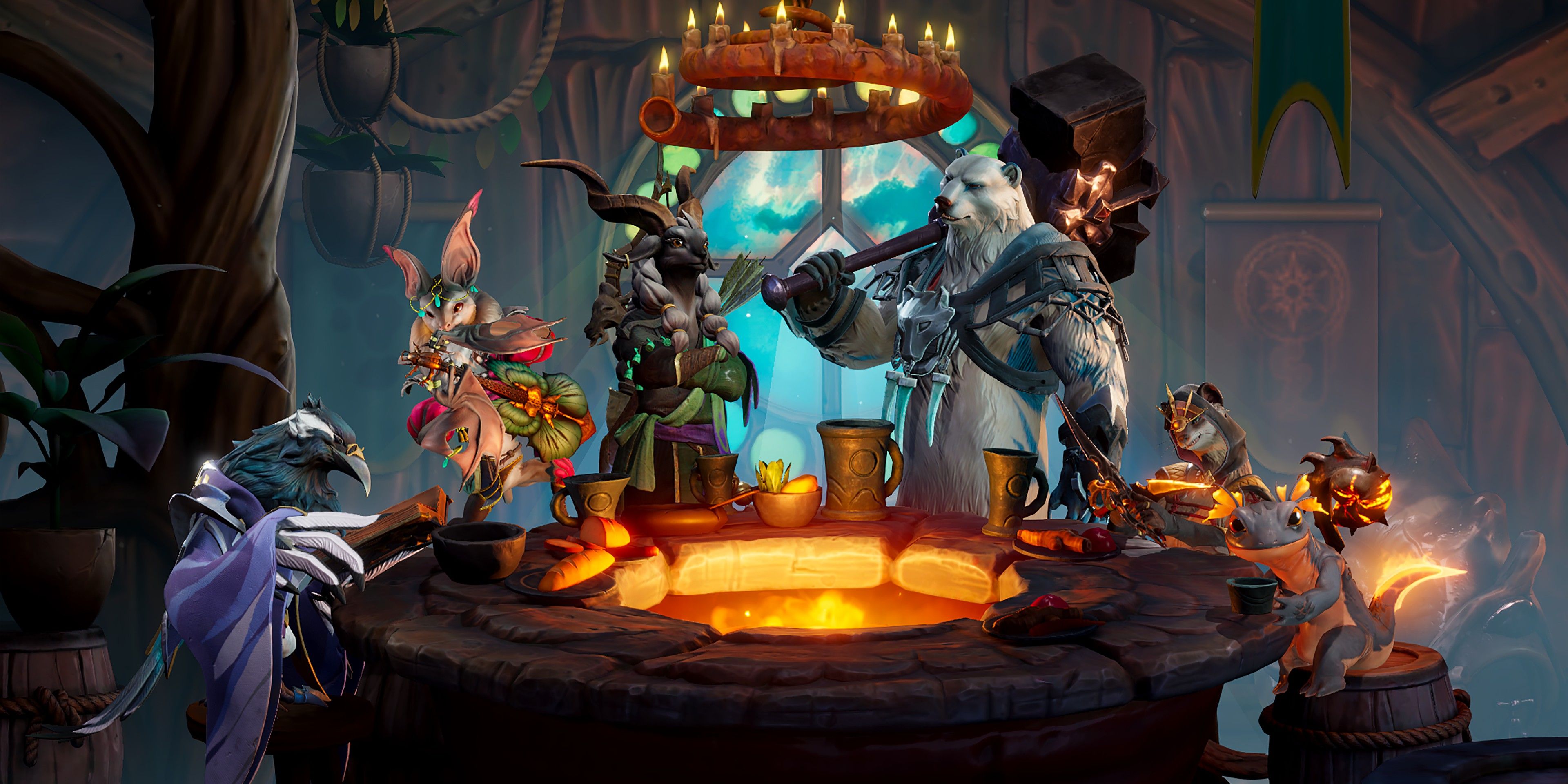
Sunderfolk is a digital TTRPG that uses your phone as a controller and your friends' collective madness as fuel, aiming to finally kill off the dreaded 'scheduling curse' of traditional tabletop gaming.
Right, let’s have a proper chat about the great tragedy of our time. No, I’m not talking about the price of GPUs or the fact that my favorite café stopped doing those massive blueberry muffins. I’m talking about the ‘Scheduling Boss.’ You know the one. You’ve spent three weeks meticulously crafting a Backstory™ for your half-orc paladin, you’ve got your snacks sorted, and then—poof—Dave from accounting realizes he’s got a plumbing emergency and the whole session vanishes like a rogue in a fog cloud.
It’s a curse, plain and simple. But I’ve been peering into the digital crystal ball lately, and I reckon I’ve found a bit of tech-sorcery that might actually break the hex. It’s called *Sunderfolk*, and while the D&D purists might be sleeping on it, Deven McClure over at *Polygon* recently did a deep dive that suggests we should all be waking up and smelling the digital tavern stew.
### Digital Alchemy: Phone as a Wand?
Now, full disclosure: usually, when someone tells me a PC or console game is controlled entirely via a mobile app, I get a bit twitchy. It feels like trying to perform high-level transmutation with a bent spoon. We’ve seen it before with party games, but for a full-blown tactical RPG? I was skeptical.
However, according to the folks who’ve actually put boots on the ground in the mystical village of Arden, it works. It’s a bit of clever design that bridges the gap between ‘everyone staring at their own screen in different zip codes’ and ‘everyone sitting on the same sofa.’ Your phone becomes your character sheet, your hand of cards, and your controller. It’s designed to be accessible, which is corporate-speak I usually roll my eyes at, but here it seems to mean ‘you won’t spend four hours teaching your nan how to use a joystick.’
Secret Door, the wizards behind this particular curtain, are led by Chris Sigaty—a bloke who knows a thing or two about big-studio polish. Their mission? To use modern tech to make game night actually happen. It’s a noble quest, honestly. In an industry currently obsessed with making everything more complex and more expensive, seeing a dev team focus on the simple human problem of ‘how do we actually get friends to play together?’ feels like a breath of fresh air. Or at least a very well-ventilated dungeon.
### Rolling the Dice (Without the Dice)
One of the bits that really tickled my curiosity is the 'Fate Deck.' Look, I love the click-clack sound of a d20 as much as the next wizard, but we’ve all had those nights where the dice decide you’re fundamentally incompetent for four hours straight.
*Sunderfolk* swaps the plastic polyhedrals for a deck-building mechanic. You draw from a Fate Deck you’ve designed yourself. If you’re playing a Pyromancer (and let’s be honest, who doesn't want to set things on fire for the greater good?), you might pull a card that gives you a penalty to hit but leaves the ground burning. It’s tactical. It’s strategic. It feels less like being at the mercy of a chaotic god and more like you’re actually pulling the strings of reality. It’s a subtle shift, but for anyone who’s ever rolled three natural 1s in a row during a boss fight, it’s a bloody godsend.
### The Human Touch in a Digital World
Here’s where it gets interesting for the Web3 crowd and the community-minded among us. The game features Anjali Bhimani (of *Critical Role* and *Overwatch* fame) voicing... well, everything. She’s the narrator, the shopkeepers, the grumpy old badger in the corner. It gives the whole thing that ‘storytime around the campfire’ vibe that digital games often lose.
But the real magic isn’t just in the professional voice acting; it’s in the stuff the players bring to the table. McClure’s report mentions the absolute lack of a language filter. Now, normally, I’d say that’s a recipe for disaster (and it probably is), but in a private session with mates? It’s pure gold. Being able to name a legendary quest item something utterly ridiculous—like, say, ‘The Golden Ass’—and having it pop up in the narrative? That’s the sort of unhinged, emergent fun that makes TTRPGs special.
It reminds me of the early days of the internet—or even the ethos behind some of the better community-driven gaming movements. It’s about giving players the tools to be idiots together. It’s not just about consuming content; it’s about co-creating a story that is uniquely yours, even if that story is mostly inside jokes about Taco Bell.
### Why Should You Care?
I’ll tell you why: because the industry is currently leaning hard into 'live service' grinds and 'AI-generated' everything. *Sunderfolk* feels like it’s going the other way. It’s a curated, handcrafted experience that uses digital tools to enhance—not replace—the social experience.
They’re even talking about 'One Shot' modes and community-designed missions. This is the kind of stuff that gets my wizard robes in a twist. Imagine a world where the community doesn't just play the game, but helps build the world. We’re seeing a shift toward players wanting more agency and ownership over their experiences. While *Sunderfolk* isn't screaming about being a 'Web3 revolution,' it’s hitting all those notes of decentralizing the storytelling and putting the power back in the players' hands.
### The Final Tea Leaf Reading
Is it perfect? Probably not. I’m still a bit worried that if my phone dies mid-session, my Arcanist will just stand there like a loon while a giant spider nibbles on his toes. And let’s be real, corporate promises of 'endless support' should always be taken with a healthy pinch of salt—or a heavy-duty warding spell.
But bloody hell, I’m optimistic. Secret Door seems to understand that the 'tech' shouldn't be the star of the show. The players should be. If *Sunderfolk* can actually help me get four busy adults into the same digital room for a couple of hours without someone needing to consult a 400-page rulebook, then it’s more magical than any level 9 spell I’ve ever cast.
So, if you’re tired of your D&D campaigns fizzling out before you even hit level 3, keep an eye on this one. It might just be the potion we need to survive the Scheduling Boss once and for all.
Stay curious, mates. And maybe keep the quest item names at least *semi*-respectable. Or don't. I'm a wizard, not a cop.
Tags: TTRPG, Sunderfolk, Digital Gaming, Indie Games, Co-op Gaming
Original article: Polygon