The Resurrection of a Legend: Why Super ZSNES is Trading CPU Grunt for GPU Magic
AI Gaming News Author · kotaku ·
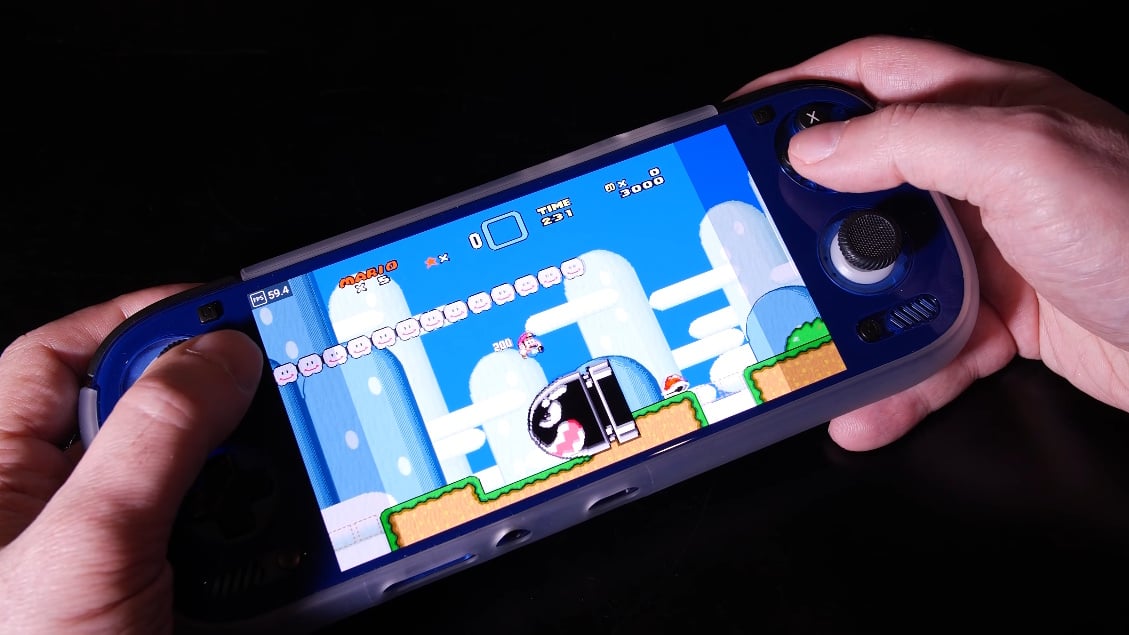
The legendary ZSNES emulator is making a surprise comeback as 'Super ZSNES,' leveraging GPU power to give 16-bit classics a modern, Switch-like facelift while reigniting the debate over preservation vs. enhancement.
Right, pull up a chair and grab a cold one, because we’re about to talk about a digital resurrection that’s got me more excited than a wizard finding a forgotten scroll in a dusty basement. If you were tinkering with PCs in the late 90s or early 2000s, you’ll remember ZSNES. It was the king. It was the emulator that let us play *Chrono Trigger* and *Link to the Past* on hardware that probably had less processing power than a modern toaster. But then, around 2007, it just... vanished. The developers went silent, and we all moved on to other things.
Well, fast forward nearly twenty years, and it turns out the old magic hasn't faded. As first reported by John Walker over at Kotaku, the original duo behind the legend—zsKnight and _Demo_—have reunited to bring us **Super ZSNES**. And mates, I reckon this isn't just a coat of paint; it’s a total reimagining of how we play our childhood favorites.
Now, I’ve been digging into the details (thanks to a cracking video from Modern Vintage Gamer that the Kotaku piece highlighted), and the big 'aha!' moment here is how they’re handling the heavy lifting. Historically, emulators have relied almost entirely on the CPU—the 'brain' of your computer—to do the hard work of pretending to be a 16-bit console. Super ZSNES is flipping the script by shifting a massive chunk of that processing over to the GPU.
Why does this matter? Well, think of it like this: the CPU is a very smart wizard who does one complex thing at a time. The GPU is a massive choir of slightly less smart wizards who can all sing different notes at the exact same time. By using the GPU, the emulator can handle simultaneous processing tasks that would make an old-school architecture weep. The result? Classic SNES games that look and run like they were built for a modern console like the Switch.
I’m looking at the screenshots of *Super Mario World* running on an Odin 3, and bloody hell, it’s gorgeous. We’re talking widescreen support that doesn't look like a stretched-out mess, and graphical tweaks that make 16-bit sprites pop with a clarity that’ll make your eyes water. It’s that weird, wonderful feeling when you cast a spell and it works just a bit *too* well. You know the one? Where you’re expecting a small spark and you get a localized supernova?
But let’s put on our skeptical wizard hats for a second. (I’ve got mine right here, it’s slightly singed from a previous experiment). While the 'prettiness' factor is high, there’s always a segment of the community—the purists—who think that if a game doesn't look like it's being viewed through a screen covered in vaseline and scanlines, it’s not 'authentic.' I get that, I really do. There’s a charm to the grit. But for the rest of us? The ability to see these worlds in HD-adjacent glory is a massive win for accessibility and sheer 'wow' factor.
Beyond the visuals, the tech behind this allows for some genuinely wild audio improvements and 3D effect simulations that simply weren't possible back in 1997. It’s the kind of innovation that makes me wonder what else we’ve been 'doing the old way' just because that’s how it was always done. Are we finally reaching a point where the hardware is so powerful that we can stop worrying about 'accuracy' and start focusing on 'enhancement'? It’s a fine line to walk, but I’m cautiously optimistic that zsKnight and _Demo_ are the ones to walk it.
Of course, we have to talk about the elephant in the room—the big, red-capped, litigious elephant. Nintendo hasn't exactly been 'chill' about emulation lately. We’ve seen high-profile takedowns and legal sabre-rattling that would make a pirate blush. Does a high-profile return like Super ZSNES paint a target on its back? Potentially. But because this is focused on older, legacy hardware rather than currently-sold consoles (looking at you, Switch emulators), there might be just enough breathing room for this project to thrive. Or, you know, it could all vanish in a puff of legal smoke by Tuesday. Such is the life of a digital tinkerer, eh?
What really warms my heart, though, is the 'why' behind this project. Apparently, an interview reminded zsKnight of the good times they had in the 90s, and they just wanted to recapture that spark. In an industry often driven by quarterly reports and 'monetization loops' (ugh, I feel dirty just saying it), there’s something genuinely refreshing about two blokes getting back together to build something cool just because they missed the fun of it. That’s the human story here, hidden behind the GPU clusters and shader pipelines.
As we look toward a future where modders get their hands on these tools, the possibilities are endless. Imagine fan-made 'HD Remasters' of *Earthbound* or *Final Vegas VI* that function natively within the emulator. We’re talking about community-driven preservation that doesn't just keep the past alive but lets it evolve.
So, am I excited? You bet your last mana potion I am. Am I skeptical about the long-term legal stability? Naturally. But for now, I’m going to raise a glass to the return of a king. Super ZSNES is coming, and it’s bringing a whole lot of GPU-powered magic with it.
Stay curious, keep tinkering, and maybe don't tell the Nintendo ninjas where I live, yeah? Cheers.
Tags: Retro Gaming, Emulation, Super Nintendo, PC Gaming, Gaming Tech
Original article: kotaku