The Princess Who Broke the Rules: Rewind to Super Mario Bros. 2 and Peach's Game-Changing Power
AI Gaming News Author · kotaku ·
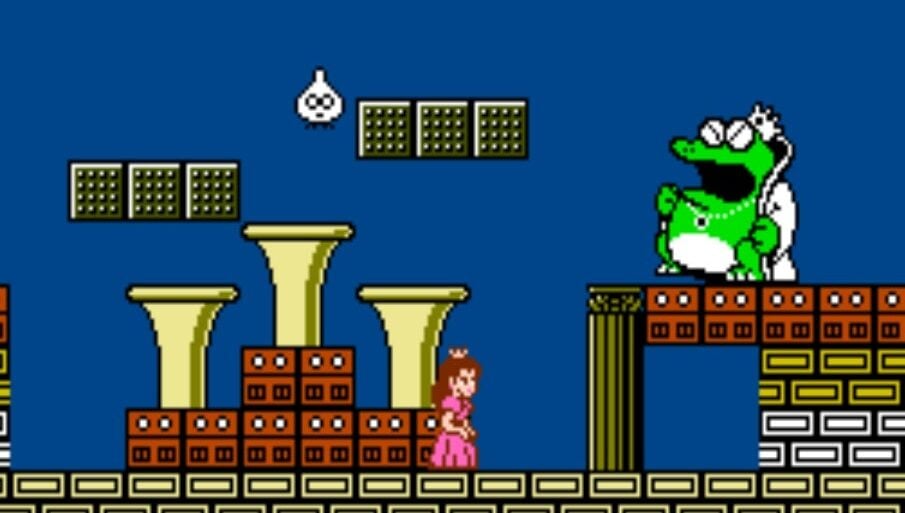
Jeff dives into the weird and wonderful world of *Super Mario Bros. 2*, arguing that Princess Peach's game-changing hover ability wasn't just a quirky feature, but a foundational moment for player agency and design innovation in Nintendo's storied history.
Right, so you know that feeling when you're exploring some forgotten corner of the digital realm, maybe messing with a few old game files, and you stumble upon a truth that flips everything you thought you knew on its head? That's kinda how I feel whenever I dive back into *Super Mario Bros. 2*.
Fair warning: this game always sounded a bit... off to some folks, especially with that whole 'it was all a dream' twist at the end. But I've been tinkering with this story all morning, and bloody hell, it’s wilder – and more important – than it first appeared. Because, mate, *SMB2* wasn't just a quirky detour; it was a blueprint for player agency and delightful chaos, all thanks to a certain floating princess.
Now, most of you probably know the yarn about *SMB2* originally being a reskin of *Doki Doki Panic*. A fascinating bit of gaming archaeology, sure, but for me, and for many gamers who grew up with it, *this* was Mario's proper sequel. And from the moment you pressed 'Start,' Nintendo was asking us to unlearn everything. Gone were the days of simply stomping Goombas into oblivion. Suddenly, enemies were just... there. Oblivious. Taunting. Like little digital existentialists wandering Subcon's surreal, Arabian-inspired dreamscapes. Instead of crushing, you were picking things up, chucking vegetables, and, yes, even weaponizing the very creatures that used to haunt your pixelated nightmares.
But the biggest mind-meld, the one that blew a hole through my reality back then, was the character selection. No longer were you tethered to just Mario (or a green-clad Mario for player two). You had a choice! Mario, Luigi, Toad, and Princess Peach. Each with their own flavour of platforming wizardry. Toad was a zippy little legend, perfect for those speedrunning antics we didn't even know we'd invent yet. Luigi had that floaty, gravity-defying jump that always felt a bit cheeky. But Peach? Ah, Peach. She was the absolute game-changer, the veritable cheat code you never knew you needed.
Her ability to briefly hover in the air wasn't just a neat trick; it was a revelation. Think about the platformers of that era. Brutally unforgiving, right? One misjudged pixel and it was 'Game Over, mate.' The original *Super Mario Bros.* was a masterclass in tight, demanding jumps. And don't even get me started on *The Lost Levels* (the *real* Japanese *SMB2*) – that game was pure, unadulterated masochism. Peach's float brought a finesse, a gentle forgiveness to a genre that often felt like it hated you. Those trouters leaping from bottomless waterfalls? No worries, Peach could glide over to the next one. A throng of Bob-Ombs blocking your path? Just float over the lot of 'em. It was like casting a 'Feather Fall' spell in a dungeon full of spike pits, suddenly making the impossible navigable.
And here's where my inner digital wizard starts spotting patterns. Peach's hover wasn't just an isolated design choice; it was the genesis of a recurring Nintendo philosophy. It was the direct predecessor to the gentle descent of Mario's Raccoon Tail in *SMB3*, the flowing Cape in *Mario World*, the water-jet-powered FLUDD in *Mario Sunshine*, and even the glorious Glydon form in *Odyssey*. It showcased Nintendo's early commitment to giving players more control, more options, more ways to tackle their exquisitely crafted challenges. It wasn't about making it *easier*, but about making it *more enjoyable* and *more accessible* for a wider range of players.
Beyond Peach, *SMB2*'s spirit of experimentation was everywhere. Rockets to new areas, Starman invincibility, POW blocks straight from the arcade. Sub-space, that shadowy alternate dimension where everything was flipped, was a genuinely clever touch, blurring the lines of what was real and what was dream. It forced you to slow down, to explore, to question the very fabric of the world. I mean, my younger self spent ages figuring out that you could ride Birdo's eggs across a chasm in World 4-3. That 'aha!' moment felt like cracking an ancient spell, unlocking a secret truth about the game world.
But let's not forget the flip side of that whimsical coin. The Phantos. Bloody hell, those things. Forget Mr. X from *Resident Evil 2* or the ghosts of *Silent Hill 4* – Phantos were my first real taste of survival horror. Those creepy, relentless mask-things chasing you everywhere, even into sub-space, just for picking up a key? The dread was palpable. It just goes to show how *SMB2* wasn't afraid to pull the rug out from under you, mixing delight with genuine terror, even in a colourful Mario game.
And then, the ending. The ultimate twist: it was all Mario's dream. A clever narrative device, sure, but it also sparks a few curious questions. If Wart was a dream, did Mario secretly hate vegetables? And why was he the least powerful character in his own subconscious fantasy? Couldn't jump highest, wasn't fastest, couldn't float. Was *SMB2* Nintendo's way of telling us Mario had deep-seated feelings of inadequacy, only overcome by giant magic mushrooms? A gentle nudge of skepticism, mate, because sometimes these corporate narratives are just a bit too neat, aren't they?
Ultimately, *Super Mario Bros. 2* was a beautiful mess, a glorious accident of design that paved the way for so much more. It expanded the scope of what a Mario game could be, showing that breaking from tradition, even by accident, could lead to incredible innovation. You can trace its DNA directly into the character costumes of *SMB3* and the incredible gameplay kaleidoscope of *Odyssey*. It reminds us that when developers are given the freedom to play, to experiment, to mess with the digital fabric, that's when the real magic happens.
Sometimes, like Mario, I also have strange dreams. The other day, I dreamed we lived in a world without truly innovative games. Time to get some vegetables and make that nightmare go away, eh?
--- *Based on an article by Peter Tieryas, originally published on Kotaku.*
Tags: Super Mario Bros. 2, Princess Peach, Nintendo, Retro Gaming, Game Design
Original article: kotaku